Who keeps us safe?
By John C. Raines There are a lot of people out there who want us to be afraid. Their lives and livings depends upon us feeling unsafe. Of course, I am talking about the terrorists, whose purpose is to make us feel afraid to be in public spaces we depend upon in our everyday life - malls, train stations, marathon races.
By John C. Raines
There are a lot of people out there who want us to be afraid. Their lives and livings depends upon us feeling unsafe. Of course, I am talking about the terrorists, whose purpose is to make us feel afraid to be in public spaces we depend upon in our everyday life - malls, train stations, marathon races.
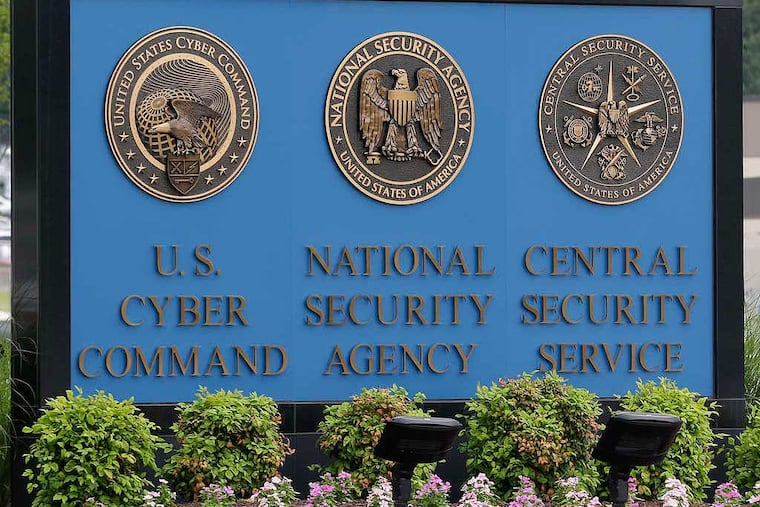
But, strange to say, I am also talking about the enemies of the terrorists. Yes, the National Security Agency, the CIA, the FBI, and the immense security systems of the military, local police, and private security firms. They all depend upon us feeling afraid.
It is curious to note that both terrorists and anti-terrorists run on the same gasoline. It is the fuel called fear. They need and want us to be afraid, to fear and distrust what is "out there."
But mostly I don't feel afraid.
Why? Because of us.
It is the gift we give each other every day when we go to work or shop or take public transportation to school. Without thinking about it, we routinely depend upon the taken-for-granted assumption of mutual safety in the public spaces we share - buses, sidewalks, supermarkets. Indeed, it is this assumption of safety that makes everyday life possible.
We trust because we must. We just get up in the morning and get on the bus to go to work without for a moment asking ourselves, "Is the bus driver a mass kidnapper in disguise?"
Of course not. And that is why I conclude it is "us" and not "them" that makes us safe.
As I sit in my townhouse in Philadelphia and write these words, it is past eight in the evening. I hear outside the sound of drilling in the street. It has been this way for three days and nights. Why? Because the gas lines buried deep in the street were first laid in 1898. Yes, our infrastructure in these older cities is old indeed. So, who is it that is keeping me safe on this cold winter night? It's those gas company guys working in freezing weather. They are us, not them - not the folks drawing those thousands, even millions of paychecks, because we have been told it is them who protect us.
What threatens us are inflated budgets of innumerable security agencies that drain public monies into an endless hole called fear. We need those public monies put to work to rebuild our roads, our bridges, our gas and water mains, our schools, our support for college students - our public support for us.
We are starving those who in fact make us safe - to walk the streets, to feel secure in our sleep, to get on a bus (as I do) and, as an 80-year-old white male, time and again have a young man or woman - often of color - immediately stand and offer me his or her seat.
It is this common everyday decency that embraces us each day when we leave our front door. It is still there. It is what makes our common life possible.
So we need to put our public monies where our mouth is when we say, "Thank you. Thank you for making me feel safe!"