Politics of immigration
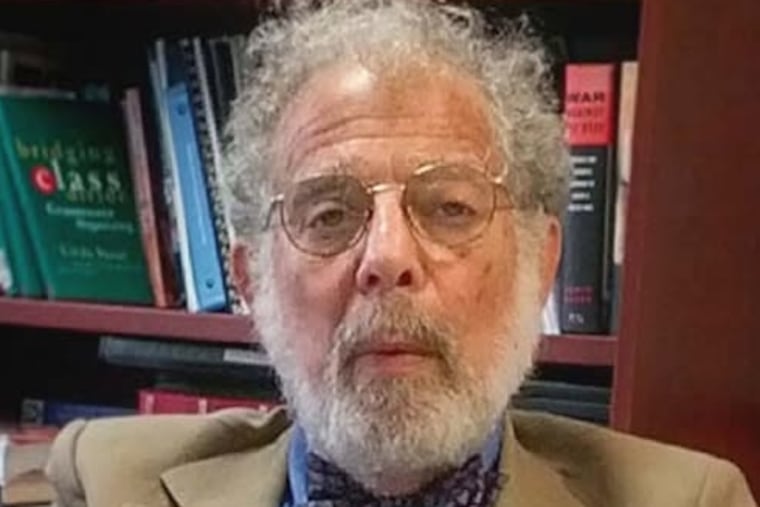
Fariborz Ghadar is the author of "Becoming American: Why Immigration Is Good for Our Nation's Future" and founding director of the Center for Global Business Studies at Penn State's Smeal College of Business
Fariborz Ghadar
is the author of "Becoming American: Why Immigration Is Good for Our Nation's Future" and founding director of the Center for Global Business Studies at Penn State's Smeal College of Business
With President Obama once again delaying executive action on immigration, we're back to the waiting game, the failed promises of possible votes instead of action.
But the immigration issue isn't one that should be pocketed by the hand of politics. For the sake of both native-born citizens and immigrants alike, it's one that we cannot afford to further delay.
While Obama claims his reasoning is because of heightened border activity this summer, it is simply an unsuitable mask for a political maneuver. This is politics at its worst, without regard to economic or human issues.
As a result, millions will continue to live in fear of deportation. Though I'm not advocating for illegal immigration, establishing a pathway to citizenship would economically benefit the United States. Last year, the White House released a report detailing how "earned citizenship for these workers would increase their wages and, over 10 years, boost U.S. GDP by $1.4 trillion, increase total income for all Americans by $791 billion, generate $184 billion in additional state and federal tax revenue from currently undocumented immigrants, and add about two million jobs to the U.S. economy."
Obama argued that he wanted to wait until reform was "more sustainable" and more citizens understood its benefits. But by delaying, he's simply put off the potential for Americans to begin witnessing its economic benefits through tangible means.
Moreover, as found by a Bipartisan Policy Center report, if the United States veers toward an enforcement-only reform, the kind that is currently supported by many Americans, the end result will be negative. Because the workforce would theoretically decrease by about 6 percent and markets would suffer, the United States could see an $800 billion increase in the federal deficit.
While reform involving a citizenship pathway is clearly advantageous, ideally the United States needs reform complementing current holes in our workforce - namely in the high-tech industry. As countries like New Zealand, Australia, and Canada actively recruit foreign talent, our country trails behind. Consider that nearly 50 percent of Canadian immigrants hold a high degree of education, whereas in the United States it's about 35 percent. This gap can be explained by Canada's immigration policies, which favor visa applicants with advanced degrees or work experience.
But the problem is not that the United States is incapable of attracting smart, educated individuals. As evidenced by the short, five-day application-filing period for H-1B visas (administered to those with a higher degree) for fiscal year 2014, intelligent foreign-born people obviously want to come to the United States.
Because employers frequently are the ones who apply for these visas, the short filing period is also indicative of an industry need for qualified workers. As stated by the Silicon Valley Leadership Group, "The more difficult it is to get H-1B visas, the more likely that jobs will go abroad because there is no American that fits the needed skill set."
Not only do highly skilled immigrants fill workforce shortages, but they also create jobs for native-born citizens. Within the last decade, immigrants helped create a fourth of our country's new technology and engineering companies. Additionally, for every 100 foreign students who receive an advanced science, technology, engineering, or math degree in the United States, 262 jobs are created.
Ultimately, for the United States to remain prosperous, we need to develop a culture and government that are not confined by the boundaries of polarization and party lines. We need to support candidates from all parties who favor immigration reform because, ultimately, America needs its immigrants.