Sielski: Hey, Sixers, don't celebrate yet
No one should celebrate his own deliberate inferiority. Someone should have reminded the 76ers of this. Having won the NBA lottery Tuesday night and acquired the first pick in next month's draft, the Sixers have reacted as if they won the NBA championship instead. On Wednesday, they held a rally on the steps of the Art Museum, complete with a dunk show by t
No one should celebrate his own deliberate inferiority. Someone should have reminded the 76ers of this.
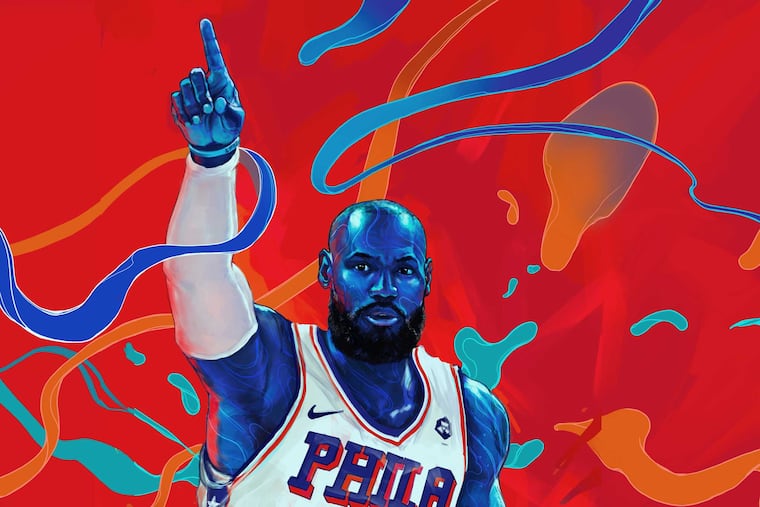
Having won the NBA lottery Tuesday night and acquired the first pick in next month's draft, the Sixers have reacted as if they won the NBA championship instead. On Wednesday, they held a rally on the steps of the Art Museum, complete with a dunk show by their team of acrobats, the Phlight Squad, and the unfurling of a gigantic banner that featured a blue Sixers jersey with a white No. 1 emblazoned on it.
Scott O'Neil, the franchise's chief executive officer, then embarked on a public victory lap, appearing on TV and radio to express just how excited the Sixers were during this exciting time of excitement, opening his suit jacket during one interview to reveal the team's colors on the inner lining, fast-talking his way around the harsh reality that the Sixers themselves chose to create.
Understand: The Sixers were right to carry out what has infamously come to be known as "The Process," their plan to accumulate high draft picks and assets in the hope of building an elite team in a top-heavy league. They wanted to lift themselves out of the swamp of so many 35-win seasons. It was a laudable goal, and this approach was the best, most promising way to do that, and it's understandable that those Sixers fans who supported the strategy are rejoicing over Tuesday's result. They're fans. They want their team to do well, and their team has a better chance now.
But for the Sixers themselves, The Process was always a necessary evil, a function of the NBA's perverse system of incentives and a free-agency policy that can leave a franchise crippled, and too many times the Sixers have publicly failed to regard it as such. The Process meant bottoming out. It meant three seasons of awful basketball, of personnel moves that might not pay dividends until sometime deep in the future. It meant a lot of long nights inside the Wells Fargo Center, for the team's coaches and players and the paying customers in the stands, and the Sixers are wrong, now that they have the No. 1 pick, to scoop up all that losing and all that embarrassment and nuzzle it in an unseemly embrace.
Neither O'Neil nor a Sixers spokeswoman responded to an email request for comment Friday, but even the architect of The Process himself, Sam Hinkie, recognized its inherent unpleasantness. He did not relish it. He rarely discussed it publicly. Before resigning as the Sixers' general manager and president in April, he lost 20 pounds during the 2015-16 season, just from stress and strain over the team's terrible record. He always acknowledged the difficulty of what he was doing, and above all, he always acknowledged the caveat that came with it: The whole thing might not work. Joel Embiid's foot might never heal fully. Jahlil Okafor might never learn how to play defense. Nerlens Noel might never learn how to play offense. Ben Simmons might never develop into another Magic Johnson. Brandon Ingram might never develop into another Kevin Durant.
In that context, it's worth remembering that the Sixers, while in an excellent position to become a better basketball team, haven't actually done so yet. Despite what that banner said, they are not No. 1. In fact, they were No. 30 - that is, by finishing 10-72 last season, they were the 30th-best team in a 30-team league. The Sixers did what they had to do, but they're acting as if they did what they wanted to do, and the distance between the two is too great to measure.
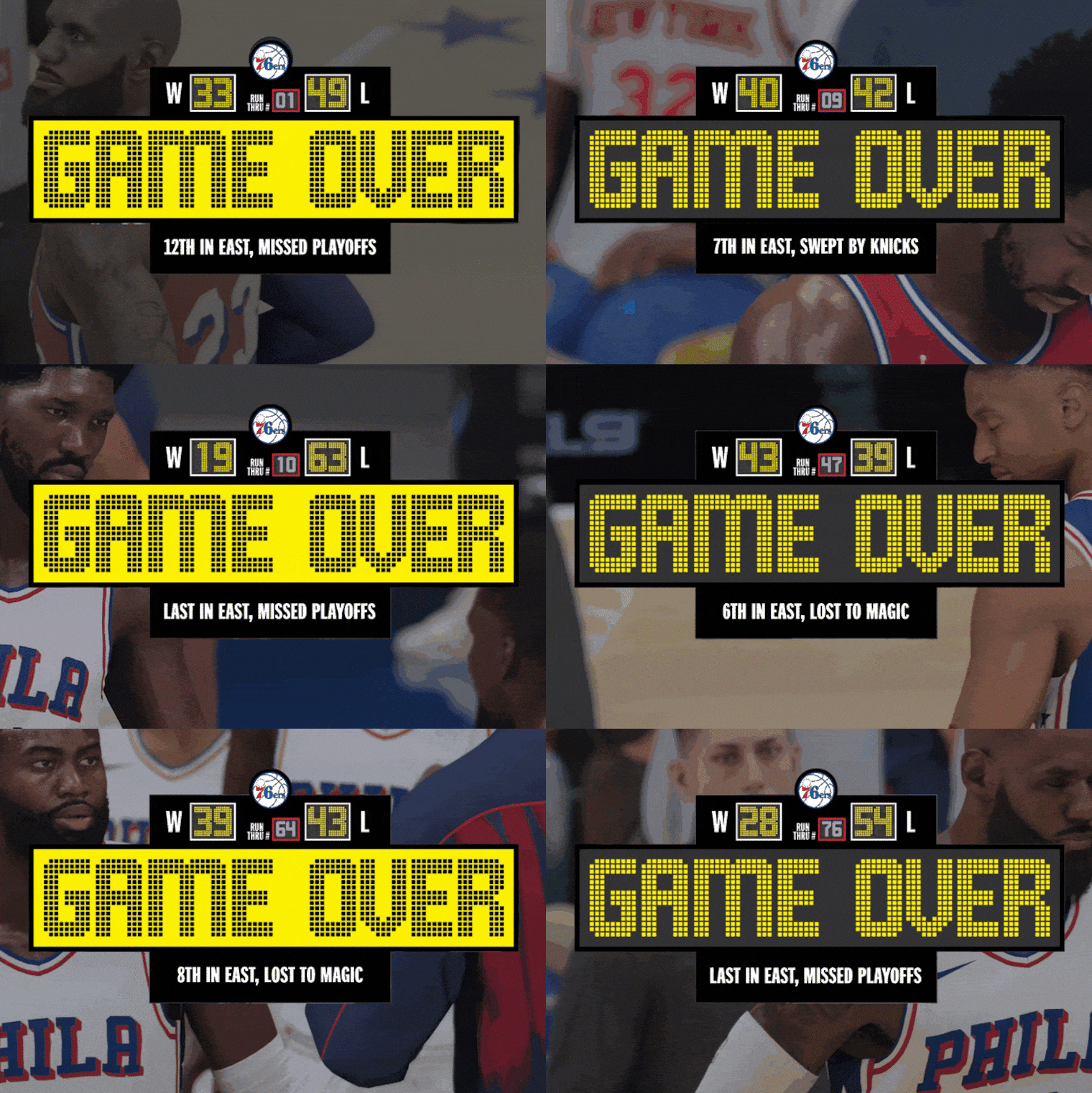
Truth be told, this sort of public pose, this refusal to pay even a small amount of lip service to the patience and the price intrinsic to this strategy, has been a problem for the franchise for a while. There was owner Josh Harris, telling reporters that the 2013-14 season, when the Sixers went 19-63, was a "huge success." There were all those videos and Vines that the team released in early 2015, showing Embiid dribbling a ball between his legs and throwing down a vicious dunk, tantalizing everyone with the promise of what was to come - a premature promise, as it turned out, given that Embiid ended up suffering a setback and sitting out the following season. There were O'Neil's words after a Rothman Institute event in November 2015, when he asked if those who questioned The Process's direction had "lost their [expletive] minds." There has been this incessant impulse for the Sixers to say, We told you so, before they had accomplished anything of true substance.
What they have done is given themselves a chance at excellence, a chance, and even that opportunity required three years of losing and ridicule that at times seemed interminable. The Sixers tanked. It was smart, it was hard, but it was never something to celebrate, at any stage. It was something to endure in relative silence, and no matter how much dancing the Sixers do now, nothing is over yet, and nothing has been assured. They would do well not to forget that, because, if their plan doesn't succeed, no one else will.
@MikeSielski