Sandberg is the silent type, but he will get his message across
In the beginning, a lot of people around here thought Charlie Manuel couldn't talk. It turned out he just couldn't speak the Queen's English.
In the beginning, a lot of people around here thought Charlie Manuel couldn't talk. It turned out he just couldn't speak the Queen's English.
Engage him in a conversation about hitting, Ted Williams, or some other aspect of the game he loved with every ounce of his being, and Manuel would launch into a country filibuster. You wouldn't want to diagram his sentences, but you sure didn't mind listening to them. His way became the right way for a franchise that accomplished so much during his tenure.
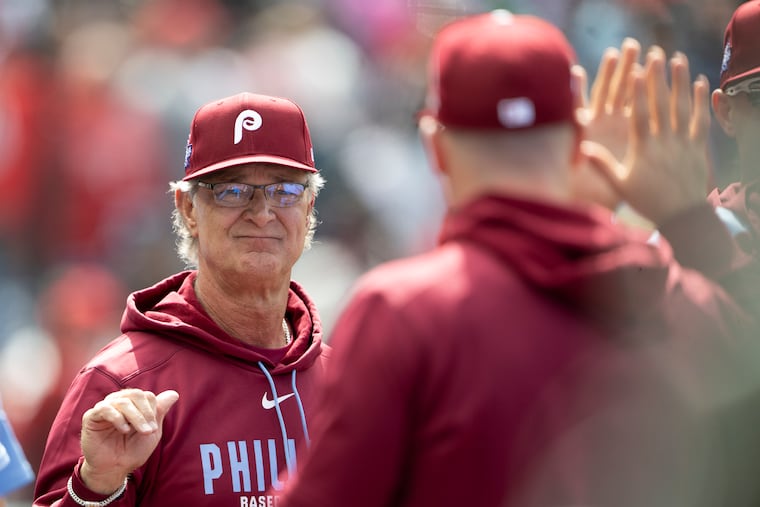
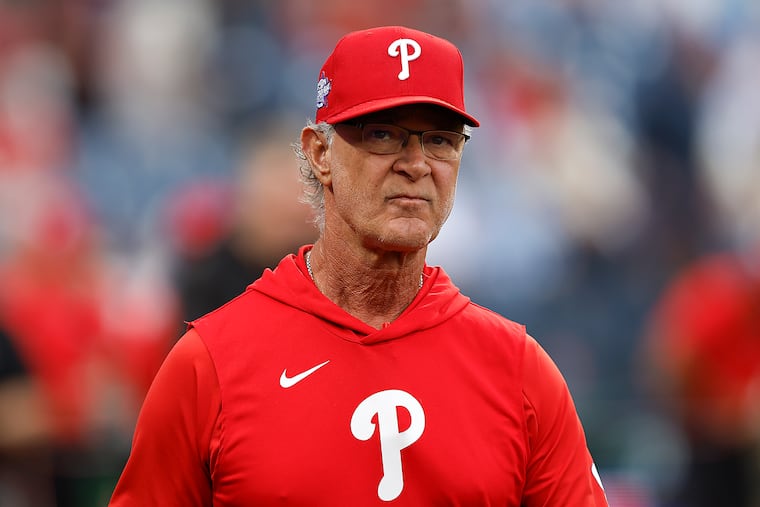
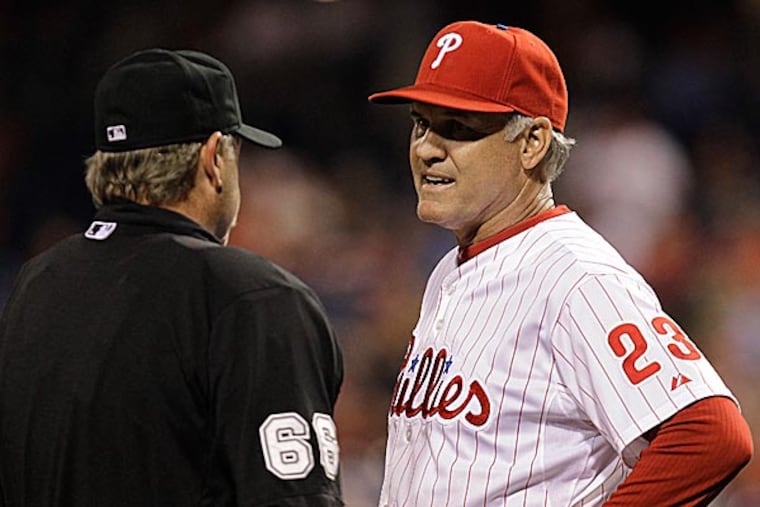
Ryne Sandberg, the man who replaced Manuel as the Phillies manager over the weekend, entered the job with a similar perception problem. He just wouldn't talk.
Consider this 1996 Sports Illustrated quote from Shawon Dunston, Sandberg's double-play partner for nine seasons with the Chicago Cubs: "People think we were tight just because we played together. Me and [Mark] Grace were tight. But me and Ryno? No way. All those years I lockered next to him, he probably said no more than 10 to 15 words to me a day. And most of those were on pop-ups. He'd say, 'You take it,' and I'd say, 'I got it.' "
A man of so few words might be just right for the Twitter generation, but Sandberg figured out long ago that if he was going to be serious about his pursuit of a major-league managerial job, he'd have to change. He laughed, in fact, when the Dunston story was relayed to him before he managed his fourth career game Monday night against the Colorado Rockies.
"I was one who took focus to another level," he said. "I was a guy who communicated with the first baseman and shortstop - 'I got it; hey, I'm over a little bit' - and it didn't go much beyond that. I did have a little fun in the locker room."
Barry Rozner, a former Cubs beat reporter who coauthored the book From Second to Home with Sandberg in 1995, said the Hall of Famer was misunderstood as a player.
"He thought baseball was very hard," Rozner said. "It took all his energy every day to prepare and play the game, so he didn't have a lot of energy to mess around or be great friends with anyone."
It would be difficult for Sandberg to have many regrets about a career that landed him in Cooperstown, but he admits to being a little too serious during his playing days.
"Yeah, I think I kept a lot of things in and I maybe didn't enjoy the game as much I could have," he said. "I enjoyed the game, but any time you talk and communicate and express yourself, you have a chance to have more enjoyment and relieve some stress. Also, you get closer to people . . . and that's what has happened with me since I retired."
Sandberg, 53, learned that he wanted to relay his knowledge of the game to the next generation of players during his nine years as a guest spring-training instructor for the Cubs. He figured out that he liked talking to the players, and he rightfully felt he was qualified to teach guys how to play baseball the right way.
A competition junkie, he realized that friendly rounds of golf and lucrative autograph-signing sessions weren't going to be enough to keep him happy into his senior years.
What he would have to shed was that label as a painfully quiet man that remained with him all the way through his six seasons as a minor-league manager. It still lingered Friday when he replaced Manuel as the Phillies' interim manager.
Quiet, of course, also can be misconstrued as aloof. Cold men can make good managers, but the Phillies weren't looking for the strong, silent type to replace Manuel.
"My concern was he wasn't going to be able to grow out of that to the point where he could argue with umpires and yell at players," said Dallas Green, the Phillies' special assistant who acquired Sandberg for the Cubs in the infamous 1982 trade with the late Paul Owens.
"He's still quiet, but he's not bashful to the point where you'd say he's a wallflower. He states his thoughts, he gives opinions, so it's not some dead deal."
That's an interesting choice of words about a man who grew up the son of a mortician in Spokane, Wash.
Sandberg has been charged with the job of restoring some life to a Phillies franchise that figures to be very young at some positions and very old at others next season. Yes, Sandberg will be here. You can forget about that interim title.
Reserves such as Kevin Frandsen and Erik Kratz have been outspoken about how well Sandberg's message got across to them when he was managing at triple-A Lehigh Valley. He helped both veteran minor leaguers get to the big leagues and remain there.
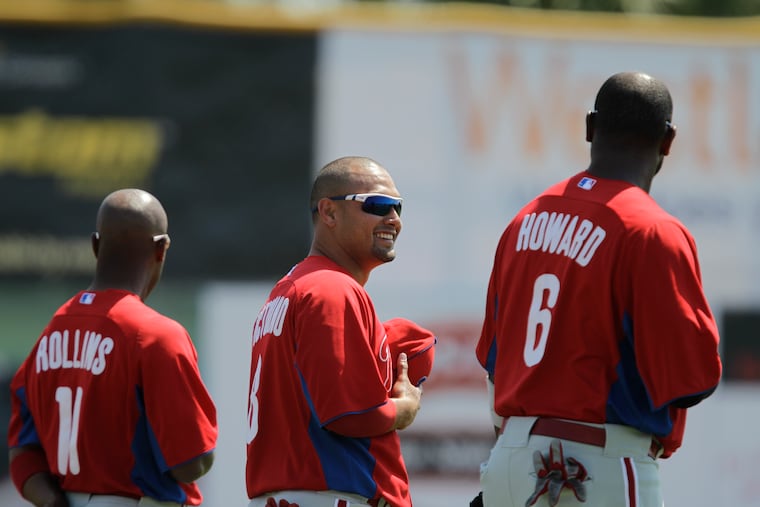
There's no question that Sandberg has a wealth of knowledge about the game. He made a lot of sense Monday as he talked about how he wants shortstop Jimmy Rollins to make some changes in his game, hitting the ball on the ground and up the middle more.
If he can get that point across successfully, he will earn a master's degree in communication.