A new commission risks embedding the gendered conceptions that have long subordinated military spouses
The military has long expected labor from military spouses — but treated their contributions as less valuable than those of soldiers.
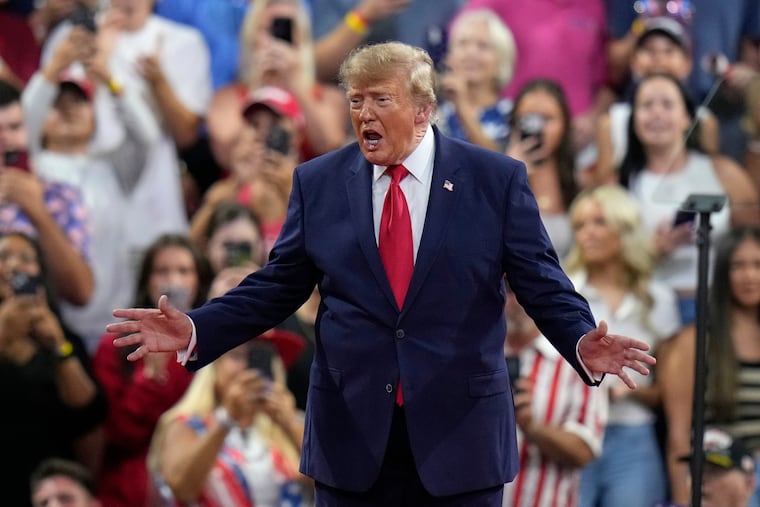
On Aug. 3, President Donald Trump established the President’s Military Spouse Commission. Chaired by Jennifer Hegseth, the wife of Defense Secretary Pete Hegseth, the commission will be comprised of over 20 military spouses of high-ranking officials — currently all women. The group will recommend policies to the president that address quality-of-life issues for military spouses, such as employment, childcare and housing.
Although these policies are aimed at benefiting military spouses in general, the commission’s composition follows in a longstanding tradition of gendering the work done by service members and their spouses — with the former more important and worthy of recognition than the latter.
Dating back to the Revolutionary War, military leaders have envisioned service members as men, and their spouses as women. The men’s heroism was valorized and compensated, while the crucial domestic and emotional labor that wives performed to ensure the military’s success was often credited to the service members themselves. Military leaders believed that this framework made soldiers more willing to endure the horrors of combat as a necessary part of their masculine identity.
In recent decades, as women have moved into all roles in the military and LGBTQ soldiers legally have been able to serve openly, this paradigm has been undermined. Yet, the all-female makeup of the commission, along with other recent initiatives by the War Department, suggests that the commission will mark a return to military policies that connect gender with labor to idealize the hypermasculine “warfighter.”
During the American Revolution, military wives, along with other women in camp, performed essential services for the Continental Army, including cooking, washing clothes and caring for the wounded. Their work was integral to the war effort, yet these women were only grudgingly accepted by military leaders. Continental officers lamented the women’s ragtag appearance as an embarrassment — though they sometimes provided the wives with pay and rations for their services.
Legally, married women were considered dependents of their husbands, who had the right to their labor. Military pensions reinforced these ideas by rewarding men’s work through the continued support of their supposed dependents. Sarah Osborn Benjamin, a young bride from New York, spent three years with her husband laboring for the army. Yet, when he died in 1837, Benjamin received a widow’s pension for her husband’s service, not for the labor she had performed.
In the rare cases when women did receive pensions for their service, it simply reinforced the idea that military labor was masculine and worthy of compensation, while the support services typically provided by women was the work of dependents.
During a battle in November 1776, Margaret Corbain took over the fighting duties of her dead husband. She was injured and captured by the British but later released. In appreciation of her service, her regiment’s officers petitioned for her to receive a pension, which she received. The crucial detail here was not that Corbain was a woman, but that she had labored like a man.
These patterns only intensified during the 19th century. By the time of the Civil War, most spouses sustained the army through labor far from the battlefield, further dividing soldiers’ duties and the support work performed by their spouses. While men labored on fortifications, marched to battle and fought valiantly in combat, women tended to farms and households (including the management and oversight of enslaved people) and sent care packages that provided the resources soldiers needed to sustain themselves.
A small group of women worked directly for the army in camp, primarily as nurses, laundresses and cooks. The exigencies of war had forced the military to make this concession. Still, the military classified women’s domestic labor as less valuable than nursing — even though the lines between jobs often blurred as women stepped in where needed.
Susie King Taylor, a formerly enslaved woman, traveled extensively with her husband, an officer of the 33rd United States Colored Infantry. Taylor washed clothes, nursed wounded soldiers and taught formerly enslaved people to read and write — all without receiving any pay. After Congress passed the Army Nurses Pension Act, which granted pensions to women who had been nurses, Taylor applied for a pension. She was denied on the grounds that she had been listed as a laundress, not a nurse.
This technicality hindered many women from earning a pension, as they had to provide credible witnesses to testify to their nursing work. This obstacle was especially prohibitive for formerly enslaved women whose work was more closely scrutinized. Nursing could be accepted as work commensurate with soldiering, but domestic labor was not.
In the 20th century, American wars moved overseas. The two World Wars required massive mobilization of men, who were largely sent to Europe or Asia to fight.
With spouses on different continents, the military paid more attention to the morale of both spouses. Yet, these efforts were highly gendered, and made clear which spouse was more valued. Instructional material aimed to persuade military wives that their job was to “make do” and sacrifice, in the service of providing their husbands with a reason to fight.
In the 1942 Army Woman’s Handbook, Clella Reeves Collins felt it was “unnecessary to state” that women, especially military wives, should give as much time and support to the war effort as possible. This guidance made it clear that the state expected wives to voluntarily perform domestic labor. The government, however, wouldn’t compensate them for these efforts — however essential they were to the war effort. Military policies and guidance left no doubt that women’s roles were subordinate to the work of the men fighting overseas.
Emotional labor was an important part of this job. Collins wrote that “much of the burden [of being a soldier] is lightened by a cheerful attitude and encouragement at home.” She urged military wives to elevate the feelings of servicemen over their own. Collins taught wives to stifle any negative emotions when they interacted with their husbands — reinforcing the gendered expectation that women should bear the emotional burden of a military relationship.
This labor continued even when a spouse was deployed. Magazines, handbooks and government posters all pushed women to keep up a positive and constant stream of communication. Columnist Mary Lee Smith, who edited a “Soldier’s Letter Box” column in a Black newspaper in Cleveland, counseled women to make the man “feel that he is still a mighty important person in this world — especially to a certain girl back home.”
Most of all, the military expected wives and girlfriends to avoid sending infamous “Dear John” letters, in which they broke off a romantic relationship with a soldier overseas. Soldiers and military officers saw these letters as more lethal than enemy bullets, causing emotional injury that threatened the well-being of the serviceman and the efficacy of military operations. The hatred generated by women choosing to exit a relationship exposed how the presumption of female support underpinned martial manhood.
During the Cold War, military spouses returned to serving in proximity to the army. Often tasked with the majority of childcare amid frequent moves, spouses struggled maintaining outside employment. Accordingly, many of them spent their time laboring for the military, whether they were making sure dinner was on the table or volunteering in the military community. Officer’s wives also were expected to entertain and socialize appropriately, or risk jeopardizing their husband’s career.
Yet, despite these expectations, the military didn’t value women’s services as labor — as seen in the cases of divorced women who did not receive any benefits.
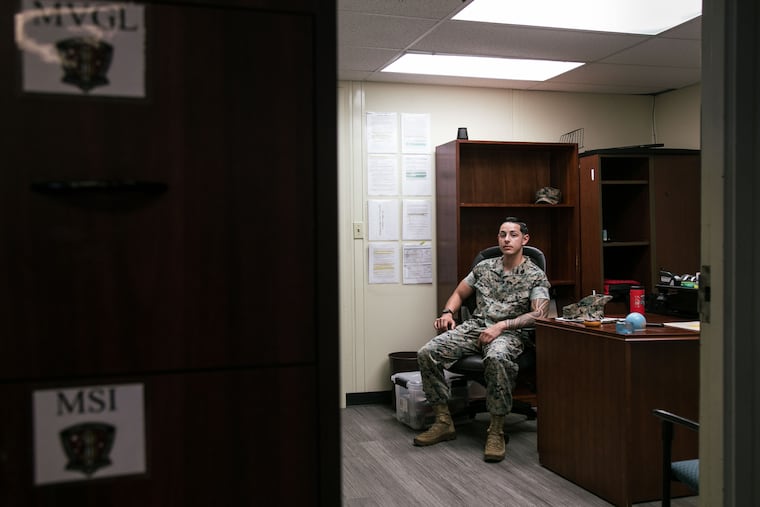
Today, military spouses, now a more diverse group, still shoulder a large workload, one that traditionally has been expected given their status as a dependent of the service member. Straight civilian women are still the biggest category of spouses, corresponding with the large number of straight men in military. Many servicewomen marry servicemen, creating a dual-military household. The question of who performs the necessary domestic and emotional labor poses new complexities.
The executive order creating the military spouse commission continues to see a connection between the labor of military spouses and warfare. It claims that military spouses are “intrinsically linked” to the effectiveness of the military. It’s the very same idea that underpinned the gender binaries of the past, which allowed the military to leverage romantic relationships as sources of labor.
By treating the labor of spouses as different and, implicitly, less valuable than the work of service members, the military has long celebrated perceived masculine values like aggression and bravery while diminishing perceived feminine values of care and support. This has not only shaped the operation of the military, but it has rippled into civil society as well.
To truly help military families, the commission can’t simultaneously expect the labor of military spouses, while treating it as subordinate to soldiering, as the government has throughout American history. Doing so risks alienating not only military spouses, which could affect recruitment and retention, but the American people as well.
Margaret G. Matheson is a PhD student in history at the University of Virginia
Made by History takes readers beyond the headlines with articles written and edited by professional historians. Opinions expressed do not necessarily reflect the views of The Inquirer.