Unaffiliated voters are the fastest-growing group in Pennsylvania. They can decide who controls Congress.
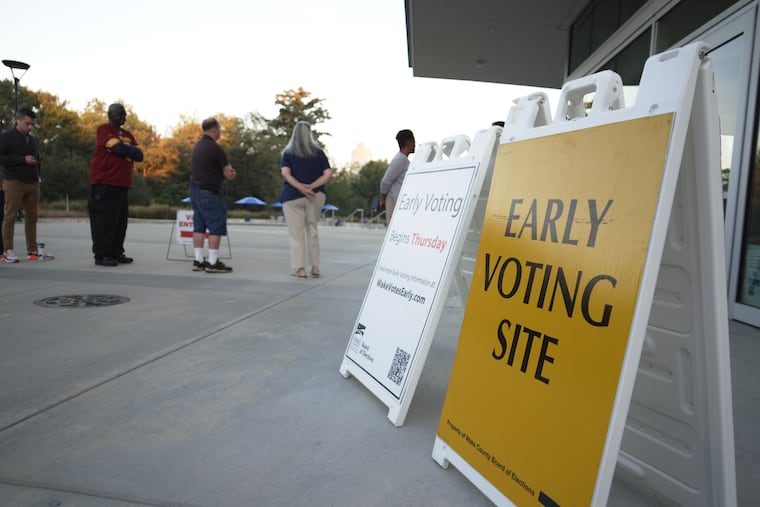
Roughly 78,000 Pennsylvanians have registered as unaffiliated in the last 12 months. These voters will wield huge power in Tuesday's election.
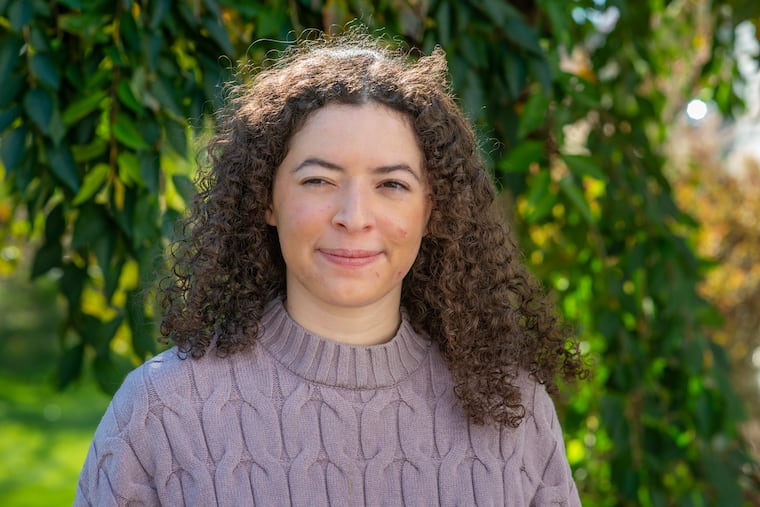
Lacey Bachart is caught in the vast gulf between the nation’s two major political parties, neither of which is appealing to her to join.
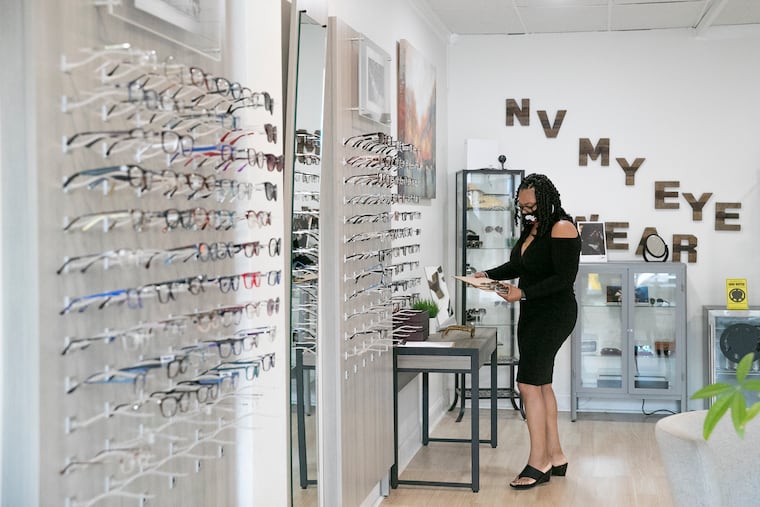
“Money hungry, I see that on both sides,” said Bachart, who is legally blind and works at Wawa part-time. “They get power and say they’re going to do this and that, and it just does not happen.”
Two years ago, Bachart, a 22-year-old Sellersville resident, decided not to register with either major political party. She is one of 1.2 million unaffiliated voters in Pennsylvania, the fastest-growing group of voters in both the state and her Bucks County-based congressional district. Roughly 78,000 Pennsylvania residents registered without a political affiliation in the last year alone.
Bachart and other unaffiliated voters are poised to decide the outcomes of four hotly contested congressional races on Tuesday, including the 1st Congressional District, where she lives.
These voters have outpaced new Democratic and Republican registrations in each of the four swing districts.
And while they represent a smaller share of the state electorate than Democrats and Republicans, their total is four times larger than the gap in registered voters between the major parties. (There are 230,000 more voters registered as Democrats than Republicans in the state.)
What this means is that unaffiliated voters have never been more important to swinging the vote in places like the 1st District.
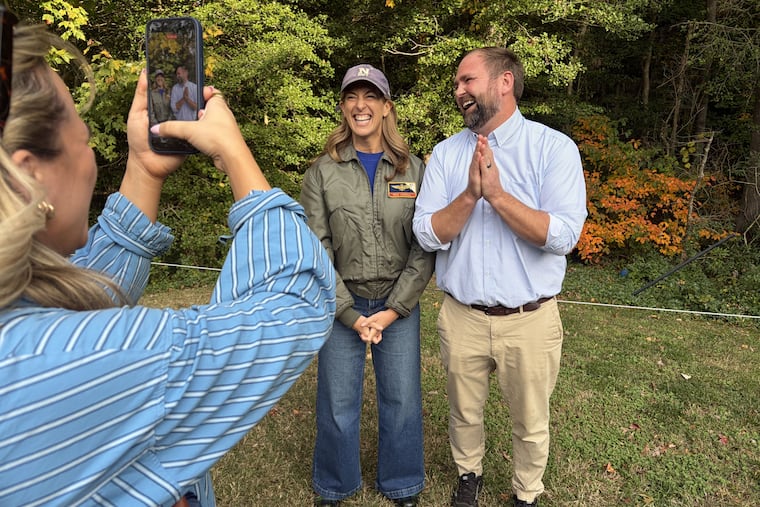
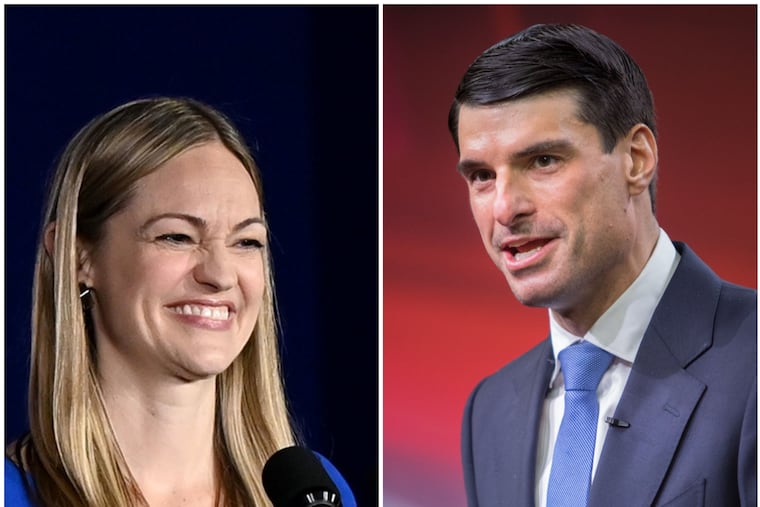
There, Republican U.S. Rep. Brian Fitzpatrick and Democrat Bob Harvie, a county commissioner, are competing in a race that could be decided by a few thousand votes.
Bachart said she is leaning toward Harvie as Election Day approaches, hoping to put a check on President Donald Trump.
“I think it’s time for a change. We’ve had Brian Fitzpatrick for a while, and I’m a huge disapprover of Trump,” she said. “I don’t think Brian Fitzpatrick is a huge disapprover of Trump, as much as he says he might be.”
Outpacing both parties
Over the last year, according to an Inquirer analysis, Republicans lost about 900 voter registrations in the 1st District, and Democrats added about 3,100 voters after a renewed focus on voter registration efforts.
But 5,400 new voters in the district have registered as unaffiliated since October 2025, outpacing both parties combined.
Now, there are about 84,000 total unaffiliated voters in the 1st District — 14.6% percent of the electorate. That is more than nine times the difference between Democrats and Republicans in the swing district, where the GOP currently holds a roughly 9,000-voter advantage.
And in the extremely tight race, Harvie narrowly leads Fitzpatrick by 2 percentage points in an Inquirer/New York Times/Siena poll released last Sunday. But when it comes to independents, Harvie and Fitzpatrick are tied.
Understanding what drives these ideologically diverse voters, however, is complex.
Like Bachart, they tend to be younger than those registered with a party. Statewide, the median unaffiliated voter is 39. That is 11 years younger than the median Democrat and 16 years younger than the median Republican.
Regardless of age, many unaffiliated voters are driven by their dissatisfaction with the two major parties and the status quo.
Joseph Macary, 79, an unaffiliated voter who lives in Doylestown, said he is “fed up” with everyone in politics.
The son of a Christian Arab immigrant from Lebanon, Macary said he inherited his father’s view that regardless of who occupied the White House, U.S. policy in the region has failed Arab people.
“What’s been going on [in the Middle East] drives me crazy,” Macary said.
Though he plans to vote for Democrats, Macary said, Harvie does not necessarily inspire him. “I have no real views on him,” he said. “But I’ll probably vote for him anyway.”
Fitzpatrick, on the other hand, “sides too much with Trump, who’s a lunatic,” Macary said. (The incumbent votes with Trump and Republicans less than any other House Republican, though it is still about 70% of the time, an Inquirer analysis found).
“Even if he’s against Trump, his voice is drowned out among Republicans. His vote is meaningless,” Macary added.
In addition to voters officially registered as unaffiliated, many in Pennsylvania who are still registered as a Democrat or Republican no longer feel a deep attachment to their party. Their registration is not keeping up with their ideology.
Bryan Canonica, an IT consultant from Southampton, is registered as a Republican but identifies as an independent voter. He plans to vote for Harvie, the Democrat, in the 1st District race, though it is more of a snub to Fitzpatrick.
“He’s just been in office too long,” Canonica, 46, said. “And he’s too close to Trump, even if Fitzpatrick voted against him sometimes. We need a shake-up.”
Meanwhile, Zbigniew Chrzanowski, 63, a registered Democrat in Newtown who identifies as an independent, plans to vote for Fitzpatrick.
Chrzanowski, a former member of Poland’s parliament who became a U.S. citizen in 2006, has come to know Fitzpatrick personally. He appreciates the congressman’s support for Ukraine amid its war with Russia.
Fitzpatrick, he said, “is trying to be independent from the psycho [who] is in the White House right now,” referring to Trump.
The fight for unaffiliated voters
One of the only Republicans to publicly admit he did not vote for Trump in 2024, Fitzpatrick told The Inquirer during one of his last campaign rallies that his closing message to voters in one of the most purple districts in the nation is “I’m one of them.”
“Nobody’s questioning my independence. And there’s no member of Congress, Democrat or Republican, that is more independent than I am,” he said in a separate interview.
He also said he would “100%” register as an independent if it were not for the closed primary system, which prevents unaffiliated voters in Pennsylvania and seven other states from casting their ballots in primaries. The five-term GOP lawmaker, who has not campaigned with Trump this year, introduced the Let America Vote Act to allow unaffiliated voters to participate in primaries for federal elections.
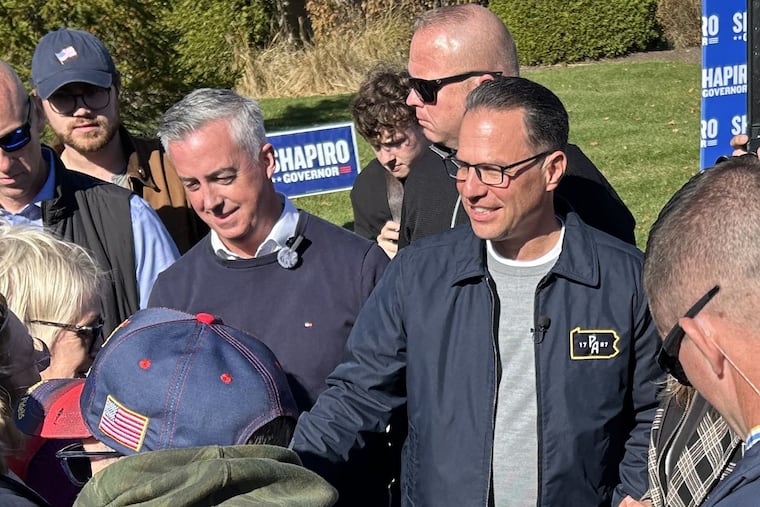
Harvie has not shied away from his Democratic bona fides, campaigning with Gov. Josh Shapiro and other party leaders, but he said in an interview with The Inquirer that he believes his voting record on the Bucks County Board of Commissioners, which is composed of two Democrats and one Republican, speaks to his independence. He pointed to votes on mental health, public safety, and sustainability issues.
“All those things have been done in a bipartisan way, and I think people recognize that,” Harvie said.
Eugene DePasquale, chair of the Pennsylvania Democratic Party, said he sees the growing trend of unaffiliated voters across the nation and believes it is the party’s job to show them why they should become Democrats.
“I think there’s still a chunk of people that want to make sure that we prove that we’ve heard them, we’ve heard their concerns, and we’re ready to deliver,” he said. “What hopefully we’re going to have in November will give us the opportunity to show people we’ve gotten the message and we’re going to deliver.”
Since DePasquale took over as state party chair, Democrats have reversed a downward trend on registrations, solidified their statewide lead, and outpaced Republicans, including in the vote-rich Philadelphia suburbs.
Meanwhile, the Pennsylvania GOP’s executive director, James Markley, said Fitzpatrick’s record will sway unaffiliated voters in Bucks and Montgomery Counties on Election Day.
“When independent and unaffiliated voters go to the polls, we believe they base their votes on job performance, real results, and a desire for pragmatic solutions,” he said in a statement.
Changing the entire system
If unaffiliated voters want real change, they should stop voting for the two parties and forge their own path, said Chris Gambino, a 39-year-old unaffiliated voter in Doylestown who is mounting an independent campaign for a state House seat.
“It is very clear to me that both parties care solely about power and fundraise based on outrage,” he said. “There’s very little desire to find common ground and solutions, and that’s problematic to me. That’s not the world I want to live in.”
There is no independent candidate in the 1st District race, but there will be independent options lower on the ballot in some races.
Gambino is running outside the two-party system to represent the 143rd state House district, which includes parts of Bucks County. Gambino, a former Delaware Valley University professor who now researches agriculture funding, is facing GOP State Rep. Shelby Labs and Democrat Tim Hayes, who works for an environmental advocacy group and previously served as the president of the Dublin Borough Council.
But as a voter, Gambino is facing a binary choice in the 1st District race and has not yet decided whom to cast a ballot for.
Fitzpatrick, Gambino said, “seems pretty happy being embedded in the Republican Party.” But in examining Harvie’s positions and record, he said, he is asking: “Is this person going to be able to vote against their party line if the time comes?”
Gambino said true democratic representation can get lost in a system that props up two parties.
“We are beholden to whatever the party says and does, and then we lose the ability to be accountable,” he said.
It is a message that resonates with Bachart.
Bachart, who lives on disability in addition to her Wawa income, said her voice and others in the disability community often get overlooked as parties focus on winning, rather than serving the needs of everyone in the community. It is one reason why she has not affiliated with a party.
“We struggle to survive even when the entire country as a whole isn’t struggling to survive,” she said.