Philly’s state lawmakers will still push to close a tax loophole requested by Mayor Parker, as Pa. budget talks move along
Pennsylvania's budget negotiations are "much further along" than last year, top legislative leaders said, as other potential sticking points emerge ahead of the June 30 budget deadline.
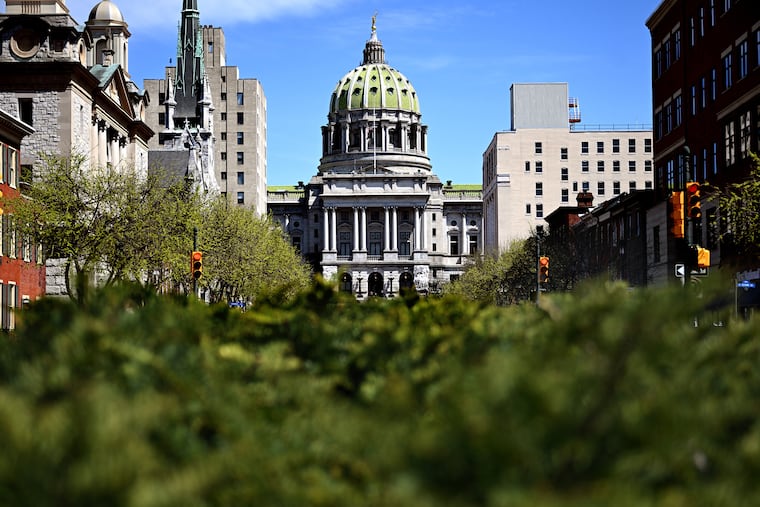
HARRISBURG — Pennsylvania lawmakers could still deliver additional revenue to Philadelphia, even after City Council last week largely rejected Mayor Cherelle L. Parker’s proposed tax increases for the next fiscal year.
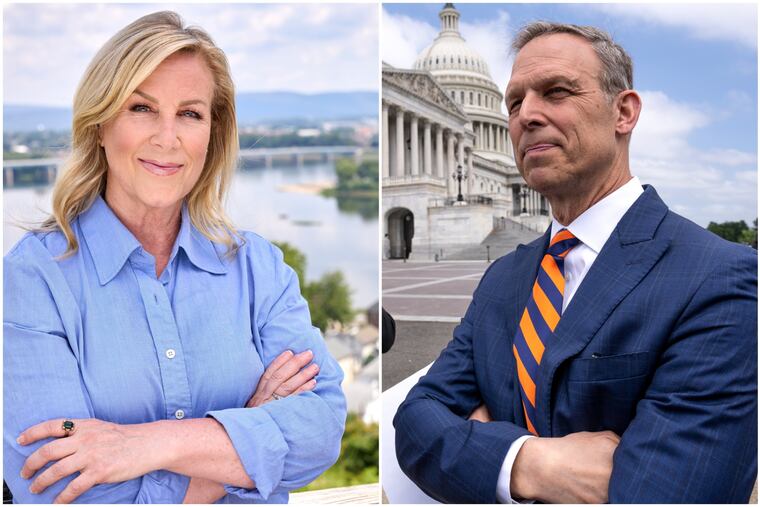
Philadelphia’s powerful House delegation to Harrisburg will push state lawmakers to close a loophole that allows online sellers to avoid paying Philadelphia’s 2% sales and use tax, its chair, Democratic Rep. Morgan Cephas, said Tuesday, as legislative leaders seek a quick state budget deal in a consequential midterm election year.
The tax would be exacted on online sellers based outside the city selling goods to Philadelphia customers, including retail giants such as Amazon. Currently, sellers outside the city have to collect only the 6% state sales tax.
The proposal — estimated to generate an additional $1.5 million for the city — would require authorizing legislation to be passed by the state and signed by Gov. Josh Shapiro.
When asked about the Philadelphia delegation’s effort to revive one of Parker’s tax proposals — albeit the one that would generate the least revenue for the city — Joe Grace, a spokesperson for Parker, said it is a “technical amendment.”
That development comes as top lawmakers are in closed-door budget negotiations trying to find additional revenue to close the state’s deficit, where Pennsylvania is expected to spend more than it brings in this fiscal year and in the future, ahead of the constitutionally required June 30 deadline. Legislators often blow past that deadline, with last year’s budget agreement stretching nearly five months after talks stalled over mass transit funding and resurfaced Pennsylvania’s rural-urban divide.
Here is a look at the status of state budget negotiations, what Philadelphia’s delegation wants in a final budget deal, and the potential sticking points as the deadline draws nearer.
Talks are ‘further along’ — in a big midterm year
Senate Majority Leader Joe Pittman (R., Indiana) said in an interview last week that legislators are “a lot further along” in their budget negotiations than they were at this point last year, but still have more to do to rein in spending.
Other top legislative leaders echoed a similar hope that budget talks will not draw out into another monthslong impasse during the midterm election year in Pennsylvania’s split legislature, where Democrats hope to ride an anticipated blue wave to gain seats in both chambers while Republicans hope to stave it off and maintain control of the state Senate.
“There’s nothing like a political wave to help politicians focus,” said House Majority Leader Matt Bradford (D., Montgomery) in an interview last week.
All 203 state representatives and half the Senate are up for reelection this year. Additionally, Shapiro is seeking a second term and is hoping to flex his political muscle to bring Pennsylvania Democratic wins in Congress and at the state level.
Shapiro proposed a $53.2 billion budget earlier this year, which would be a 6.2% spending increase over last year and would largely rely on the state’s Rainy Day Fund and new revenue streams from skill games and adult-use cannabis to help fill a $4.6 billion budget hole. The state House in April passed Shapiro’s budget as introduced, though the final product will be struck in closed-door meetings involving Pittman, Bradford, and Shapiro. The three negotiators may call on additional leaders to join the budget talks in the state’s tightly divided legislature, where Democrats hold a one-seat majority in the House and Republicans control the Senate with a three-seat majority.
In previous midterm election years, the electoral pressure has sped up negotiations, as legislators want to bring home results to their constituents before they return to the campaign trail in a year when the governor’s mansion and control of the state House and Senate are on the line.
‘An opportunity to regroup with Council and regroup with our mayor’
Philadelphia’s delegation to Harrisburg, made up of 25 lawmakers representing parts of the state’s most populous city, will take up Parker’s requested sales tax loophole closure, in addition to any other requests from City Council once the city’s budget receives final approval on Thursday, Cephas said.
“City Council hasn’t finalized their budget just yet. So we are paying close attention as to what is the final product that gets across the finish line, and then we look at it, look at it as an opportunity to regroup with Council and regroup with our mayor to see where we are and where there’s still gaps that would potentially fill,” Cephas added.
» READ MORE: The downfall of Mayor Parker’s tax on Uber was her biggest legislative defeat to date. Here’s what went wrong.
As part of several proposals meant to juice revenue from gig economy companies, Parker requested the city’s sales tax loophole be closed in her budget pitch in March.
Closing the loophole, however, was an easier sell in Harrisburg than Parker’s efforts to raise taxes on city hotels and short-term rentals, which would have also required state legislative approval.
Last week, sources close to state budget negotiations told The Inquirer there was no interest in raising taxes in Philadelphia as Parker had proposed, even on big tech companies, in an election year. Shortly after, any support appeared to evaporate in City Council for Parker’s proposed taxes on hotels and rideshare services to fund homelessness-prevention programs and help plug the Philadelphia School District’s $300 million structural deficit.
Shapiro previously said he was uninterested in raising any taxes, and has boasted about cutting taxes in past budgets.
Shapiro’s office did not immediately respond to a request for comment.
Cephas said Philadelphia’s statehouse delegation is also focused on continuing to increase public education funding through the state’s new adequacy formula, expanding a popular student-teacher stipend program, and increasing funding to improve school facilities.
The delegation — which includes Democratic legislative leaders such as House Speaker Joanna McClinton and House Appropriations Chair Jordan Harris, who are involved in budget talks — will also push to expand a working families tax credit, a childcare tax credit, and an increase to the state minimum wage from its current $7.25 per hour, Cephas said.
Potential sticking point: Skill games and gaming expansions
The big unknown in Pennsylvania’s Capitol is whether lawmakers this year will finally address skill games and other gaming expansions in the state as an effort to raise additional revenue.
Skill games are slot-machine look-alikes that have proliferated around Pennsylvania and, despite coaxing from Shapiro to tax them at a much lesser rate than the hefty 52% levied on slot machines, remain unregulated and untaxed by the state. Shapiro estimated that taxing machines at the same rate as slots would generate $765.9 million in its first year.
A case is before the state Supreme Court to determine whether the machines found in restaurants, corner stores, and bars are legal — and distinct from other gambling devices.
The deep-pocketed skill games lobby had long been an ally of the Senate GOP until recent years, when Republicans considered a higher-than-desired tax on the industry that the lobbyists claim would hurt small businesses. The relationship eroded further last month when a conservative group tied to the skill games lobby helped fund three unsuccessful primary challenges to Republican state senators.
» READ MORE: As Pa. gets closer to regulating skill games, these lawmakers say they’re being subjected to an intimidation campaign
Now, top GOP lawmakers say they are awaiting the court ruling before they decide how to tax the devices.
Another emerging form of gaming that could require state regulation would be prediction markets like Kalshi or Polymarket, which allow users to place bets on the outcome of events, including elections. Pittman said he wants federal lawmakers to regulate the new industry, while House Minority Leader Jesse Topper (R., Bedford) said “it will need to be addressed.”
“Prediction markets, to me, seem to be a whole new world,” Pittman said last week. “That is something that the federal government really needs to grab onto in a very consistent manner to make sure that you have consistent policy nationwide on that front.”