Pa. state lawmakers won’t back Mayor Parker’s tax hikes, jeopardizing key pieces of her budget proposal
The development out of Harrisburg is an eleventh-hour setback for the mayor ahead of a planned City Council vote this week. The major sticking point — her $1 rideshare fee — remains up in the air.
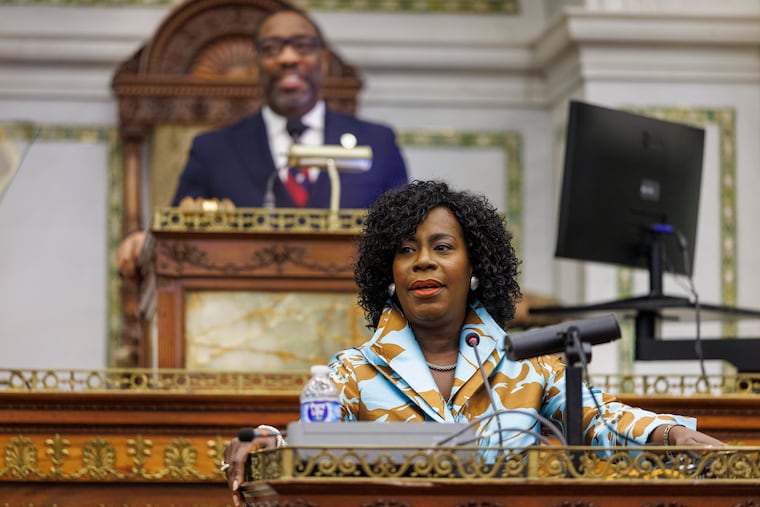
HARRISBURG — Pennsylvania legislative leaders signaled late Tuesday that they would likely not approve new tax increases associated with Philadelphia Mayor Cherelle L. Parker’s budget proposal, dealing a blow to the mayor ahead of a key City Council vote on her spending and revenue plan.
According to three sources with knowledge of the backroom negotiations among state leaders, there are not currently enough votes in either chamber of the split state legislature — where Democrats control the House and Republicans control the Senate — to raise the city’s hotel tax.
Parker, a centrist Democrat, had proposed increasing taxes on hotels and short-term rentals, like those reserved through Airbnb and Vrbo, to generate about $15 million a year to fund homelessness-prevention programs.
Any increase in the city’s hotel tax requires approval from both City Council and the General Assembly in Harrisburg, and authorizing legislation must be signed by the governor. But sources said that as Parker has looked to win over Council members ahead of an expected vote this week, she has yet to garner enough support to raise taxes in the state House, even among Democrats.
The hesitance from the General Assembly could also spell trouble for Parker’s proposal to close a sales tax loophole that allows online retailers to sell goods in Philadelphia without charging the city’s 2% sales tax.
» READ MORE: Philly Mayor Cherelle Parker wants big tech companies to pay up. With the clock ticking, she’s meeting resistance.
One source close to the state-level negotiations, who requested anonymity to speak freely about private dealings, said there is “little appetite for tax increases” in this year’s consequential midterm elections, when all 203 state representatives and half of the 50-member Senate is up for reelection.
Democratic Gov. Josh Shapiro is also in the midst of a reelection campaign and frequently boasts his support for tax cuts to the state’s corporate net income tax, among other levies. His office did not immediately respond to a request for comment Tuesday.
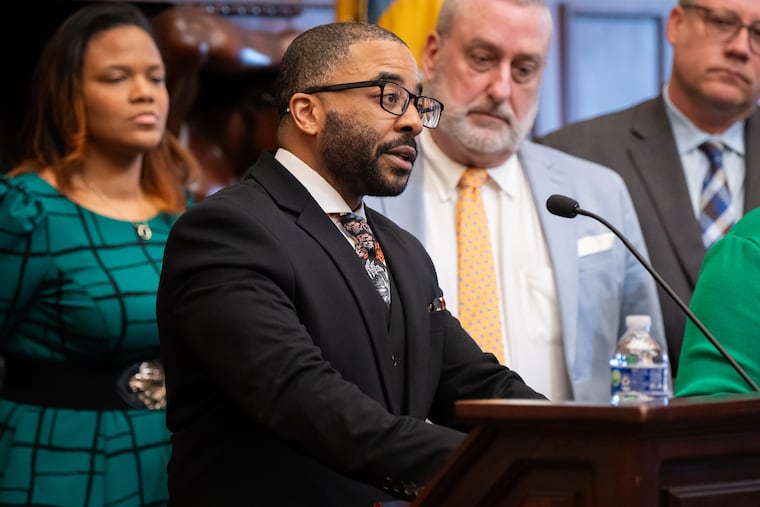
Rep. Morgan Cephas (D., Philadelphia), who chairs the city’s delegation to Harrisburg, said lawmakers had yet to receive a final proposal from Parker, adding that “it’s still relatively early, particularly in our time frame in Harrisburg.” Pennsylvania has a June 30 budget deadline ahead of the new fiscal year, but state lawmakers often blow past it without consequence.
A spokesperson for Parker did not respond to a request for comment.
» READ MORE: Mayor Parker turns to Harrisburg — and GOP allies — to make her budget priorities work
The developments out of Harrisburg came just hours before Philadelphia City Council was scheduled to convene Wednesday morning for what is expected to be around-the-clock negotiations on Parker’s spending plan. The biggest sticking point remains the mayor’s proposed $1-per-ride tax on rideshare services to generate millions of dollars in funding for the School District of Philadelphia.
That tax would need approval by City Council — where members have been skeptical — but it does not require authorization from Harrisburg.
Council members are expected to give preliminary approval to a budget this week, when lawmakers must greenlight a funding plan for it to be fully passed by the start of the new fiscal year on July 1.
The hotel tax had been one of several sticking points between the administration and Council. Parker had initially proposed raising it by 2 percentage points, to go from 15.5% to 17.5% — one of the highest hotel taxes in the country. That increase would have applied equally to hotels and short-term rentals.
But last week, after conversations with leaders of the city’s hotel industry, Parker announced that she revised her proposal to instead increase the tax on hotels by just 0.6% and instead raise the tax on short-term rentals by 6%.
It is unclear if Parker will look for another way to fund her homelessness-prevention agenda. She has said her goal is to add about 1,000 beds to the city’s stock of shelter spaces, and her administration is looking to expand behavioral health and drug recovery offerings for people who are housing-insecure.
Parker’s proposed tax on rideshare services is the provision of her budget that has been by far the most controversial.
The Parker administration estimates that her rideshare tax would generate about $50 million a year to help the School District of Philadelphia stave off planned staff cuts amid a $300 million budget deficit. On Tuesday, a bevy of school advocates and labor leaders rallied outside City Hall in favor of the tax, saying that the planned staff cuts could be “devastating” for students.
Uber, which has waged an aggressive campaign to oppose the rideshare tax, has asked lawmakers to reject Parker’s proposed city tax and instead raise an existing 1.4% tax on rideshare in Philadelphia, which is levied by the state-run Parking Authority. The alternative proposal would require approval from Harrisburg, but city officials have indicated that traction on that plan sputtered.
“Nobody from the state has come to me and said, ‘This is something we’re willing to carry in Harrisburg,’” Council President Kenyatta Johnson said last week.
» READ MORE: Uber pitches alternative to Mayor Parker’s $1-per-ride tax as City Council searches for an exit ramp
Before she was elected to City Council and eventually mayor, Parker spent 10 years as a state representative and she has highlighted her experience as a lawmaker there as evidence of her ability to navigate Harrisburg’s bureaucracy.
The mayor has made intergovernmental coordination a key focus of her administration, and she ran for office in 2023 on a promise to maintain close ties with officials in Harrisburg and Washington.
Last week, Parker met in City Hall with some members of the Philadelphia delegation in the General Assembly. But sources said she failed to win over enough Democratic members of the state House to advance her tax plan, meaning she struggled to coalesce support even among members of her own party.
Parker, who cut deals with top GOP leaders when she was a state representative, had tried this year to woo top legislative Republicans to support her tax increases, calling Senate President Pro Tempore Kim Ward (R., Westmoreland), Majority Leader Joe Pittman (R., Indiana) and Sen. Joe Picozzi (R., Philadelphia) “amazing allies” in an interview earlier this year.