Philly’s crowded, costly, and combative 3rd Congressional District race is coming to an unpredictable close
How the candidates spent the final days of the campaign offers a window into the demographic and geographic blocs they think they need to prevail on Tuesday.
For the better part of the last year, three people with their hearts set on representing Philadelphia in Congress have crisscrossed the city, pitching their visions to church congregations and community organizations and cocktail parties teeming with donors.
And in the final hours before Democratic voters on Tuesday decide who they want to represent Pennsylvania’s 3rd Congressional District, the candidates are finishing this race not all that differently from how they started.
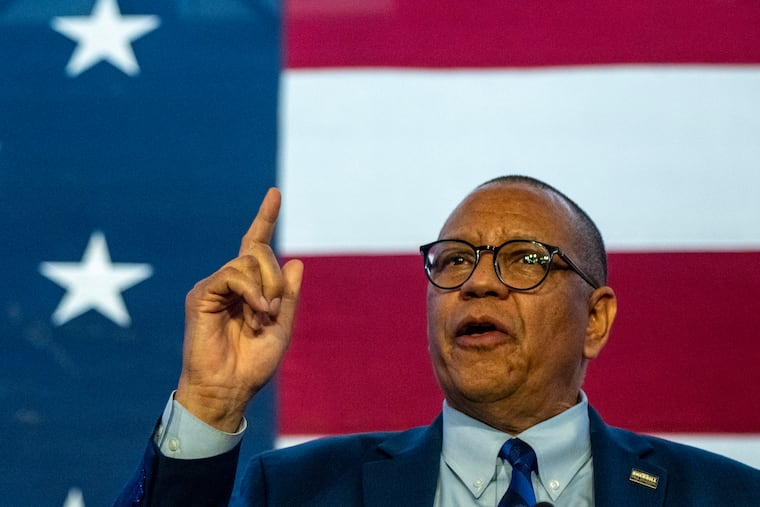
State Rep. Chris Rabb is still the Democrat who is critical of his own party — the progressive who called his campaign “movement-driven” on the day he announced his bid and who rallied alongside U.S. Rep. Alexandria Ocasio-Cortez on Friday.
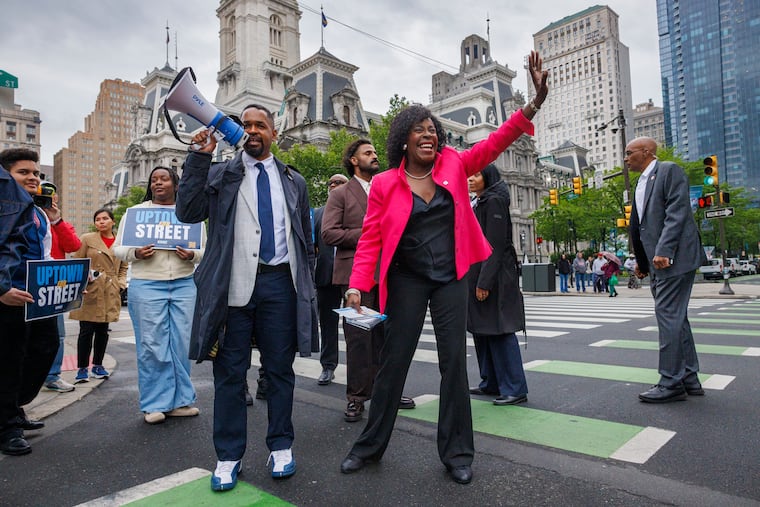
State Sen. Sharif Street is leaning into his connections with the party. He was the head of the Pennsylvania Democrats in July when he launched his campaign, and he has spent the final days stumping with some of the region’s most well-known Black politicians.
And Ala Stanford — a physician who rose to prominence for her work to provide COVID-19 testing and vaccinations in Black communities and made much of her campaign about healthcare — met with voters across the city this weekend, at times offering advice on how they can access services.
But even now — despite a handful of other candidates dropping out, dozens of community forums, and millions of dollars raised and spent — there is not much more clarity than there was months ago about who is most likely to fill the congressional seat.
There have been no independent polls conducted in the district, which includes most of the western half of Philadelphia stretching from Chestnut Hill to South Philly. Internal polls paid for by the campaigns and their backers have trickled out into public view, and each of the three front-runners have at different times appeared to lead the field.
A fourth Democrat, attorney Shaun Griffith, is also on Tuesday’s ballot. He has struggled to fundraise and is considered a long shot.
Whoever wins the primary is all but guaranteed to fill the seat currently held by retiring U.S. Rep. Dwight Evans. The district is one of the bluest in the nation, and no Republican filed to run.
Depending on who prevails Tuesday, the results could provide key insights into the state of Philadelphia’s politics.
Will the city’s Democratic establishment, oft-maligned as past its prime, flex its muscle anew?
Will the progressive left notch its most high-profile win in Philadelphia yet?
Or will voters prove that they want someone in Congress who has never been part of the system before?
In what may be the most tired cliché in politics, it may all come down to turnout.
Neil Oxman, a veteran Philadelphia political consultant and longtime ad maker, said Rabb appears to have momentum heading into Election Day, but it could still be anyone’s race.
“It’s a crapshoot,” Oxman said. “Who knows what’s going to happen? This is why they play the game.”
How the candidates spent their final days of the campaign offers a window into the demographic and geographic blocs they think they need to prevail on Tuesday.
Street came into the race with the most recognizable name. The son of former Mayor John F. Street, Sharif Street hails from a political family that’s been entrenched in North Philadelphia for decades. With the backing of the Philadelphia City Committee and most of its ward leaders, Street’s name will appear on sample ballots that hundreds of party members hand out at polling places.
The mayor and the deep-pocketed building trades unions are also in his corner, making Street — at least on paper — the one to beat.
However, despite raising the most money out of the three front-runners, he has had the smallest presence on television, where advertising is able to reach the widest audience. That’s because Rabb and Stanford both have independent expenditure groups, also known as super PACs, that have run TV commercials on their behalf.
» READ MORE: Big money is flooding into the Philly congressional race as all three front-runners hit the airwaves
But the super PAC backing Street, which is bankrolled by the building trades, instead invested in hundreds of thousands of dollars into get-out-the-vote ground operations that are meant to juice turnout.
Street has aimed to generate enthusiasm through on-the-ground campaigning, especially among Black and working-class voters who make up the core of his coalition.
Speaking during a campaign rally with U.S. Sen. Cory Booker on Monday, State Sen. Anthony Williams lamented that Street’s supporters in elected office have been labeled “establishment.”
“Let me be very clear. We are not the establishment,” Williams said. “We are spirits. We are smart. We are tough. We are connected. And we are from the streets.”
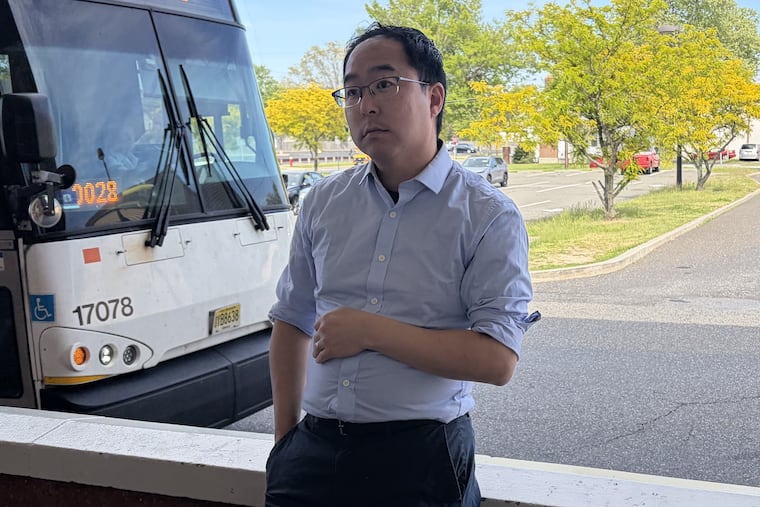
On Thursday, Street and his most prominent endorser in the city, Mayor Cherelle L. Parker, shook hands with riders taking public transit during morning rush hours and they encouraged them to cast a ballot for Street.
“When your supporters are from Philadelphia, they’re going to be able to energize their neighbors,” Street said in an interview while standing on the Broad Street sidewalk. “That’s going to be a big difference than people who are merely having supporters from out of town.”
It was a thinly veiled shot at both of his opponents who have prominent backers from outside the city.
That support is in part what made Stanford such a formidable candidate. Evans is her most prominent local endorser, but it was a Washington-based super PAC, called 314 Action Fund, that plowed a staggering $3.5 million into a pro-Stanford advertising campaign.
314 is a “pro-science” organization that recruits doctors and other science professionals to run for public office. The group said its polls in April showed that Stanford was winning, in no small part thanks to weeks of television ads paid for by 314 that introduced Philly voters to Stanford.
Their backing was also something of a liability for Stanford, who faced relentless attacks on the campaign trail and online, in large part fueled by Rabb and his allies on the left who speculated that 314’s pro-Stanford campaign was funded by the American Israel Public Affairs Committee (AIPAC).
» READ MORE: Ala Stanford and Chris Rabb are trading accusations as AIPAC becomes a flashpoint in Philly’s U.S. House race
314 and AIPAC both denied that the pro-Israel lobby played any role in the campaign. However, 314 is partly funded by nonprofits that are not required by law to disclose their donors, meaning the identities of 314’s donors have not been independently verified.
Amid the online firestorm, Stanford made a series of comments and missteps that drew criticism, and then dropped out of the most high-profile debate of the campaign. In the final days of the race, 314 pulled its advertising off television after some private polling showed her standing with voters had declined.
Still, Stanford is not out of contention. On Friday, she was endorsed by The Philadelphia Tribune, the oldest continuously published African American newspaper in America.
And she made more than a dozen campaign stops over the weekend. She talked about healthcare with voters on Friday, played games with families in South Philly on Saturday, and appeared at multiple predominately Black churches on Sunday morning.
“For me, it’s one person at a time,” Stanford said in between stopping people on the street near the 60th Street SEPTA station on Monday, spending as long as five or 10 minutes with people who hadn’t yet voted, and some who already had. She stopped into businesses around Wadsworth Avenue and later joined a canvass in West Philadelphia.
“We do large crowds, but also the one-on-one interaction, because that person is going to tell a person who’s going to tell a person,” she said.
“For me, it’s more that people have an opportunity to talk with me and everything,” Stanford continued, interrupting herself mid-sentence to stop someone about to go through the SEPTA turnstile: “How you doing, sir? You ready to vote tomorrow?”
And then there’s Rabb, who seemingly gained late momentum after his campaign was hobbled earlier this year by a former treasurer he says embezzled $161,000 worth of contributions.
He drew some negative attention during the campaign, including for an October post on his Instagram page that advanced an antisemitic conspiracy theory about the deadly massacre targeting Jewish people in Australia’s Bondi Beach. Rabb said the post was made by a former staffer.
And some advocates for the Jewish community were critical of Rabb for rallying with Hasan Piker, an anti-Zionist streamer who has made a series of inflammatory comments about Israel and U.S. foreign policy.
But Rabb has also been a strong fundraiser and won support from beyond the progressive left. He was also endorsed by The Inquirer’s Editorial Board, which runs The Inquirer’s opinion pages and operates separately from the newsroom.
In the final days leading up to Election Day, Rabb is most prominent on the airwaves. A coalition of national progressive groups are spending about $1 million on pro-Rabb TV commercials. The Working Families Party, the labor-aligned third party, is also running ads online that attack Street for his role in a controversial redistricting scheme in 2021.
Much of Rabb’s get-out-the-vote effort seemed tailor-made to shore up his base and appeal to young people, a traditionally fickle group of voters who are less likely to cast a ballot than their older counterparts, particularly in a primary during a non-presidential election year.
Ocasio-Cortez, one of the nation’s most well-known progressives, spoke to a packed crowd of Rabb supporters last week in a North Philly church, invoking the nation’s founders who, in Philadelphia, introduced “a radical new idea into the world: that all people were created equal.”
“Every generation of Americans has inherited the responsibility of stewarding that promise for the questions and crises of their time,” she said. “For us, that time is now.”
Rabb has insisted that his coalition extends beyond young people, and the room on Friday included supporters of all ages.
“It’s hard to feel proud to be an American right now,” said Rabb supporter Naima Black, a 67-year-old who attended the rally with Ocasio-Cortez. “But maybe if [Rabb] can get into office, we would be able to feel a little proud.”

- Meet the Democrats vying to replace Dwight Evans in Congress
-
Ala Stanford is banking on a healthcare message to break through crowded Philly primary for Congress
-
Big money is flooding into the Philly congressional race as all three front-runners hit the airwaves
-
How two Philly congressional candidates are quietly guiding super PACs in plain sight