Senate votes to weaken environmental laws to speed up energy and construction projects
The Bipartisan American Affordability and Jobs Act passed with the support of 14 Democrats, including Senate Minority Leader Chuck Schumer.

The Senate on Thursday passed legislation to make energy projects, housing, roads and other infrastructure easier to build by weakening bedrock environmental laws that have often delayed construction for years. The effort, backed by more than a dozen Democratic senators and most Republicans, has been billed as a bid to make American life more affordable and lower electricity prices.
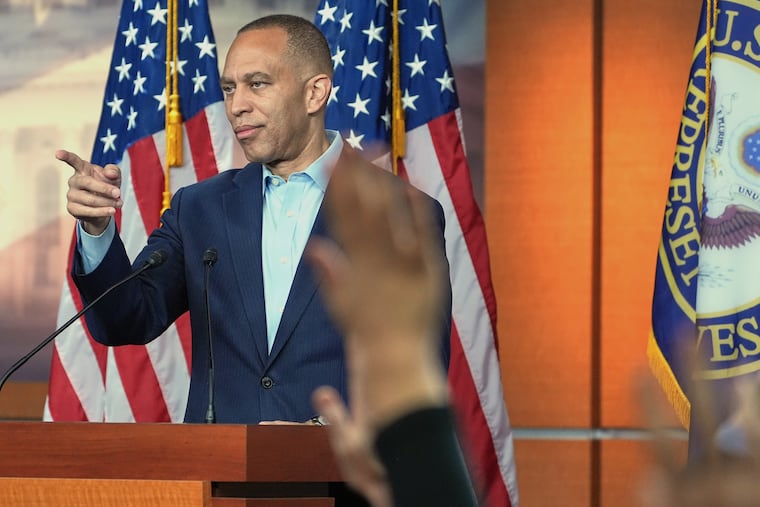
The Bipartisan American Affordability and Jobs Act (BAAJA) passed 62-33. Fourteen Democrats voted for it, including Senate Minority Leader Chuck Schumer (New York), as well as Sen. Angus King (I-Maine), who caucuses with Democrats. Two Republicans, Sens. Josh Hawley (Missouri) and Mike Rounds (South Dakota), voted against it.
It now moves to the House for consideration, where some Democrats have indicated they plan to support the bill. That could ease its passage in the chamber, where Republicans hold only a two-vote majority.
The bill has divided the environmental community and Democrats. Some say the bill will mean more renewable energy is built and plugged into the grid, advancing the fight against climate change by helping to fix a broken and slow permitting system. Opponents, however, say it opens the floodgates to more oil pipelines and natural gas power plants, while making it easier to build in areas of pristine wilderness or sacred Native American sites.
“If you’re going to get a lot more clean and some more fossil, you have just got to figure out, is that a good trade-off? Is that a good balance?” said John Podesta, who was climate envoy under President Joe Biden.
The bill’s supporters say it will boost clean energy by ensuring that long-distance transmission lines can be built to carry wind, solar and geothermal power from where it is produced to dense population centers. The lack of those high-powered lines has slowed progress on deploying renewable power and raised electricity prices in recent years.
Longtime Senate climate hawks Sheldon Whitehouse (D-Rhode Island) and Martin Heinrich (D-New Mexico) sponsored the bill, arguing that it will speed the energy transition.
“If we can create an open, competitive, level playing field, clean is cheap and cheap wins in the marketplace,” Heinrich told reporters this month.
Oregon Democratic senators Jeff Merkley and Ron Wyden emerged as prominent critics of the bill. Wyden proposed an amendment to ban data centers on public land, accusing Republicans of being too afraid to take a floor vote on the proposal at a time when Americans are overwhelming opposed to data centers.
Merkley criticized a lack of open debate on the bill and blocked consideration of a package of amendments to protest other amendments not getting a vote.
“It is pretty damn outrageous and offensive that this bill has never had a hearing in the House or Senate,” he said on the Senate floor Wednesday.
Hawley, one of two Republicans who voted against the bill, argued it would hurt farmers, whose land infrastructure like transmission lines and pipelines often crosses.
“Legislation that threatens to take farmers’ land is legislation I won’t support,” Hawley said in a statement. “This bill is stuffed with giveaways to data centers and industry at the expense of farmers.”
Many prominent environment groups, including Earthjustice, reject the proposal on the grounds it will weaken key environmental laws.
“For groups who are predominantly thinking about clean energy, this is a package that does so many of the things that all of us have been lobbying for over the years,” said Abigail Dillen, president of Earthjustice. “The question is, with all the other things this bill does — is the bill still doing more good than harm?”
According to modeling from Rhodium Group, a research firm, the bill has the potential to lower U.S. carbon emissions by around 3 percent by 2040 and lower household utility bills by $50 to $78 per year. The legislation would accelerate renewables deployment and the export of liquefied natural gas. However, its report noted, it also has the possibility of keeping emissions close to status quo.
Supporters say the bill will lower energy prices by boosting all energy projects. Chad Whiteman, vice president for environmental and regulatory affairs at the U.S. Chamber of Commerce, said in an interview that voters called firmly in the midterm elections for greater affordability. “How are you going to address affordability except to be able to provide more energy and release some of those bottlenecks?” he added.
Proponents also argue that many prospective fossil fuel projects would get built anyway.
Podesta said in weighing the gains for renewables versus for fossil fuels, the trade-off is probably “worth it.”
The bill also demands that data centers pay for any new power facilities that must be built to meet their demand, as well as power lines that connect that energy to the grid. Voters have become increasingly angry about the impact of data centers on electricity prices and on their local environments.
The bill would alter several environmental laws originally passed in the 1970s. It would limit states’ and tribes’ ability to veto or place conditions on projects under the Clean Water Act and reduce protections for wetlands. And it would reduce the need for consultation with state and tribal historic preservation offices before approving projects that could affect significant cultural or tribal sites.
Under the Endangered Species Act, the bill gives more responsibilities to states, which may not have the ability or desire to carry out the law, and potentially allows courts to ignore emerging research when evaluating species protection.
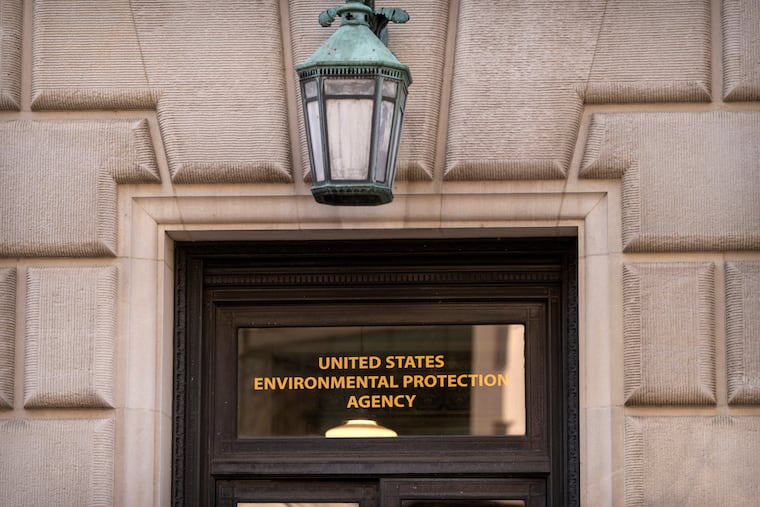
If the bill is enacted, projects will be allowed to move forward even if they violate the National Environmental Policy Act (NEPA), a law designed to make permitting decisions thorough and transparent. Under current law, completing the NEPA’s review process often takes years, and violations can lead to projects being paused indefinitely or losing their permits.
The bill is aimed at ensuring neutrality by accelerating permits for fossil fuels and renewables equally. “We are not dictating here what gets built; we are simply protecting the ability to build,” said Sen. John Barrasso (Wyoming), the No. 2 Senate Republican, on the chamber’s floor Wednesday.
But some advocates also worry President Donald Trump will not carry out provisions.
Trump said last week that the bill had the administration’s backing “100 percent,” and the White House issued an official statement of support. But he also said he would not approve wind turbines, even though the bill demands he do so, and has aggressively favored fossil fuels in his first two years back in office.
The bill now heads to the House.
Senate Majority Leader John Thune (R-South Dakota) said the bill would have an easier road to Trump’s desk if the House passes it without making changes.
“If it were to go over there and then come back over here, I can’t predict what would happen,” Thune told reporters Thursday. “So hopefully there will be the critical mass there to move it.”