Mayor Parker says she’ll reduce her hotel tax plan and propose a 6% hike on Airbnb instead
With one week remaining until City Council is set to vote on the mayor's tax plan, Parker announced a new proposal to fund homelessness initiatives by hiking fees on short-term rentals.
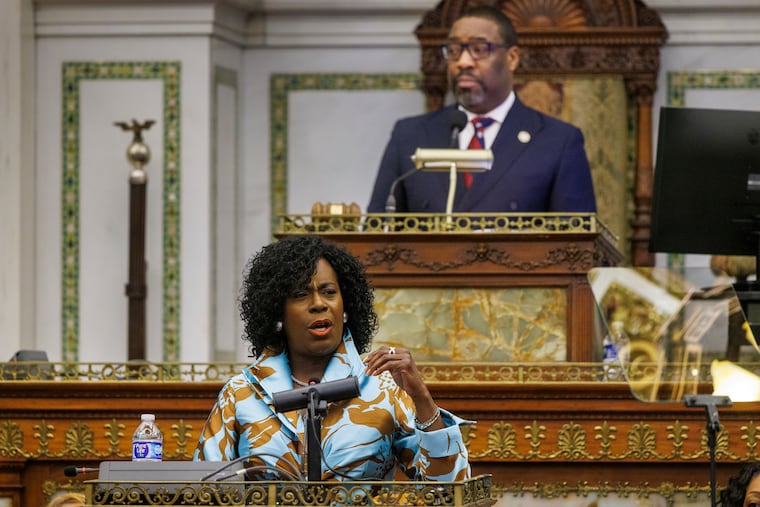
Short-term rentals like those reserved through Airbnb could cost more in Philadelphia under a proposed tax plan unveiled Wednesday by Mayor Cherelle L. Parker.
In a statement, Parker said that she wants to hike taxes on short-term rentals by 6% to help fund initiatives to address homelessness.
The proposal is an amendment to the mayor’s earlier plan to increase the city’s hotel tax by 2%, which would have also applied to short-term rentals like Airbnb and VRBO.
Under Parker’s new plan, short-term rental operators in Philadelphia would face higher fees. The tax on hotels would increase by 0.6%, from 15.5% to 16.1%. Taxes on short-term rentals, meanwhile, would increase 6%, from 15.5% to 21.5%.
The increase would amount to one of the highest tax rates on short-term rentals in the country. Parker’s proposal would have to be approved by both City Council and the General Assembly in Harrisburg.
Taken together, the tax increases would bring in about $15 million annually. That’s slightly less than the $20 million a year that Parker’s initial 2% hotel tax increase proposal would have generated. The money would fund new homeless shelter slots in the city, as well as behavioral health and drug recovery programs.
Under the new plan, the tax increases would sunset in five years.
» READ MORE: Mayor Parker turns to Harrisburg — and GOP allies — to make her budget priorities work
In a statement, Parker thanked the hotel industry, as well as city and state lawmakers, for “continuing to work together toward a balanced proposal that supports both our hospitality sector and our goal of helping more Philadelphians access safety, stability, and support with dignity.”
Airbnb immediately urged Council members to reject Parker’s plan, calling it a “hotel handout” that would fall “on the backs of struggling Philadelphia homeowners who share their homes to help pay their bills.”
“This tax is nothing more than an attack on everyday homeowners disguised as policy — all the while leaving critical tax revenue on the table by not taxing big hotels at the same rate,” said Michael Blaustein, the company’s Northeast Policy Manager.
Parker’s new plan comes as the administration is already facing controversy for trying to increase taxes on rideshare and retail delivery services. And it comes at the eleventh hour: City Council members must take an initial vote on a city revenue and spending plan next week in order for it to be passed by the start of the new fiscal year on July 1.
The last Council meeting of the spring session is June 11. Under normal Council procedures, the budget must be preliminarily passed the week before the final meeting.
With just days left for the administration and Council to negotiate, the hotel tax emerged as a sticking point. Some members expressed concern that increasing the current 15.5% hotel tax to 17.5% would be too burdensome on the city’s hospitality sector.
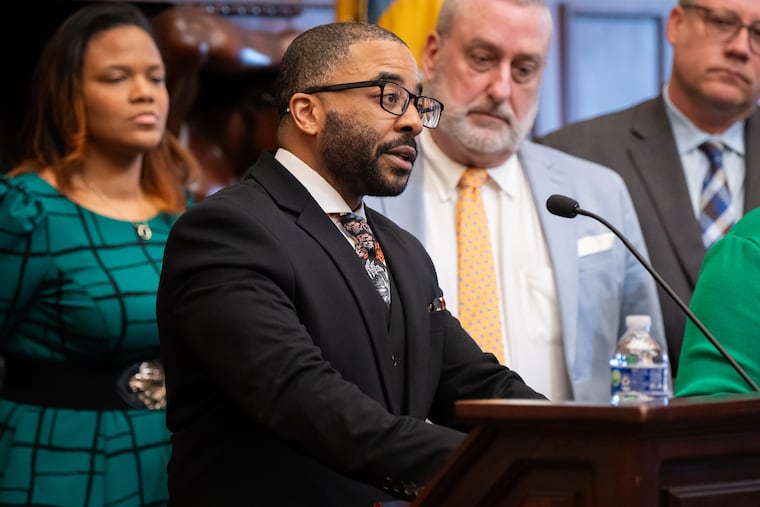
City Councilmember Isaiah Thomas, a Democrat who represents the city at-large and has been an ally of the hospitality industry, said Council will have to examine the mayor’s new proposal but that he likes the fact that the tax on hotels would be lower.
“We like the idea that there’s wiggle room, room to negotiate, room to adjust,” Thomas said. “We appreciate that energy and that effort.”
The other major point of contention in city budget talks: Parker’s plan to levy a $1-per-ride fee on rideshare services like Uber and Lyft. The expected $48 million in annual revenue is meant to help the School District of Philadelphia stave off staff cuts as it faces a massive structural deficit.
» READ MORE: Philly principals say they need the $1-per-ride Uber tax to keep schools afloat
But since the mayor announced her $1-per-ride proposal, City Council members have appeared skeptical. None of body’s 17 members have said publicly that they support the plan.
Some have said that they don’t want to increase taxes to help fund the city’s public schools while the district is simultaneously advancing a plan to close 17 school buildings. Others expressed concern that a flat-rate tax would have a disproportionate impact on lower-income residents who rely on rideshare services.
Meanwhile, Uber has escalated its already aggressive public relations and lobbying campaign in City Hall to oppose the tax.
The company has floated its own, alternative proposal to substantially increase the city’s existing 1.4% rideshare tax, which would likely have less of an impact on consumers — particularly those who take short, frequent rides in the city. That fee is assessed by the Philadelphia Parking Authority which is governed by the state, so City Council members would not have to vote on it.
» READ MORE: Uber pitches alternative to Mayor Parker’s $1-per-ride tax as City Council searches for an exit ramp
And this week, Uber launched a six-figure campaign to run ads on television and online urging Council members to vote against the mayor’s proposal. The spots feature a woman who says she relies on Uber “for work, appointments, and daily needs, and higher costs would make that harder.”
Jazmin Kay, a spokesperson for Uber, said in a statement that the mayor’s $1-per-ride tax “would make transportation less affordable at a time when Philadelphians are already struggling with the rising cost of living.”
But Parker has indicated that she is not backing down. A spokesperson called Uber’s alternative proposal “budget gimmicks,” and said it would not generate the amount of money the district needs to avoid staff cuts.
And Philadelphia school principals earlier this week held an event to say that staff cuts will be disastrous for their students if the mayor’s proposed rideshare tax money doesn’t come through.
KaTiedra Argro, principal of the Philadelphia High School for Girls, said bluntly: “The rideshare funding is not a luxury.”
Staff writer Kristen A. Graham contributed to this article.