Collingswood voters will decide on a $4.56 million operating bond to keep schools running
Like many districts across the state, Collingswood has had a structural deficit for years.
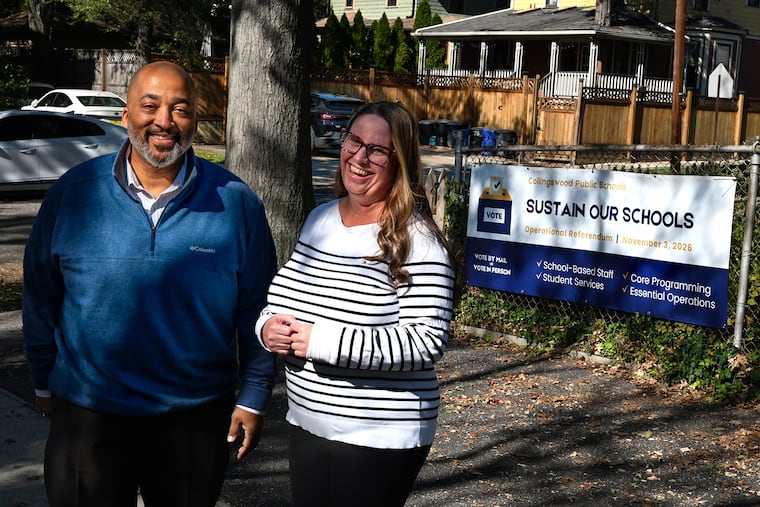
The Collingswood school district needs more money to stay afloat and hopes voters will approve a $4.56 million operating bond, the first of its type in the district, during this year’s general election.
Superintendent Fred McDowell said the bond question, if approved by voters Tuesday, would fund day-to-day operations, reduce class sizes, and retain teachers and programs for the 2027-28 school year.
“We’ve done everything at the local level that we can do in order to address this systemic problem,” McDowell said. “The funding is no longer there that allows us to do that without devastating additional reductions.”
Like many districts across the state, Collingswood has had a structural deficit for years. Faced with declining state aid, districts have raised property taxes and cut programs to plug gaping budget holes.
The question on Tuesday’s ballot could be a tough sell in Collingswood, which cut staff and programs and closed an elementary school in June to close a budget gap for the current school year. If approved, it would add $1,324 annually to a tax bill for a home assessed at the borough average of $448,000.
“We understand this is a huge ask,” said board president Kelly Maia, who has two children in the district. “If we had another option, we would take it.”
In 2024, Collingswood voters overwhelmingly rejected a controversial $44.5 million bond referendum that would have decommissioned two schools, reconfigured grades, and made changes to address racial disparities.
Prior to the pandemic in 2020, Collingswood generated between $500,000 and $1.2 million from surplus funds to boost its budget, McDowell said. Those funds have been depleted, he said.
Collingswood’s tax levy yields about $480,000 a year, McDowell said. The rollover costs for salaries, benefits, and state mandates total more than $4 million, leaving a budget gap, he said.
For the current school year, the district had a $3.3 million deficit. It raised property taxes 6.4%, cut 33 positions, consolidated campuses, and shuttered James Garfield Elementary, its second-oldest school. Collingswood enrolls about 2,500 students.
McDowell expects another tough budget year after the state releases aid figures in February. He anticipates a possible deficit between $2 million and $4 million.
Three other districts in the state — Burlington Township and two others in Bergen and Hunterdon Counties in North Jersey — are also asking voters to approve operating bonds Tuesday. One district, Bordentown Regional, is asking voters to approve a capital bond.
More New Jersey districts are turning to operating bond questions like Collingswood to generate additional funds to add to their budgets. It enables districts to exceed the 2% property tax levy cap.
The increases are needed because of rising health insurance costs and shrinking state aid that has left districts with budget shortfalls, officials say. There have been calls for Gov. Mikie Sherrill to revamp the state’s school funding formula.
» READ MORE: Collingswood voters set to consider controversial $44.5 million school bond referendum, the largest in its history
The Burlington Township school district is asking voters to approve a $567,000 operating bond referendum to raise additional funds for the 2027-28 school year.
If adopted, the funds would be used to hire two additional elementary school teachers, add a music teacher and expand the music program, reduce class sizes, and expand middle school athletic programs.
It would mean a permanent increase in the district’s tax levy. It would add $50 to the annual tax bill for a home assessed at the township average of $234,975, said district spokeswoman Liz Scott.
Burlington Township voters approved two bond questions in 2024 totaling $38 million to pay for renovation projects, roofs, HVAC systems, lockers, and classrooms. The district said at the time that the tax impact would be minimal because a debt service was expiring.
Also in Burlington County, the Bordentown Regional school district is asking voters in Fieldsboro, Bordentown City, and Bordentown Township to approve an $86.1 million bond referendum.
Superintendent James Altobello said the bond, one of the largest in the district’s history, would be used for renovations at all five district schools.
The proposed projects include replacing leaking roofs, upgrading heating and air conditioning systems, replacing windows and interior doors, and upgrading the fire alarms, public address system and security systems, Altobello said.
“We have some serious needs that we have to address,” Altobello said. “All of the things that we’re talking about are critical areas of need.”
If approved, the bond would add $588 to the average annual tax bill in Bordentown Township, $456 in Bordentown City, and $420 in Fieldsboro. The state would pay $34.4 million of the costs.
Altobello said the district would pay for the projects from its operating budget if voters reject the referendum. That would take years and the district would not have the state’s contribution, he said.
“The work doesn’t go away,” he said.
Statewide, voters in 13 school districts on Tuesday will consider bond questions totaling more than $244 million and fill 1,483 school board seats, according to the New Jersey School Boards Association. The state would contribute $97.6 million. The special election is one of five times during the year that school boards may ask voters to approve a capital or operating bond issue or special question.
The referendum questions can struggle to win voter support because they typically seek a property tax increase. They allow districts to pay for projects that cannot readily be funded through their annual operating budgets.
Elsewhere in the region, voters in Washington Township in Burlington County are deciding whether the school board should be reduced from five members to three.

Inquirer South Jersey