Fewer than half N.J. third graders can read proficiently. Gov. Sherrill signed an executive order to change that.
Fewer than half of New Jersey's students are meeting proficiency expectations for English language arts.
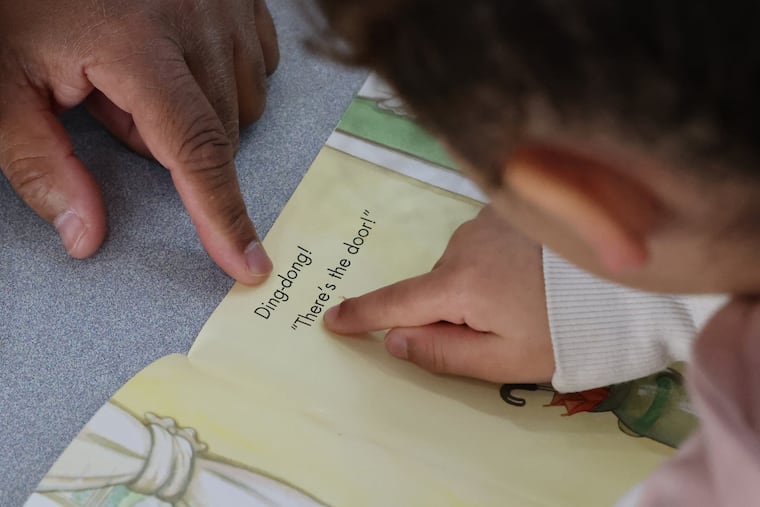
Gov. Mikie Sherrill announced an ambitious plan Monday to improve student literacy in New Jersey, where fewer than half of third graders are proficient in reading.
During a news conference at Arthur M. Judd Elementary School in North Brunswick, Sherrill unveiled a new strategy to target young learners at an earlier age to improve reading skills and narrow the achievement gap.
She signed an executive order that gives the state Department of Education 90 days to develop a plan for districts to use more evidence-based reading practices in the classroom. The order also calls for literacy coaches for teachers and for the state to explore setting up a summer camp for struggling readers. Other states, including Pennsylvania have in recent years passed similar legislation mandating such evidence-based “structured literacy”programs.
“Every child in New Jersey deserves the strong start that comes from learning to read, and reading to learn,” Sherrill said. “We have a responsibility to equip all our kids with the strong literacy skills that are essential for opening doors, enabling them to thrive academically, and preparing them for life-long success.”
Sherrill said the new strategy is modeled after a plan launched in Mississippi in 2013, then ranked 49th in the country for literacy. The state implemented sweeping education reforms and saw tremendous gains for its fourth graders.
By 2024, Mississippi had moved up to ninth in the country and drew attention from educators nationwide. The gains were called “the Mississippi Miracle.”
Lily Laux, New Jersey’s education commissioner, said the state plans to combine evidence-based instruction with high-quality materials, early screening, and timely intervention. The goal is to make sure every student reaches their full literacy potential by third grade, she said.
“We can’t wait until third grade to find out if a child is struggling,” Laux said. “We need to identify those needs and respond quickly.”
Nearly half of New Jersey’s students in grades three through nine fail to meet grade-level expectations in English language arts, according to Sherrill. Achievement rates are substantially lower among economically disadvantaged students, multilingual learners, and students with disabilities, she said.
Here are other takeaways from Sherrill’s executive order:
The state Department of Education has 180 days to update the evidence-based criteria for literacy screening tools and publish a list of at least two approved tools, at least one at no cost. Districts must choose their tool from that list.
The Education Department has 360 days to evaluate early literacy instructional materials currently in use and publish a list of approved high-quality, evidence-based ones.
The state wants to amend the approval criteria for Educator Preparation Programs to make sure they are aligned with evidence-based reading instructions. The state also plans to review its educator certification program and make changes to increase the number of qualified instructors certified in early literacy and reading.
The state plans to start a regional literacy coaching pilot program to train educators in evidence-based literacy instruction and how to use literacy screener data. It also plans to explore the feasibility of setting up a literacy summer camp program.

Inquirer South Jersey