Camden’s poverty rate is its lowest in at least 15 years. But people are still struggling.
The city has made significant progress in the fight against poverty but experts say there is still a lot of work to be done to help those in need.
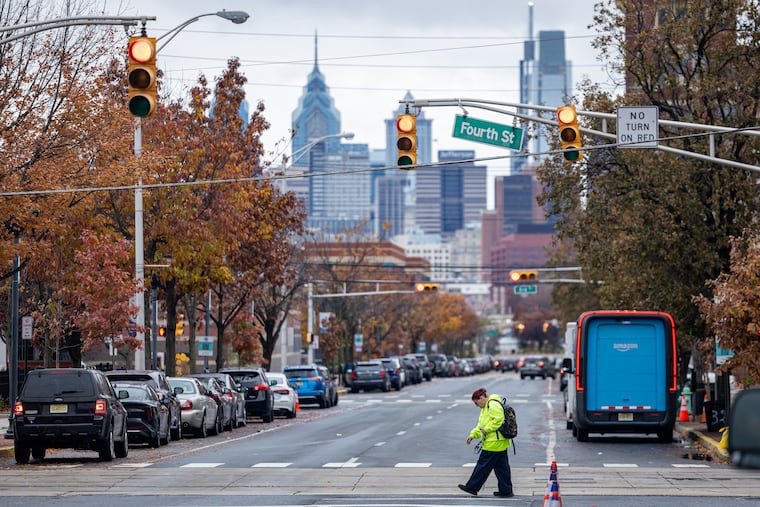
Camden’s poverty rate has reached a significant milestone — but advocates say it’s still too soon to celebrate.
For the first time in more than 15 years, less than a quarter of the city’s population was living below the poverty line last year, according to data released by the U.S. Census Bureau in late October.
The poverty rate in Camden fell to 24.9% in 2025, the lowest it has been since at least 2010, according to the latest American Community Survey, which produces annual reports on a wide range of detailed population data.
In comparison, the poverty rate across Camden County was 9.9% in 2025, the data show.
“Nobody’s going to be handing out any trophies in terms of the status quo,” said Bill Golderer, president and CEO of United Way of Greater Philadelphia and Southern New Jersey, a nonprofit that conducts a wide range of anti-poverty work in the city.
“It’s still an intolerably high rate, on the one hand, but on the other hand, it does represent significant progress,” he said.
The data, which reported Camden’s poverty rate was above 40% multiple times during the 2010s, show a return on the long-term investments made in the community, Golderer said.
In Camden’s case, that involves a coordinated effort among the city and county governments, the private sector, nonprofit organizations, and residents to approach the issue holistically, he said.
“There’s a momentum that’s created when that kind of coordinated action is undertaken and moves along with focus and discipline, you can see — sometimes in a longer time than anybody would appreciate — you can see actual progress. And progress begets progress if you’re doing this the right way,” Golderer said.
Camden Mayor Victor Carstarphen’s office did not respond to multiple requests for comment.
‘The poverty rate is a really low bar’
While there has been steady progress in the fight against poverty, those working on the front lines warn that the problem is far from eradicated.
Many families in Camden may technically be living above the federal poverty line — an annual income of $32,150 for a four-person household in 2025 — but are still struggling to afford the cost of living.
Roughly 76% of households in Camden earn more than the federal poverty threshold but cannot cover the cost of basic necessities, according to a United Way report that analyzed data from 2024.
The report included households that are what is known as ALICE — asset limited, income constrained, employed — to get a more comprehensive picture of how many people are experiencing financial hardship.
“The poverty rate is a really low bar,” said Noreen Flewelling, vice president of development at Camden’s Cathedral Kitchen, which just marked 50 years as an emergency meal provider in South Jersey and serves about 6,000 people each month.
Inflation is impacting families, she said, and household budgets often have very little room to absorb rising costs.
“At the end of the month, when people have used up their income, benefits, salary — that’s when our numbers are the highest, and it’s as many as 800 people in one day during that last week of the month,” she said.
Job training could lead to long-term gains
Though many solutions to poverty must come from the federal level, Golderer said, local efforts can improve Camden residents’ day-to-day lives, including expanded access to benefits like Medicaid or food assistance and workforce development programs.
“What is within our control is to build upon things that we absolutely know work and have demonstrated, in our market and other markets, real return on investment and progress,” he said.
Anyone eligible for assistance should apply for it, he said.
“Benefits access is the floor of stability,” he said.
While the city has gained ground against poverty over the last 15 years, Camden residents have struggled to raise their incomes over that same time. Median household income for Camden residents has risen only 8% since 2010, adjusted for inflation — on par with Camden County but well below the 14% increase nationwide, census data show.
Camden also consistently ranks among the 10 cities with populations 65,000 or larger with the lowest median household income in the country, according to the data. With households earning a median of $45,900 in 2025, Camden ranked 10th, according to census data.
After peaking at $47,200 in 2021, Camden’s median household income dropped steeply following the pandemic, falling roughly $10,000 in two years, after adjusting for inflation.
Workforce development training can help residents gain skills for higher-paying jobs, Golderer said, but many are unable to complete the monthslong endeavor because they simply cannot afford to miss work.
“The reality is that people have access to this training and there’s a job waiting for them on the other end that would improve their lives immensely,” he said. “But if they can’t afford to complete the program, they’re not going to get anywhere. And in fact, they’ve gone backward because they lost wages that they could have had for the weeks that they tried.”
Launching next year, a new United Way stipend program will help cover those lost wages so that people can complete the training.
But as anti-poverty efforts continue to prioritize getting people higher-paying jobs, they need to do so carefully, said Kathleen Noonan with the Camden Coalition, a social services nonprofit.
For many people, a hard-earned raise at work could also mean losing essential healthcare or food assistance benefits without enough of a pay boost to afford those necessities out of pocket, she said.
“We don’t spend enough time thinking about ‘what’s the tipping point for people when they’re just making enough in wages that they’re not eligible for benefits anymore but they’re not making enough in wages that it really is more helpful?’” she said.

Inquirer South Jersey