E-bikes outnumber regular bikes at Indego, Philadelphia’s bike-share program
Indego aims to bulk up its regular bike offering, adding hundreds of bikes to the network in the coming years.
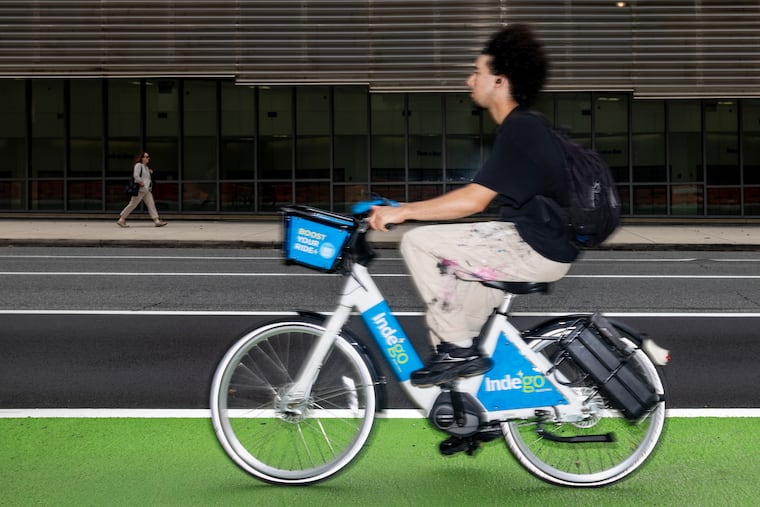
E-bikes are taking over Philadelphia’s streets.
Electric bikes make up 71% of the fleet for Indego, the city’s bike-share program, according to Ryan Wall, spokesperson for Philadelphia’s Office of Transportation and Infrastructure Systems. That’s roughly 2,000 e-bikes.
“Rider demand initially drove the growth of e-bikes within the Indego system,” Wall said, adding that e-bikes can “make longer trips easier, faster, and more accessible.”
Out of 1.3 million Indego trips so far this year, 915,000 or 70% have been on e-bikes, Wall said.
E-bikes have been gaining popularity nationally, too. The National Association of City Transportation Officials says e-bikes represented 42% of station-based bike share fleets in 2025, up from 30% in 2022.
New York City’s Citi Bike program has been growing its supply of e-bikes as well. In 2023, e-bikes made up roughly 20% of its fleet but were being used on nearly half of rides.
How many e-bikes does Indego aim to have?
The Indego program launched in 2015, and e-bikes were introduced in 2018, with a test pilot of 10 bikes.
In 2020, the program announced that it would add more e-bikes, aiming to have them make up half of the bikes available within five years. At the time of the announcement, there were 1,400 Indego bikes, 250 of which were e-bikes.
Now Indego is looking to bulk up its regular bike offering, by 200 next year and another 500 in 2028, so regular bikes make up 40% of the fleet, up from the current 29%.
“Riders have expressed that they value a mixed fleet, and they enjoy having the option of which type of bike to use,” Wall said.
The program is also adding bike stations. Indego currently has over 300 locations and aims to have 350 by the end of the year.
» READ MORE: Not just for ‘the white guy in Lycra’: E-bikes are gaining popularity in Philly’s low-income communities of color
Riders can borrow Indego bikes for a single ride at a time-based rate, which is 30 cents per minute more for e-bikes. For example, a 30-minute ride on a regular bike costs $4.50 and on an e-bike costs $13.50.
A basic yearly plan starts at $156 for unlimited one-hour rides on a regular bike, but e-bike rides cost an added 20 cents per minute.