Hanwha Philly Shipyard says it’s ready to build oil tankers and Navy ships at the same time
Will boost production to build Navy, civilian ships at the same time at South Phila. shipyard
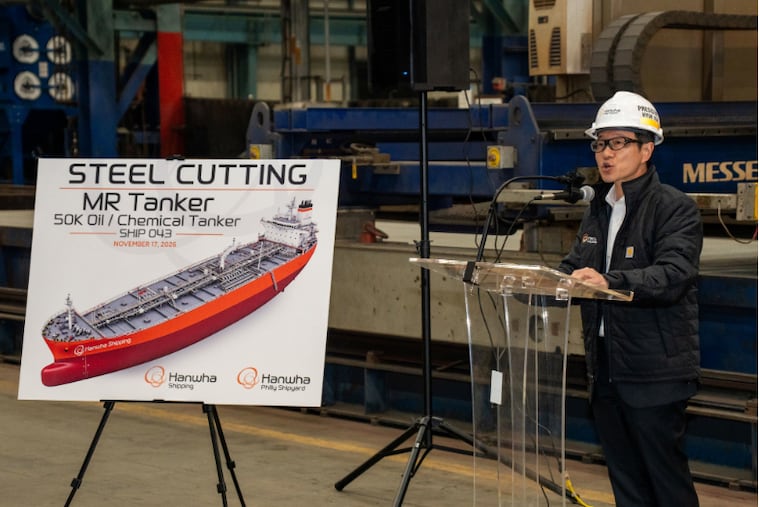
Hanwha Philly Shipyard says it’s started work on the first of four 600-foot, nearly 50,000-ton oil and chemical tankers to carry U.S. cargoes between U.S. ports.
The shipyard plans to deliver the ships to its Hanwha Shipping affiliate in 2029 and 2030.
Renderings and details of the new, medium-range ships, which typically haul cargoes in U.S. or East Asian waters or across the North Atlantic, but not on longer Pacific routes, were unveiled at a steel-cutting ceremony at the South Philly shipyard on Tuesday.
Hanwha plans to build the ships “simultaneously” with three liquid natural gas container ships it is building for Matson, which ships long-range cargoes between U.S. Pacific ports and to China. The first of the Matson ships, Makua, was christened last month and is to be delivered next year. Hanwha expects to deliver the other two by 2028.
Meanwhile, Hanwha will start work on the first of up to four Medium Landing Ships (LSMs), for the Navy to land Marines on Pacific islands, in late 2027.
And it plans to complete two enemy-missile-tracking Missile Range Instrumentation Vessel (MRIV) hulls for the U.S. government by 2030. It expects to begin that after completing TS Golden State, the last of five U.S. Maritime Administration training and multi-mission ships built since 2020, next year.
The Hanwha group had said last year it planned to order up to 10 tanker ships for its own Hanwha Shipping affiliate as it seeks to boost production at the Philadelphia yard from about one ship every eight months to one every few weeks.
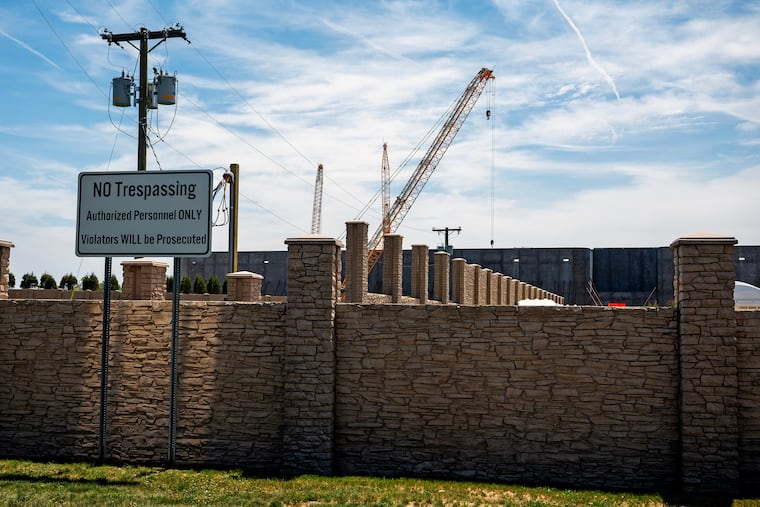
The detailed schedule put out this week underlines newly appointed Hanwha Philly president Hyuk Kim’s resolve to continue building commercial cargo ships while expanding U.S. Navy and government ship production. Hanwha meanwhile is adding new facilities on 47 recently acquired acres to the 110-acre complex the group purchased in 2024.
Shipping analysts have noted U.S.-built ships typically cost more than double the prices charged for similar-sized ships built in China, the world’s leading shipbuilder nation. U.S.-built ships also cost more than ships from Japan and Korea, partly due to mass-production savings at those countries’ large commercial yards.
Hanwha says it can get costs down as it increases production. In a statement Wednesday, the company made clear it expects the 1920 Jones Act will remain in force, which will require shipments between U.S. ports to be carried by U.S.-built ships and American crews. That’s despite waivers currently granted some foreign ships to haul certain cargoes during the Iran war.
Dozens of East Asian-built tankers have hauled Texas and Great Plains crude oil to Philadelphia-area refineries, and shipped natural gas, butane, fuel, and refinery feedstock from Delaware River terminals to plants in New England and Louisiana since March, when President Trump suspended provisions of the Jones Act.
» READ MORE: This Trump policy has Asian ships hauling U.S. cargoes for Philly refineries despite a century-old ban
Lobbyists for Hanwha and other shipbuilders, as well as organizations representing merchant marine officers and Seafarers union seamen, have called for renewed protection for domestic shipping. That would boost demand for U.S.-built ships like the tankers Hanwha is building.
Against them, lobbyists for refiners such as Delta Air Lines’ Monroe Energy and for PBF, which runs refineries in Delaware City and Paulsboro, N.J., have argued for easing the Jones Act and bringing in more cheap foreign shipping to lower energy companies’ expenses.
The new ships “will join the Jones Act fleet to transport the fuels that power American homes, businesses, and communities safely and efficiently,” James Sagar, CEO of Hanwha Shipping, said in a statement.
He noted the overall Jones Act fleet is aging; the new tankers are the first of their size built in the U.S. in nearly 10 years. The Philly yard has been the largest builder of Jones Act ships since 2000, when it opened under previous owners at the former Philadelphia Naval Shipyard.
With these ships, “Hanwha is reaffirming its commitment to the United States, supporting highly skilled American jobs, and helping strengthen the shipbuilding industrial base that is critical to our nation’s economic and strategic interests,” Sagar concluded.
Hanwha says the new tanker ships will offer “an energy-efficient design” and meet International Maritime Organization standards for safely carrying chemicals.
The yard employs around 2,300. Hanwha says it has invested hundreds of millions, and plans to eventually invest a total of $5 billion, in cranes, new buildings and piers, dry docks, automatic welding equipment, and other facilities to increase shipbuilding. The company has said it hopes to boost employment to more than 4,000 welders, pipefitters, equipment operators, engineers, and other workers over the next several years.