Pa. state workers' pension outsources $2 billion to a firm it just fired
Asset manager Xponance was terminated for poor foreign-stock performance but is getting more money to invest in the U.S.

The $42 billion Pennsylvania State Employees’ Retirement System (SERS) last month unanimously agreed to end a $300 million foreign-stocks investment for failing to meet targets — then gave the same firm a fresh $2 billion to invest in U.S. stocks.
The plan to eliminate Center City-based Xponance Inc.’s Non-U.S. Small Cap Equity fund passed unanimously at SERS’s meeting July 28.
That came 20 months after SERS put the investment on its “Evaluation List,” a special status that SERS’s adviser, Callan Inc., told trustees in a memo was “due to underperformance.”
According to SERS investment data, Xponance, which manages around $25 billion, was the only one of five firms it hired to pick foreign company stocks that has failed to beat its benchmark index of those stocks “since inception.” SERS uses Morgan Stanley’s MSCI ACWI ex USA Small Cap Index of foreign stocks, as Xponance’s benchmark.
Xponance actually met or slightly beat that index in three of the seven years since SERS invested. But that wasn’t enough to cover larger shortfalls from other years, including 2025, when Xponance trailed the index by 6%, yielding $15 million less than its target.
SERS has paid Xponance more than $10 million in fees since hiring the firm’s predecessor, FIS, in 2018, with the support of longtime SERS trustee State Sen. Vincent Hughes (D., Phila.).
Hughes and Xponance officials didn’t return calls seeking comment.
In all, SERS paid more than $230 million in fees, profit sharing, and expenses to hundreds of investment fund managers in 2024, the last year for which it has published data.
SERS has profited from rising investment valuations in recent years, which helped persuade state lawmakers in July to boost pensions for staff retired more than 25 years.
The system also beat its self-imposed annual investment benchmark, currently 6.875% a year, by more than one percentage point from 2015 to 2025. That enabled SERS to reduce the “employee contributions” collected from 67,000 state employees, which vary from 5% to 9%, by half a percentage point for three years. SERS collected about five times as much from taxpayers last year, and collects varying amounts from its investments.
While SERS voted to “liquidate” Xponance’s account with one hand, it awarded Xponance a new account with the other. In the same July 28 vote, trustees headed by chairman Gregory Thall, a Harrisburg lobbyist, unanimously agreed to give Xponance $2 billion to invest in a “passive” index fund based on the Russell 3000 index of large and small U.S. stocks.
Though the $2 billion SERS granted is more than six times the $300 million SERS took away, Xponance is still likely to lose significant income in the switch. Xponance charged SERS around 80 basis points a year (that’s 0.8% of the investment’s value) plus expenses — a total of around $2 million a year — for the former stock-picking account.
According to a formula in Xponance’s marketing materials, for a $2 billion investment in its “passive” Russell 3000 index fund, the firm would typically charge around $400,000 in client fees a year. That’s less than one-quarter what Xponance charged SERS to “actively” pick and manage foreign stocks.
The highest fees are typically paid to private-equity and real estate investors. Stock-pickers like the former Xponance foreign-stock fund are paid less. Index funds such as the new Xponance fund tend to collect some of the lowest fees. Xponance’s new fees will be “very competitive,” according to SERS spokesperson Pamela Hile.
SERS said it’s still negotiating the terms of its new Xponance mandate.
“SERS has been laser-focused on negotiating and lowering investment manager fees,” which totaled 0.41% for all managers last year, according to Hile.
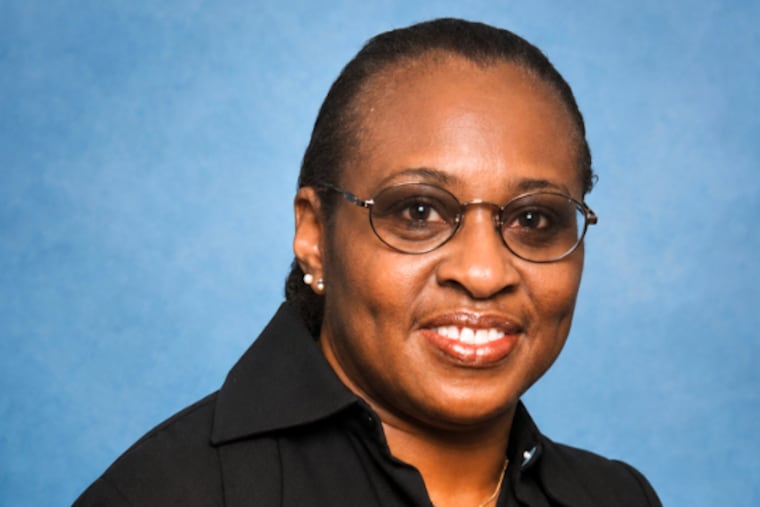
Xponance, headed by past Philadelphia city chief investment officer Tina Byles Williams, is the only fund managing stocks for SERS that is “owned and/or controlled by a majority of persons who are women and/or minorities.”
SERS investment policy “encourages the use of diverse investment managers” in all asset classes “within the bounds of financial and fiduciary prudence,” adding that a diverse range of professionals contribute different points of view that improve the system and its economic performance.
Among SERS’s more than 200 outside money managers are five other firms controlled by women or diverse owners. Those five firms all manage private assets, rather than publicly traded stocks and bonds like Xponance, according to SERS.
The pension system helps defray the annual cost to taxpayers of funding guaranteed pensions for around 250,000 working and retired state troopers, prison guards, social workers, state college staff, judges, legislators, and other state employees. The majority of its board is appointed by Gov. Josh Shapiro.
SERS already pays Mellon Investment Management, a Pittsburgh unit of New York-based BNY Mellon, to manage $14 billion, SERS’s largest single investment, in Mellon’s Russell 1000 big-stock index fund, and for smaller investments in two Russell 2000 small-stocks funds.
The new Xponance investment will be SERS’s only Russell 3000 fund, combining the big- and small-stock indexes. The Russell indexes are licensed to Xponance and other fund managers by the London Stock Exchange Group.
Money for the new Xponance investment will include funds taken from SERS’s Mellon account.
Elsewhere, BNY Mellon has been winning significant new public business. In June, the larger Pennsylvania school pension plan, PSERS, agreed to outsource $20 billion in investments to BNY Mellon.
Last month, BNY Mellon was also named financial agent for Trump Accounts, the federal government’s new lifetime savings program.