Main Line cannabis payments operator charged with $9 million fraud
David Dinenberg's Kind Financial won over investors and a few customers but couldn't turn a profit. He has been accused of stealing investors' and growers' money.
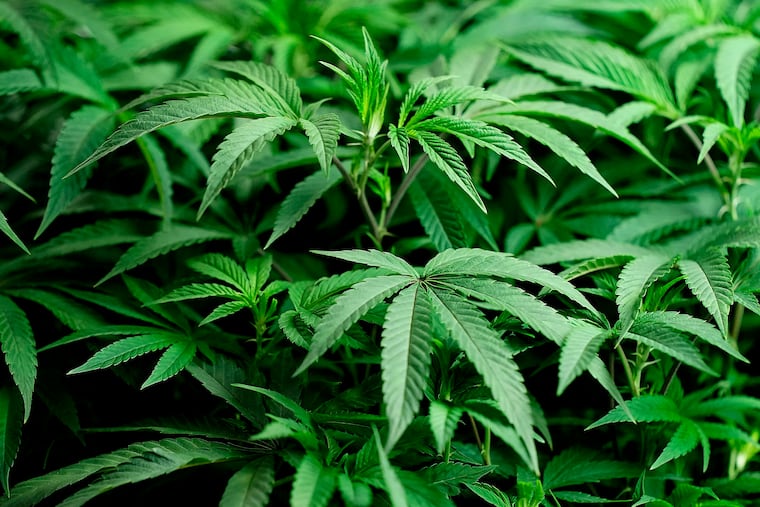
A Lower Merion businessman who raised $9 million from more than 50 Main Line, pro sports and Hollywood investors for Kind Financial, his marijuana payment-processing business, was charged by federal prosecutors Tuesday with five counts of fraud.
The businessman, David Dinenberg, “fraudulently induced dozens of people into buying shares of Kind” by supplying false sales and business information, and “misleading the investors into believing that their entire investments were being used” for the company, not “diverted” for his personal use, according to charges filed in Philadelphia federal court. Dinenberg did not return calls seeking comment.
The U.S. Attorney also called on Dinenberg to forfeit $9 million prosecutors contend he had raised from investors by fraud.
Kind worked his networks of friends and business contacts to raise money from singer John Legend; former tennis star Andy Roddick and his actress-model wife, Brooklyn Decker; former Sixers manager Billy King; former Eagles star Brian Westbrook; investor Lindy Snider, whose family once owned the Flyers; and dozens more, according to investor lists.
Investors had spoken to federal investigators.
But Snider and others who invested in Kind, then tried to keep the company going after the board confronted Dinenberg about his spending and he left in 2023, said Wednesday that they had no advance notice of the criminal charges.
Instead of using all the money to build his marijuana business, Dinenberg allegedly “embezzled” more than $750,000 to pay for “unauthorized personal expenditures,” including family members’ school tuition, a luxury California rental home, and country club memberships. Prosecutors say he lied to investors by exaggerating sales and prospects for Kind.
Dinenberg is also accused of stealing $175,000 from Rhode Island, which had hired Kind to collect cannabis fees from growers.
Prosecutors say Dinenberg was supposed to forward that money to the state, less a small transaction payment, but began keeping the fees, and reported money that should have gone to state as company revenue.
Dinenberg started Kind in 2012 to process cannabis transactions that were legal in some states but prohibited under federal law. The legal complexity discouraged national banks from working with cannabis businesses, but also created what Dinenberg persuaded investors was an opportunity for his company to focus on serving legal-cannabis pioneers.
The prosecutors depict Dinenberg as a successful fundraiser who founded a series of related companies, hiring two friends and a “family connection” to run the business in 2014, and tapping each of the three employees to help fund Kind.
Kind in 2015 acquired cannabis-farm payments software from Colorado-based Agrisoft Development Group, which had clients in Colorado and a few other states, and used that relationship to land a software development partnership with Microsoft that won national media coverage.
After the Microsoft deal, Kind won the Rhode Island contract. But Kind’s cash flow from the Rhode Island work was so meager that Dinenberg stopped paying his lawyers and stopped paying Kind employees — while keeping the tax and Social Security deductions he had withheld for them, prosecutors said.
Dinenberg issued glossy investor documents that projected sales of under $500,000 in 2016 would zoom to over $10 million in 2017 and $40 million in 2018 — with “no factual basis” for the unaudited financial reports, their “false” revenue data, and baseless projections, prosecutors allege.
» READ MORE: Atlantic City’s top cannabis official was charged in a scheme to solicit bribes from a weed business
In 2019, Dinenberg closed a business deal with pioneering cannabis investor Hartstreet Holdings and Colorado-based Herring Bank to develop a KindPay app to pay cannabis transactions through the MasterCard payment network, according to the prosecutor’s charges.
At first, it worked: “In 2020 and 2021, KindPay was working and some dispensaries even had KindPay kiosks” to enable sales, according to prosecutors.
But in 2021, MasterCard figured out that KindPay was used for marijuana sales, and cut the service off, according to prosecutors.
By 2023, Dinenberg had taken more than $750,000 from Kind bank accounts to cover personal expenses. Confronted by an employee, Dinenberg admitted he’d stolen money but claimed the total was $80,000, according to prosecutors. He resigned May 4 of that year.
Snider and other investors looked at ways to keep the company going, but its websites have since gone dark.
“The company has been defunct for some time, and it’s truly a shame what has happened,” said Snider in an email after learning of the charges. She declined further comment.