2026 Lincoln Nautilus: The biggest screen wins
Much has been made about the 48-inch screen across the front of the dashboard. It’s not all that in some ways, but it’s really pretty nice.
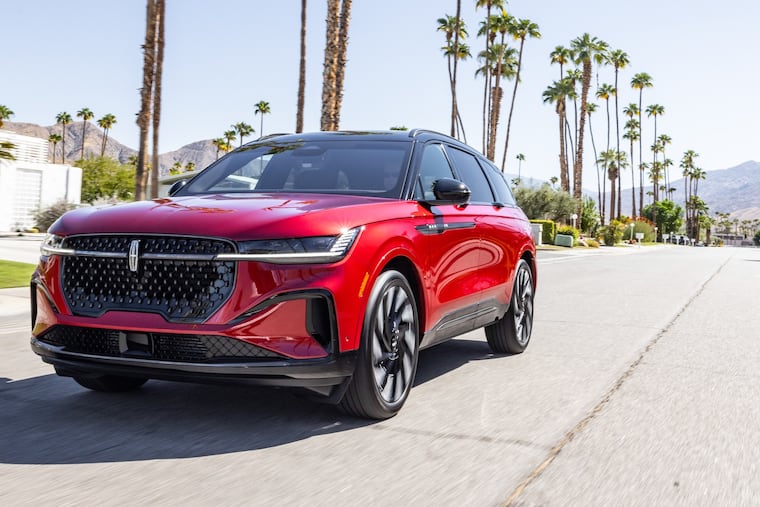
2026 Genesis GV80 3.5T Prestige AWD vs. 2026 Lincoln Nautilus Hybrid AWD Reserve III: Battle of the big screens.
This week: Lincoln Nautilus
Price: $76,380 as tested.
What others are saying: “Highs: Nicest interior in Lincoln’s lineup, cool extra-wide dashboard display, hands-free driving feature is standard. Lows: Acceleration and road manners are mid, real-world highway fuel economy isn’t better than the nonhybrid model, best features reserved for Black Label trim,” says Car and Driver.
What Lincoln is saying: “Experience the SUV named best luxury hybrid of 2026.” (A U.S. News and World Report award.)
Reality: I’m not sure I’ve ever cited U.S. News here, and there’s a reason for that.
What’s new: The Nautilus was last redesigned for the 2024 model year. It gets a new look for 2027 as well. Time to shop for a deal.
Competition: In addition to the GV80, there are the BMW X5, Land Rover Defender, Lexus RX, Mercedes-Benz GLE, and Toyota Land Cruiser.
Up to speed: The Nautilus tested uses a 2.0-liter engine and hybrid motor and battery that together make 280 horsepower. The vehicle gets to 60 mph in 6.6 seconds, according to Car and Driver, which is not bad for a hybrid SUV. There’s also a non-hybridized version which creates just 250 horses.
Shiftless: Lincoln uses five buttons where the center of the dashboard meets the console for PRNDL, in a nod to the original 1958 Edsel, which pioneered a push-button transmission in the center of the steering wheel. That one was ridiculous because what an odd location; this one is ridiculous because it wastes so much valuable real estate.
On the road: The Nautilus rides quite nicely, even among luxury midsize SUV competitors. Super smooth and quiet, but not as detached as the Mercedes. It’s not much fun on the curves but definitely easy to get around in, and highways are a delight.
Driver’s Seat: First, the screen. I’ve heard raves about the screen, and I’ve seen pictures of the screen. But it is not until you sit in front of the 48-inch screen that you realize the IMAX 3D nature of the screen. The weather. The date, as big as a calendar. The time in huge numbers, turning from the minute before to the current minute and the minute after, flipping like a graphic representation of the old mechanical flip digital clocks. The map. The gauges. All swept across the top of the dashboard in an arc. Mr. Driver’s Seat’s aging eyes approve.
But in the end it’s kind of a letdown. There are only three changeable screens from a total of six choices. Woo hoo. You still have a separate 11.1-inch touchscreen near you for the things you can change, and that touchscreen faces awkwardly out of your gaze where you might reach for a cup, and it looks smaller than it is.
The seat itself is super comfy and beautifully proportioned, rife with snuggles, from the shape of the seat and the side bolsters.
Finally, let’s talk about getting into and out of the Driver’s Seat. Lincoln has long since dispensed with the fake tire on the trunk but the designers made an unexpected nod to tradition with the door handles.
There’s an exterior trim piece riding the beltline under the windows, and it is there you’ll see the bump-out handles with the opener mechanisms underneath. It took me a minute to find them. This looks to be a nod to the 1960 Mercury Montclair, a vehicle I recall seeing once as a small child, and this design touch completely fascinated me — even almost 50 years later. But it does seem like something for children, honestly. Still, I guess this is better than the pop-out handles that may not, in fact, pop out — or worse.
The exit ramp from the Nautilus is almost as clever/silly. The door armrest has a large toggle sticking up in the front of the part that you grab to close the door.
Sturgis Kid 4.0 had to move the vehicle in the driveway and commented on how hard it was to find different features. When I first sat down in it later, I messaged him, “Tried to release the emergency brake. Opened the gas tank.”
Friends and stuff: The rear seat feels like a letdown compared to the front. It’s flat and kinda blah feeling, not hard nor soft, and yet not just right. Legroom, foot room, and headroom are all awesome, though the middle passenger will dispute that.
Cargo space maxes out at 71.3 cubic feet.
In and out: The Nautilus sits at a nice height, so everyone should find it easy to enter and exit.
Play some tunes: The stereo is mostly controlled by the touchscreen save for an enormous volume dial in the console, something that cars from the 2010s made me think would be the PRNDL. Add this and the transmission controls together, and factor in the six pretty toggles with the fairly illegible-for-a-man-of-a-certain-age labels, and one just wants to shout “WHY?!?!” into the sea.
Sound from the 28 Revel Ultimate 3D speakers is just fair, about a B+. It had flashes of being better but it was not overall.
Keeping warm and cool: Most of the controls can be found along the bottom of the touchscreen, and those are fairly easy to sort as long as the vehicle is not in motion.
The vents look like they stretch across the front of the cabin but they really don’t. I didn’t find any way to redirect the air flow.
Fuel economy: The vehicle averaged around 26 mpg over about 2,500 miles of travel in various journalist and delivery-driver hands. Advantage, Lincoln.
Where it’s built: Hangzhou, China.
How it’s built: The Nautilus Hybrid gets a 2 out of 5 for predicted reliability from Consumer Reports.
In the end: The fuel economy and the bargain price over the Genesis makes this Lincoln worth a second look, and honestly the cool stuff is kinda cool after all.