Lower Merion has banned two parents from school board meetings for ‘disruptive’ behavior. Can it do that?
Solicitor Kenneth Roos sent the parents letters saying they violated Lower Merion's civility policy after they shouted during meetings about school technology use. An ACLU lawyer questioned the bans.
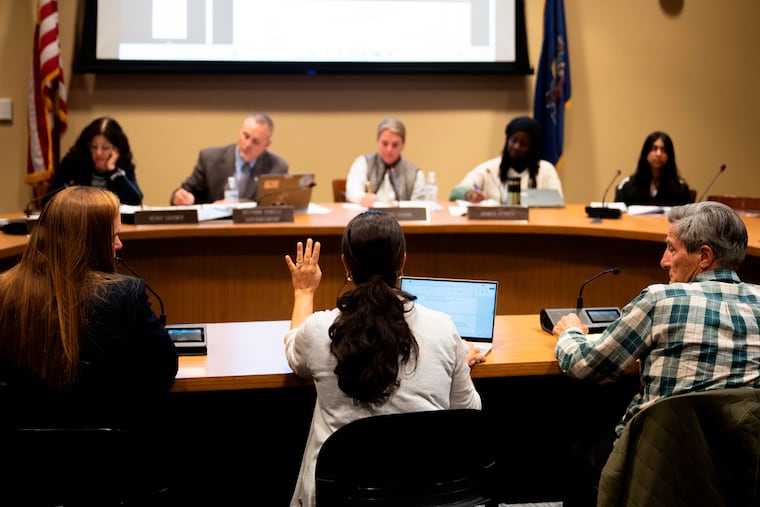
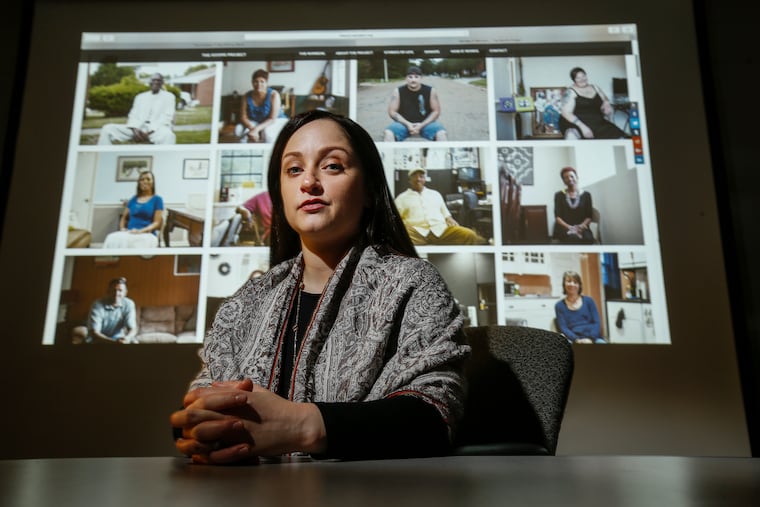
Rebecca Foscolo acknowledges she was “extra spicy” at a Lower Merion school board meeting in June, when the board voted to repeal a policy that let parents like her opt their kids out of school-issued laptops and iPads.
Foscolo, who is part of a group of parents demanding that the affluent Montgomery County district scale back on screens, could not believe the board was moving ahead with the vote, after parents had pleaded for the option to say no to devices they said were imperiling their kids’ ability to learn.
“All these educated people are telling you you are doing something wrong, and you are sitting there and doing nothing,” Foscolo yelled at the board, while seated in a row in the Lower Merion High School auditorium.
Members of the district’s security came up to Foscolo, who left on her own.
Now she is no longer allowed to attend Lower Merion school board meetings in person, for a year.
After a second outburst during a board policy committee meeting on Aug. 3, Foscolo received a letter from the district’s solicitor, informing her she had violated Lower Merion’s civility policy.
A second parent in the Pencils Over Pixels group, David Smyth, said he had received a similar letter after the meeting.
In his Aug. 4 letter to Foscolo, Lower Merion solicitor Kenneth Roos wrote that at both the June 15 and Aug. 3 board meetings, she “displayed disruptive and bullying behavior, including yelling at school board members and administrators while they were conducting board business.” He said her conduct “contributed to the board needing to go into recess prior to the completion of each meeting.”
The district on Friday announced that its meeting on Monday night, when the board is expected to approve a new technology policy, would be virtual only “due to disruptions at two recent meetings,” as well as “threatening comments on social media pages.” It did not say what the social media comments were.
Foscolo, who shouted at the board that “the way you’re responding is ridiculous” after it cut off public comment on Aug. 3 before she had a chance to speak, accused the district of violating her constitutional rights.
“They’re basically just trying to bully me and silence me,” Foscolo said in an interview. She and Smyth were banned from attending school board meetings until June 30, 2027. They can watch meeting live streams and submit written comments, Roos said.
The bans come amid ongoing tensions between the Pencils Over Pixels group and the 8,500-student Lower Merion School District over school technology use, a battle that has received national attention amid a growing parental movement pushing back on screens in schools.
”While we would have preferred that everyone remained calm, and we recognize that the behavior may have been perceived as disruptive, we do not believe banning concerned community members from all future board meetings is an appropriate or productive response," the group said in a statement.
In another statement, Pencils Over Pixels said it was “disappointed” by the decision to make Monday’s meeting virtual.
Any threatening comments “were not condoned by any member of this group and any threatening language is promptly removed,” the group said.
Is it legal?
First Amendment lawyers said the district’s actions in banning residents could be running afoul of their constitutional rights.
“Unless there’s a threat of violence, there’s really no basis” to ban someone from public meetings, said Sara Rose, deputy legal director of the ACLU of Pennsylvania. A person who is “truly disruptive” can be removed from a meeting, she said, and if the district referred the matter to prosecutors, a court could decide to ban the person.
“But the school district cannot unilaterally tell people they cannot attend future meetings,” Rose said, adding: “I haven’t found a single decision that says that’s permissible.”
The ACLU in November 2024 sued the Souderton Area School District after it banned two parents and a student from school properties, accusing them of threatening a school board member. The parents and student, who were part of a group of demonstrators protesting the board president, said they were wrongly accused, and the district lifted the ban in March 2025.
Other restrictions on speech during school board meetings have also led to legal battles. In 2022, the Pennsbury School District agreed to pay $300,000 to four men who had sued the district, saying their public comments at board meetings had been illegally curtailed. A federal judge had previously directed the district to stop enforcing a policy that prohibited abusive, offensive, or personally directed public comments.
Melissa Melewsky, media law counsel at the Pennsylvania NewsMedia Association, questioned Lower Merion’s decision to end public comment after 45 minutes during its Aug. 3 policy committee meeting.
While government agencies are allowed to have guidelines for how long public comment can last, “there has to be flexibility,” Melewsky said. If there is not enough time to hear every person on a controversial issue, she said, agencies are supposed to schedule another meeting to finish the public comment, and “any proposed action has to be put off as well.”
Asked why the district believed its actions were legal, spokesperson Amy Buckman said that residents “were advised that intentionally disrupting a lawful meeting or the administration of a government function is a criminal offense in Pennsylvania.”
She noted the board’s policy for committee meetings includes a 45-minute time limit for public comment on agenda items, “unless extended by the board for special circumstances.”
Pencils Over Pixels said its members had been “assured by the board that the Aug. 3 meeting would be an opportunity to engage with the policy committee” and receive feedback to their questions about the district’s new technology policy.
While Pencils Over Pixels said it had urged its members to remain “calm and professional,” some “were rightfully upset that they were unable to engage in dialogue with the committee as promised,” the group said. “Unfortunately, their emotions governed their behavior.”
Frustrations around tech use
Lower Merion parents have been appearing before the board to complain about school technology use since the spring, describing kids focused on gaming or visiting inappropriate websites instead of doing schoolwork. Others have criticized the district’s use of educational technology programs as low quality, and say they do not want their kids doing reading and math on computers. Hundreds of parents signed a petition in favor of opting out of computers.
The district, which has said it is not possible to opt out of technology use, rescinded its policy allowing for that option and has been moving forward with a new version that places more limits on screens.
Under the policy, which the board is expected to vote on Monday, kindergartners and first and second graders will no longer be issued personal devices, while third and fourth graders will have personal logins to computers in the classroom. The policy includes new guidelines for screen time by grade, and district officials say there will also be new tools for teachers and parents to monitor kids’ internet usage.
Parents pushing for stricter limits have called for the district to release its contracts with educational technology companies and data on how long students are on screens during the school day.
They also want more say in how technology is used, including through the creation of a committee to review the district’s educational technology programs.
“They’ve not been really having good-faith personal conversations,” Smyth, who has a seventh and an eighth grader, said of the board.
Smyth, who went up to the microphone after the board said that public comment was over Aug. 3 and called on the board to answer how many speakers remained, said in an interview he was “only disruptive to insist on continuing public comment.”
Foscolo, who has a rising first grader and a 3-year-old, said that while she had previously addressed the board about the technology policy and had met with several board members, she had repeatedly asked to meet with the board’s president, Kerry Sautner, and the policy committee chair, Anna Shurak.
When Sautner responded, she told Foscolo to come to the Aug. 3 meeting, Foscolo said. She was frustrated she was not able to speak then.
To Foscolo, the board appears to be “placating” parents who have concerns about technology, rather than having genuine debate.
“You have a bunch of parents who want to help, and you’re like, ‘Don’t talk,’” she said.

Inquirer Lower Merion