Iran targets Bahrain twice after months of quiet, claiming retaliation against U.S.
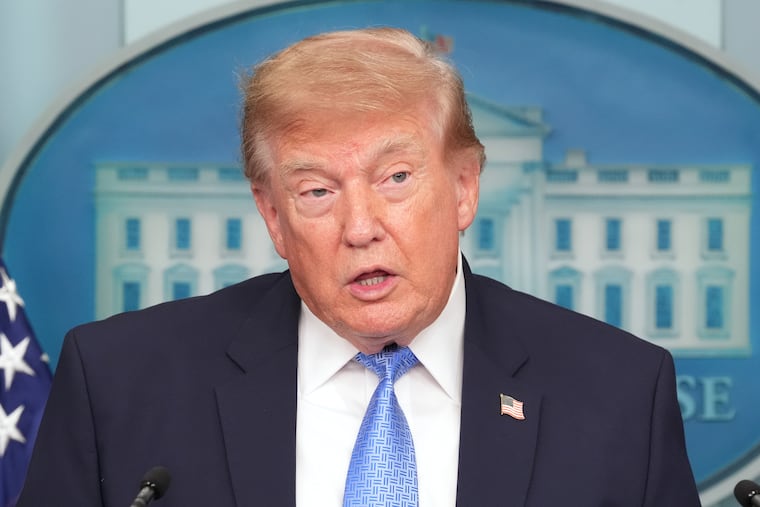
The resumption of attacks comes as President Donald Trump has said that the U.S. will maintain the “status quo” in its war with Iran.

ABU DHABI, United Arab Emirates — Sirens sounded and explosions were heard in Bahrain on Sunday in an attack Iran said targeted U.S. military equipment at a helicopter base in retaliation for American strikes in Iran.
Bahrain, home to the U.S. Fifth Fleet Navy base, was targeted by hundreds of Iranian drones and missiles during the first months of the war, but had been relatively quiet recently.
Then on Friday, Iran again began targeting Bahrain, with the Islamic Revolutionary Guard Corps saying it had struck “early warning radar of the aggressor U.S. military.”
U.S. Central Command denied the radar was destroyed and said it had shot down two Iranian drones.
Tehran said Friday that its attack was in retaliation for U.S. strikes on Iranian sites, including Qeshm Island. It described Sunday’s as the “second phase of a decisive and crushing response” to the United States.
The resumption of attacks comes as President Donald Trump has said that the U.S. will maintain the “status quo” in its war with Iran — signaling last week that a massive military escalation is unlikely but also saying a diplomatic solution to end the war is unnecessary. In the region, there is widespread concern that the strikes have the potential to once again expand.
Sunday’s attack marked “a return to using Gulf states’ territory as a stage for exchanging military messages with Washington,” Ebtesam Al-Ketbi, president of the Emirates Policy Center, said in a statement on X.
“Iran appears to want to increase military pressure without sliding into an all-out confrontation, using that pressure to improve its negotiating position,” Ketbi wrote. “But repeated attacks on Bahrain carry the risk of miscalculation and could open a new round of escalation.”
Residents in Bahrain, an island nation of 1.6 million, reported hearing sirens from early-warning systems and explosions, as the government urged residents to keep calm and take shelter.
The IRGC said in a statement, carried by state media, that it had targeted Bahrain’s Riffa Air Base with six drones. Bahrain’s air-defense systems intercepted “several treacherous Iranian aerial attacks,” the military said in a statement.
Tim Hawkins, a spokesperson for U.S. Central Command, said there had been “no impacts to American forces” as a result of the attacks. Bahrain’s government did not respond to questions about whether there were damages. The Fifth Fleet base suffered extensive damage during the first phase of the war, and few Americans are still operating there.
U.S. officials confirmed to the Washington Post this month that U.S. strikes hit Iran’s Qeshm Island, with one U.S. official, speaking on the condition of anonymity to discuss the operation, describing them as “defensive.”