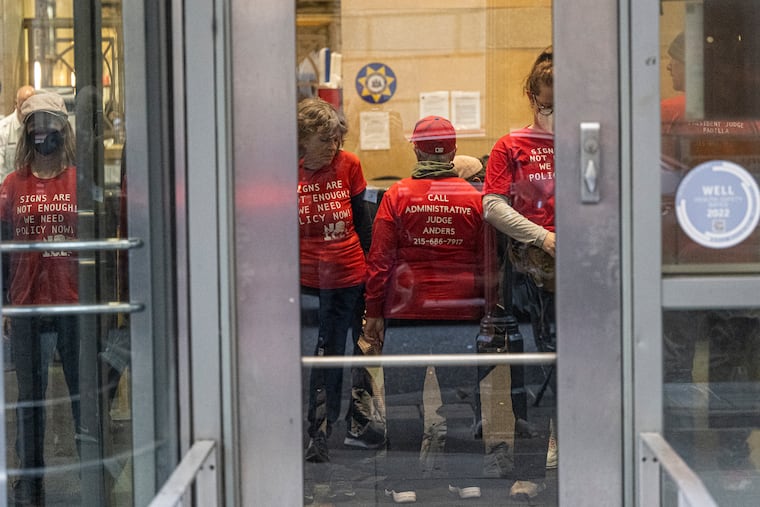
Proposed Philly school closures would disproportionately impact Black students. Here’s a look at the data behind the decisions.
The proposal to close 20 Philadelphia public schools would address mostly buildings with hundreds of unused seats. The district says the plan is designed to improve academic outcomes.
Superintendent Tony B. Watlington Sr.’s plan to restructure the Philadelphia School District landed with a boom this month — and the changes it could bring would be felt for years to come.
An Inquirer analysis of the decisions and the data behind them shows the proposed closures would disproportionately affect Black students. And despite efforts to minimize the impact, schools in the most vulnerable sections of Philadelphia would also be disrupted.
The closures would mostly address buildings with hundreds of unused seats, though some largely empty buildings were spared. And eight of the closures would affect schools given the district’s worst building condition rating — though 30 more buildings in that category would stay open and receive upgrades of some kind.
Monique Braxton, district spokesperson, said the facilities plan was “designed to provide access to high-quality academic and extracurricular programs across every neighborhood regardless of zip code.”
Most affected students — 90% — would be reassigned to schools with similar or better academic outcomes, and all would be reassigned to schools with either similar or better academics or comparable or better building conditions. Receiving schools will get additional supports, Braxton said.
Overall, the proposal would shake up at least 75 schools, with 20 closing entirely, four leaving their current buildings to colocate within other schools’ buildings, and three moving to new buildings. It would create new schools and, in one case, result in a new building. Nearly 50 other district schools would take in displaced students from the closing schools, with some adding grades and others modernizing to fit new programming needs.
» READ MORE: What’s happening to your Philly school under the proposed facilities master plan?
Collectively, about 32,000 district students learn in the 75 affected schools — more than a quarter of the district’s total enrollment — not counting children in pre-K programs.
And those are just the changes Watlington introduced this month. Other shifts, some of them major, district officials said, are expected to be announced by the time he presents the plan to the school board next month. A final vote is planned for later this winter.
The racial impact
The 20 schools that could close have twice as many empty seats as the district’s other schools. But The Inquirer’s analysis found that the closures will hit Black students disproportionately.
Among the closing schools, about 68% of the student population is Black, compared with 40% for the rest of the district’s schools — not including disciplinary or other specialized schools.
Of the district’s schools where at least 90% of the students are Black, more than half are scheduled to close or take in more students from the closures.
Overall, a majority of students in the 75 schools that could close, take in students, or change in some way are Black, at about 54% of enrollment.
Some majority-Black schools, however, are earmarked for upgrades. Bartram High would get a modern athletics facility after nearby Tilden Middle School in Southwest Philadelphia is closed and upgraded for that purpose.
Nysheera Roberts is the parent of multiple children who attend Waring Elementary, in Spring Garden, which landed on the closure list. Waring now educates under 200 students; its pupils would be sent to Bache-Martin.
Roberts is stunned that her school — which educates mostly Black students like her kids — could close.
She worries about the logistics of getting her kids to school safely further away, then getting to her job in home care in Frankford on time. She worries what will happen to her children, including the niece and nephew she now raises who have lived through significant trauma and have behavioral and learning needs, if they have to adjust to a new and larger school.
“It’s not fair,” Roberts said. “They’re hurting Black kids more.”
Paying attention to vulnerable neighborhoods
In deciding which schools to close or expand, the district considered the vulnerability of the surrounding neighborhood.
Two dozen neighborhood elementary schools were labeled “very high risk,” meaning they have likely dealt with a previous school closure, or the community is otherwise vulnerable to high poverty, housing concerns, or other factors.
Welsh, in North Philadelphia, was the only school building in a neighborhood labeled “very high risk” to land on the closing list.
Bethune in North Philadelphia and Martha Washington in West Philadelphia will colocate with other schools.
But three schools with building conditions considered unsatisfactory, poor programming options, and “very high risk” neighborhood ratings were left off the closure list. Those schools are Philadelphia Military Academy in North Philadelphia, Sheppard in West Kensington — which has successfully fought off closure in the past — and Francis Scott Key in South Philadelphia, the district’s oldest building, constructed in 1889. Sheppard and Francis Scott Key are both majority-Hispanic schools.
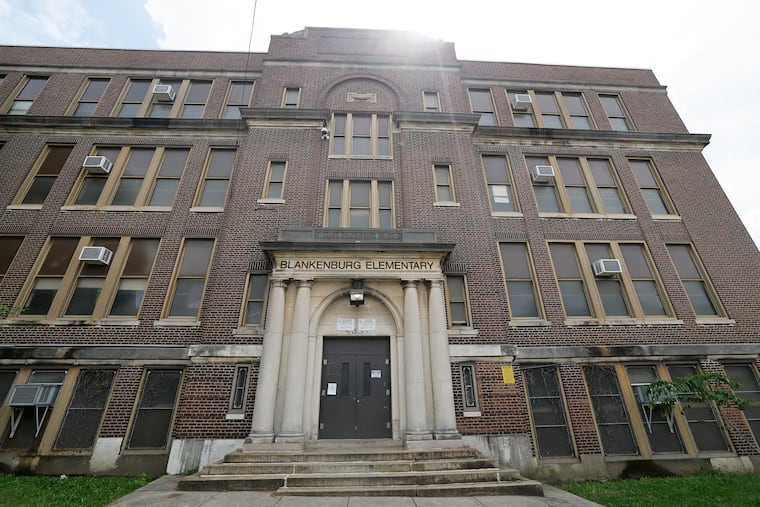
The district plan calls for closing five schools in neighborhoods it deemed to have a “high risk” of vulnerability, the level below “very high”: Blankenburg, Harding, Stetson, Tilden, and Wagner.
Watlington has made it clear that the district is phasing out middle schools when possible, in favor of the K-8 model — and of that list, four are middle schools. Only Blankenburg, in West Philadelphia, is an elementary. Also, of those schools in vulnerable neighborhoods, four of the five are rated as having “unsatisfactory” buildings, the district found.
Perhaps no section of the city faces as much disruption from the recommendations as the lower part of North Philadelphia.
Fourteen schools with a combined enrollment of 5,400 students could be affected, including the closures of Ludlow, Morris, Penn Treaty, and Waring.
Councilmember Jeffery Young Jr., whose district includes many of the schools that would be affected, expressed alarm at the proposal. He has suggested a City Charter change that would allow City Council to remove school board members.
“If you are closing schools during a literacy crisis, then you should be held directly accountable to the people you serve,” Young said last week.
Right sizing mostly empty buildings
Underused space was a factor in the district’s decision-making, an Inquirer analysis found.
Data released by the district last year identified about 60 schools that were more than half empty. The recommendations attempt to realign some of these schools by taking significant action on 31 of the 60 half-empty schools.
Of the 20 schools the district wants to close, 14 are currently at less than half capacity.
AMY Northwest, Conwell, Robert Morris, Motivation, Tilden, and Welsh are all recommended for closure, with each educating fewer than a quarter of the students they have room for.
Overbrook High in West Philadelphia — a 100-year-old school with roughly one in four seats filled — would remain open but begin sharing space with the Workshop School, a small, project-based high school located nearby.
Overbrook has received millions in funding from the state for remediation and a new roof. It also has a strong alumni association.
Having a more robust enrollment, however, did not save some schools from landing on the closure list. Harding, Parkway Northwest, Pennypacker, Robeson, and Stetson operate at 50% to 74% of capacity but would still close.
Besides shutting down underused schools, the plan would alter an additional 17 half-empty schools by moving them into colocations, adding grades, or otherwise expanding their use by taking in students from the closing schools.
To make it work, the district’s recommendations often involve a series of logistical steps. A pair of North Philadelphia neighborhood schools built in the 1960s are one example.
Hartranft, a K-8 school in North Philadelphia with a building rated in “good” condition but only 37% occupied, would take in students from Welsh, a school marked for closure. Welsh teaches the same grades but in a building rated “poor” about a half a mile away. The district would then convert the Welsh building into a new year-round high school.
Getting students out of (some) fatigued buildings
By one city estimate, district schools need about $8 billion in repair costs for 300-plus buildings that are about 75 years old on average. Watlington’s plan calculates the district could do it for $2.8 billion.
Even with some investments over the last decade, many schools still have asbestos, lead, or mold issues. And many schools that don’t have bad building quality ratings still need improvements.
Eight schools recommended for closure are in buildings rated “unsatisfactory” by the district, its lowest score.
An additional 30 schools also rated “unsatisfactory” would remain open under the plan, including some expected to see an increase of students.
Watlington wants the district to pay for $1 billion of the plan’s price tag with its own capital funds over the next decade. That would leave $1.8 billion unfunded, and he wants the state and philanthropic funders to cover the rest.
If the full $2.8 billion plan is funded, Watlington said, the district could improve every building labeled “poor” or “unsatisfactory.”
To achieve this, some buildings could get the same kind of treatment Frankford High received — a $30 million major renovation project to remedy significant asbestos damage. Students had to relocate into an annex and another building for two years while the work was done.
The district plan calls for some of the buildings in the worst shape to receive more students. Bache-Martin, Catharine, Howe, John Marshall, and Middle Years Alternative are in buildings that need significant upgrades, according to the district’s analysis, but all would take on more pupils.
In the case of Howe, the district wants to add grades to keep students who would have attended Wagner, a middle school that is proposed to close.
The district has said Bache-Martin would receive upgrades if the plan is adopted. For other schools, neither the timeline nor the fixes they would receive are clear.
The recommendations so far only mention a handful of schools set to modernize.
Among them is Comly, a K-5 in the Somerton neighborhood.
Comly now has 660 students enrolled, putting it at 107% of its capacity. But the district recommends modernizing the school and accepting middle grades students from the Comly and Loesche catchments. Students who now attend Loesche, another K-5, go to Baldi Middle School, which is also overcrowded.
What appears to set schools like Bache-Martin apart from some of the closures is higher occupancy. Together, about two dozen schools that are more than half occupied would remain open, even though the buildings are “unsatisfactory.”
Schools on this list — like Barton Elementary, which runs at about 80% of its capacity — are harder to shutter or colocate if no nearby school has low attendance. That makes building upgrades a more logical solution.
But those two dozen schools are not the only ones in need of significant building upgrades.
An additional 45 schools currently operate in buildings rated slightly better at “poor,” the category just above “unsatisfactory.” The district recommends closing seven of them and colocating two.
And beyond that large number of fatigued schools, many others in poorly rated buildings will remain unchanged for now, with about 10 even taking in more students.
Roxborough High, for example, would merge Lankenau High’s students into the school as an honors program.
Watlington has said that in total, 159 schools would modernize over a decade if the plan is approved and fully funded, but absent extra state and private money, that number could drop.

Wholesale changes are coming to the Philadelphia School District, with the school board passing a $3 billion facilties plan that aims to close 17 schools permanently, and renovate 169.
Superintendent Tony B. Watlington Sr. presented the plan to the school board Feb. 26 and it immediately faced strong opposition. After some amendments, the board passed the plan April 30. Here's what we do and don't know about it.
And to see the proposed list school closures and check how your school could be impacted, use our interactive charts.
Each of the schools proposed for closure has its own story. Find them all here.
The Inquirer’s journalism is supported, in part, by the Lenfest Institute for Journalism and readers like you. News and editorial content are created independently of The Inquirer’s donors. Gifts to support The Inquirer’s high-impact journalism can be made at inquirer.com/donate. A list of Lenfest Institute donors can be found at lenfestinstitute.org/supporters.