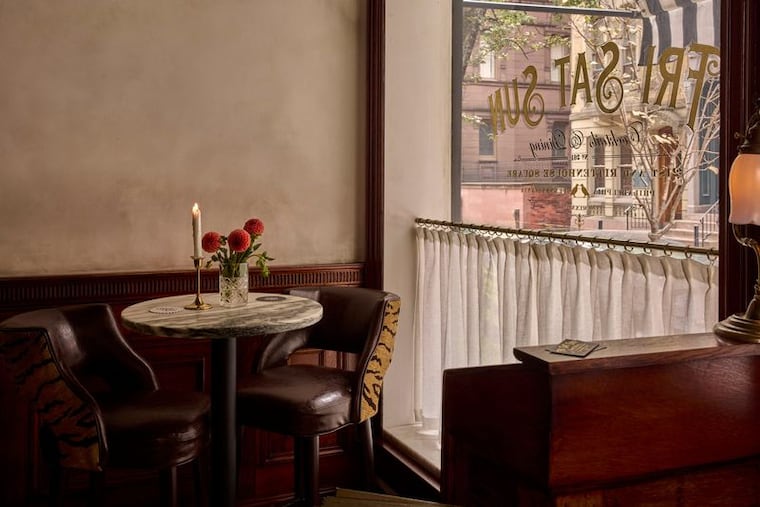
Philly's thriving restaurant scene is almost entirely a good thing, but one drawback comes to mind: so many restaurants, so little time. The Inquirer Food Festival, now in its second year, presents a perfect chance to scratch at least a dozen restaurants off your bucket list. The all-day event, split into two sessions, features more than 40 of the city's best restaurants and bakeries. Here are six Center City restaurants whose chefs will be cooking at the Fillmore come Nov. 14. If you're tempted, get a ticket soon — the festival is nearing sellout.
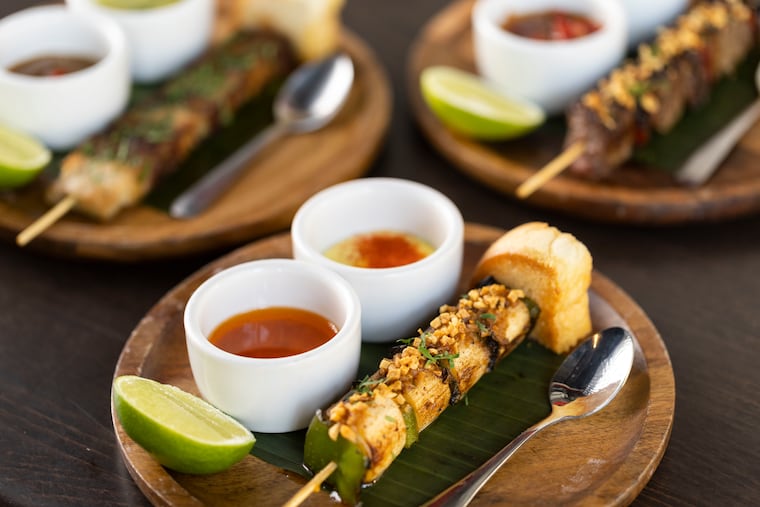
Bolo
Chef Yun Fuentes’ Bolo is a love letter to both Puerto Rico, where Fuentes grew up, and Philadelphia, where Fuentes has put down his family’s roots. Its menu is inspired by a question one of his daughters once asked him: Am I Puerto Rican or Philadelphian? Located in Center City, Bolo melds Latin American classics with East Coast ingredients. Think mofongo served with an entire butter-poached Maine lobster or cornmeal sorullitos stuffed with cheese sourced from Chester County. When Fuentes opened the restaurant in 2023, he envisioned its downstairs bar as an extension of the marquesina, or covered patio, of his grandmother’s salon back in Puerto Rico, where his grandfather would make snacks and cocktails for patiently waiting husbands. At The Inquirer Food Festival, Fuentes will be preparing a riff on guineos en escabeche, a classic cold Puerto Rican side dish he remembers being “at every family function as a kid.” The base is a mixture of tender boiled green bananas marinated in a mixture of onions, garlic, and vinegar. In Fuentes’ family, they were traditionally served with chicken gizzards, but the chef is swapping in sardines, which he plans to pickle in a lemony brine and top with pine nuts. The vibe is that of a German-style potato salad with more flair, Fuentes said — a mix of starch, tang, salt, and crunch. “It’s honestly something that’s going to come across very unexpected,” he laughed. A two-time James Beard Award semifinalist and a regular on The Inquirer’s The 76, Fuentes said little matched the rush of appearing at the first-ever Inquirer Food Festival last year, where he served tacos and threw rolled up T-shirts to the crowd as if he were a rock star. “The room is buzzing,” he said. “It feels very personal when you’re passing food straight from your hands.” — Beatrice Forman

Dara
At Dara in Washington Square West, chef-owner Wichittra Phansaeng wants to move diners beyond the familiar shorthand of Thai food. The dish she has created for The Inquirer Food Festival, Dara’s Starlit Tuna Koi, does just that: It’s a minced raw fish "salad" of fresh tuna with shallots, toasted rice powder, chile flakes, lime juice, kaffir lime leaves, culantro, and mint, served in a crispy phyllo shell. The Isaan-style dish, she said, is an approachable introduction to the herbal, spicy flavors of northeastern Thailand. “For me, this dish represents the connection between two places that I care about — the authenticity and bold spirit of Isaan, and the energy, diversity, history, and modern character of Philadelphia,” she said. (A version of the tuna is expected to join Dara’s menu in October.) Phansaeng opened Dara in 2024 after working at Nourish Thai in New York. She grew up in Ang Thong, Thailand, helping her grandmother cook, and later studied culinary arts at Dusit Thani College. Her training also included Le Méridien Khao Lak Resort & Spa, Rayong Marriott Resort & Spa, and Mohegan Sun in Connecticut. The restaurant’s name reflects that connection to home: “Dara” means “star” in Thai. “When people are far away from home and miss their family, their country, or the place they grew up, they sometimes look up at the stars to feel a little closer to home,” she said. “No matter where you are in the world, you can look at the same stars.” – Michael Klein
Friday Saturday Sunday
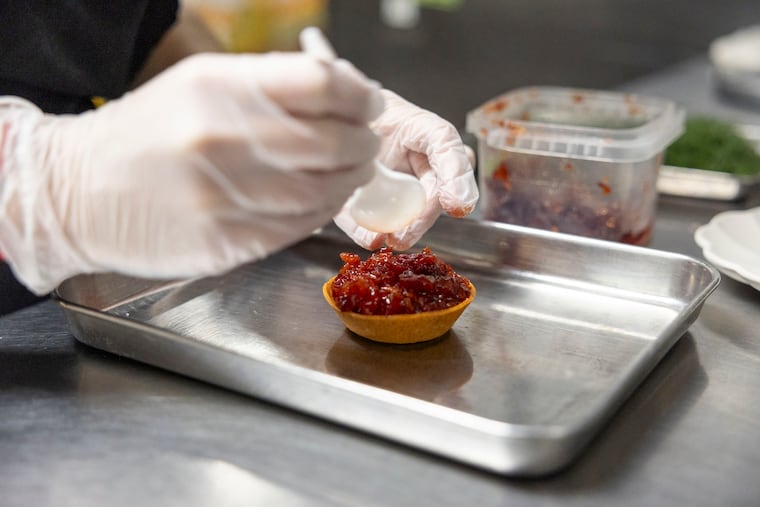
Amanda Rafalski is known to her colleagues at Friday Saturday Sunday by many titles. The former sous-chef is tagged in owner Chad Williams’ contacts as his “Chief of Staff.” But, when she’s not training for a marathon, she’s also the kitchen’s unofficial “Quarter Master,” “Go-Getter” and “Fixer” of appliances. “People always bring me stuff that’s broken because I can fix a Robot Coupe or KitchenAid!” she said. But Rafalki’s title as Friday Saturday Sunday’s executive pastry chef — and one of Philly’s finest — is her best-known role, having significantly contributed to the Rittenhouse restaurant’s rise to national prominence and praise from the James Beard Foundation (Outstanding Restaurant, 2023) and a Michelin star. Rafalski’s creative mastery of the cannelé, infusing the crunchy-creamy fluted pastry with everything from black sesame to the bar’s signature cocktail (the Assassin’s Handbook) or even real blood and chocolate for Halloween is rightfully renowned. And her approach to artfully weaving savory notes into her sweets — a telltale sign of her days as a line cook beside Williams as far back as his stint at Chifa — is perfectly suited to seamlessly stitching together the crescendo of an eight-course tasting menu. It’s a talent that will come in handy as her showcase grows as part of Friday Saturday Sunday’s planned expansion next door. She’s already creating some stunning desserts in anticipation of the enhanced gastronomic experience. A mini-tart layered with luscious duck-egg semifreddo topped with sour cherries recently took a “super-Polish turn” (in a nod to her family heritage), with haunting aftertones of caraway and toasted rye in the almond crumble. Rafalski will tap another biographical inspiration for this year’s Inquirer Food Fest, a “Midwestern Pavlova” meringue cup filled with rich corn custard and chamomile-blackberry compote topped with a crunchy golden nest of fried corn silk. For a chef who grew up in rural Indiana, playing tag in her best friend’s cornfield and picking wild berries from the bushes around her childhood home, this creation “is very much a presentation of where I come from and who I am.” — Craig LaBan
Little Water
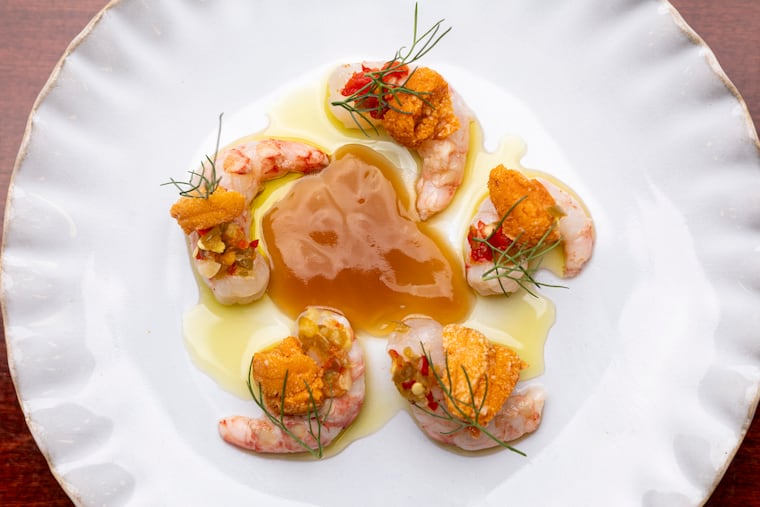
Opening Little Water, his second restaurant, shifted the way chef Randy Rucker operates in the kitchen. “My creative process has changed now that I have two restaurants,” he said. “It’s more conceptual now. I used to cook how I felt in the moment.” Both Little Water and River Twice are known for sourcing of pristine seafood (which he plans to serve at The Inquirer Food Festival) and their ever-evolving reinterpretations of classic dishes. Take Rucker’s tomato sandwich, a late-summer special that’s hotly anticipated every year, a tomato tower dressed with smoked mayonnaise, gamtae seaweed, and a quenelle of caviar. “I always start with the product. We can’t make bad product taste good, so it has to be good or great, and then we work backwards,” said Rucker. He and his chefs are dependent upon many seasonal ingredients for their best beloved dishes: Maine uni in fall, which tops Little Water’s crisp hash browns, or their grilled soft shell crab with koji butter in early summer. “I used to feel that I had to change the menu every day or else I wasn’t being creative,” said Rucker. “But I know now that each of my restaurants have dishes that people look forward to having.” — Kiki Aranita
Mod Spuds
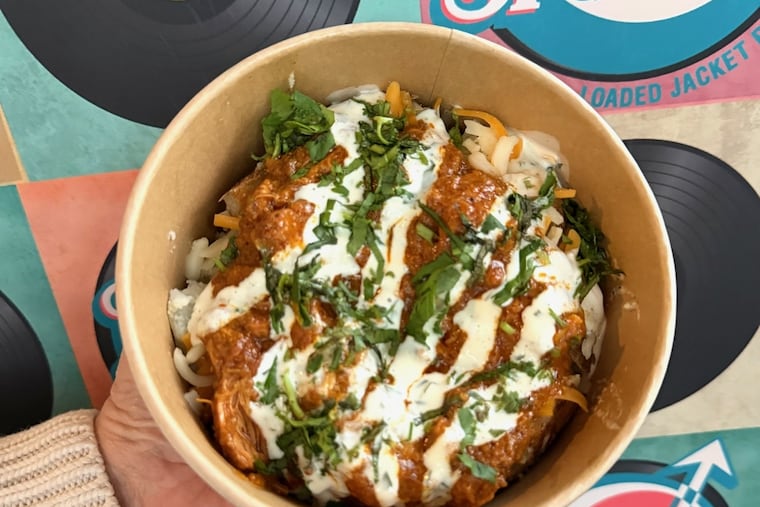
Ange Branca’s latest restaurant idea began with a 30-year-old memory from Scotland. Born in Singapore and raised in Malaysia, Branca worked at a Chinese takeaway in Edinburgh as a college student and became enamored with the city’s jacket-potato shops, where baked potatoes were split open and piled with fillings. Years later, after building a career around Malaysian cooking in Philadelphia — at Sate Kampar and its sequel, Kampar — Branca turned back to tubers with Mod Spuds, which opened last spring on South Street just west of Broad Street. Weekend breakfast there includes tattie scones, traditional Scottish potato pancakes that Branca says can be eaten with jam at teatime or used in place of bread alongside breakfast. For The Inquirer Food Festival, she is shrinking the tatties into bite-size wedges and using them to connect Mod Spuds with the Malaysian cooking that made her name in Philadelphia. One version will be topped with beef rendang, herbal ulam, and oniony sambal bawang; another with smoked salmon, cream cheese, and scallions. Both are gluten-free, and the rendang version is dairy-free. Branca entered the restaurant business after a corporate consulting career that included work for Deloitte, Fujitsu, and IBM. Saté Kampar, drawing on dishes and techniques she learned from her family, opened in 2016 on East Passyunk Avenue but closed during the pandemic. From there, she moved on to the pop-up circuit, developing Kampar Kitchen and the Muhibbah dinner series before opening Kampar in Bella Vista in early 2024. Kampar has been closed since a February 2025 fire and is expected to reopen by year’s end. “We’re at the last mile on this race,” she said. “It’s taken a long time to get the building back together.” — Michael Klein

Ogawa Sushi & Kappo
At Ogawa’s sushi counter, chef Carlos Wills shows off to diners, draping long, slinky-like needlefish over his arms, cracking open shells of live scallops, deftly making handrolls in just one hand, with a barely perceptible flick of his wrist. Wills is obsessed with scouring the globe (through his buyers) for seasonal seafood delicacies, as well as studying ancient Japanese techniques for aging fish and ways to dress them. “I try to stay as close to traditional Japanese style as possible, but I’m not even Japanese. I’m Honduran,” Wills said. The life of a sushi chef came calling when he was 14 and sent from his native home to live with a sushi-chef uncle in Washington D.C. His uncle taught him everything he knew, and as he fell more in love with the cuisine, Wills went to master sushi chef Minoru Ogawa to ask him to teach him even more about Edomae-style sushi. “His training was demanding. I cooked rice for three years,” said Wills, who spent nine and a half years under Ogawa’s tutelage before moving to Philadelphia to head up Ogawa’s Market Street location, where he is part-owner. Wills is particularly entranced with curing fish with salt and vinegar. It can transform a naturally funky fish into one that tastes sweet, balanced, and buttery.“It completely changes what people think of fishy mackerel,” he said. Wills likes to experiment with this technique — which will likely factor into the handrolls he aims to serve at The Inquirer Food Festival — letting fish cure for anywhere from two to 23 days. “I respect the Japanese processes,” he said. “People come in and say they’ve never tasted fish like this and it makes me so happy.” — Kiki Aranita
Bolo
Chef Yun Fuentes’ Bolo is a love letter to both Puerto Rico, where Fuentes grew up, and Philadelphia, where Fuentes has put down his family’s roots. Its menu is inspired by a question one of his daughters once asked him: Am I Puerto Rican or Philadelphian? Located in Center City, Bolo melds Latin American classics with East Coast ingredients. Think mofongo served with an entire butter-poached Maine lobster or cornmeal sorullitos stuffed with cheese sourced from Chester County. When Fuentes opened the restaurant in 2023, he envisioned its downstairs bar as an extension of the marquesina, or covered patio, of his grandmother’s salon back in Puerto Rico, where his grandfather would make snacks and cocktails for patiently waiting husbands. At The Inquirer Food Festival, Fuentes will be preparing a riff on guineos en escabeche, a classic cold Puerto Rican side dish he remembers being “at every family function as a kid.” The base is a mixture of tender boiled green bananas marinated in a mixture of onions, garlic, and vinegar. In Fuentes’ family, they were traditionally served with chicken gizzards, but the chef is swapping in sardines, which he plans to pickle in a lemony brine and top with pine nuts. The vibe is that of a German-style potato salad with more flair, Fuentes said — a mix of starch, tang, salt, and crunch. “It’s honestly something that’s going to come across very unexpected,” he laughed. A two-time James Beard Award semifinalist and a regular on The Inquirer’s The 76, Fuentes said little matched the rush of appearing at the first-ever Inquirer Food Festival last year, where he served tacos and threw rolled up T-shirts to the crowd as if he were a rock star. “The room is buzzing,” he said. “It feels very personal when you’re passing food straight from your hands.” — Beatrice Forman

Dara
At Dara in Washington Square West, chef-owner Wichittra Phansaeng wants to move diners beyond the familiar shorthand of Thai food. The dish she has created for The Inquirer Food Festival, Dara’s Starlit Tuna Koi, does just that: It’s a minced raw fish "salad" of fresh tuna with shallots, toasted rice powder, chile flakes, lime juice, kaffir lime leaves, culantro, and mint, served in a crispy phyllo shell. The Isaan-style dish, she said, is an approachable introduction to the herbal, spicy flavors of northeastern Thailand. “For me, this dish represents the connection between two places that I care about — the authenticity and bold spirit of Isaan, and the energy, diversity, history, and modern character of Philadelphia,” she said. (A version of the tuna is expected to join Dara’s menu in October.) Phansaeng opened Dara in 2024 after working at Nourish Thai in New York. She grew up in Ang Thong, Thailand, helping her grandmother cook, and later studied culinary arts at Dusit Thani College. Her training also included Le Méridien Khao Lak Resort & Spa, Rayong Marriott Resort & Spa, and Mohegan Sun in Connecticut. The restaurant’s name reflects that connection to home: “Dara” means “star” in Thai. “When people are far away from home and miss their family, their country, or the place they grew up, they sometimes look up at the stars to feel a little closer to home,” she said. “No matter where you are in the world, you can look at the same stars.” – Michael Klein
Friday Saturday Sunday
Amanda Rafalski is known to her colleagues at Friday Saturday Sunday by many titles. The former sous-chef is tagged in owner Chad Williams’ contacts as his “Chief of Staff.” But, when she’s not training for a marathon, she’s also the kitchen’s unofficial “Quarter Master,” “Go-Getter” and “Fixer” of appliances. “People always bring me stuff that’s broken because I can fix a Robot Coupe or KitchenAid!” she said. But Rafalki’s title as Friday Saturday Sunday’s executive pastry chef — and one of Philly’s finest — is her best-known role, having significantly contributed to the Rittenhouse restaurant’s rise to national prominence and praise from the James Beard Foundation (Outstanding Restaurant, 2023) and a Michelin star. Rafalski’s creative mastery of the cannelé, infusing the crunchy-creamy fluted pastry with everything from black sesame to the bar’s signature cocktail (the Assassin’s Handbook) or even real blood and chocolate for Halloween is rightfully renowned. And her approach to artfully weaving savory notes into her sweets — a telltale sign of her days as a line cook beside Williams as far back as his stint at Chifa — is perfectly suited to seamlessly stitching together the crescendo of an eight-course tasting menu. It’s a talent that will come in handy as her showcase grows as part of Friday Saturday Sunday’s planned expansion next door. She’s already creating some stunning desserts in anticipation of the enhanced gastronomic experience. A mini-tart layered with luscious duck-egg semifreddo topped with sour cherries recently took a “super-Polish turn” (in a nod to her family heritage), with haunting aftertones of caraway and toasted rye in the almond crumble. Rafalski will tap another biographical inspiration for this year’s Inquirer Food Fest, a “Midwestern Pavlova” meringue cup filled with rich corn custard and chamomile-blackberry compote topped with a crunchy golden nest of fried corn silk. For a chef who grew up in rural Indiana, playing tag in her best friend’s cornfield and picking wild berries from the bushes around her childhood home, this creation “is very much a presentation of where I come from and who I am.” — Craig LaBan

Little Water
Opening Little Water, his second restaurant, shifted the way chef Randy Rucker operates in the kitchen. “My creative process has changed now that I have two restaurants,” he said. “It’s more conceptual now. I used to cook how I felt in the moment.” Both Little Water and River Twice are known for sourcing of pristine seafood (which he plans to serve at The Inquirer Food Festival) and their ever-evolving reinterpretations of classic dishes. Take Rucker’s tomato sandwich, a late-summer special that’s hotly anticipated every year, a tomato tower dressed with smoked mayonnaise, gamtae seaweed, and a quenelle of caviar. “I always start with the product. We can’t make bad product taste good, so it has to be good or great, and then we work backwards,” said Rucker. He and his chefs are dependent upon many seasonal ingredients for their best beloved dishes: Maine uni in fall, which tops Little Water’s crisp hash browns, or their grilled soft shell crab with koji butter in early summer. “I used to feel that I had to change the menu every day or else I wasn’t being creative,” said Rucker. “But I know now that each of my restaurants have dishes that people look forward to having.” — Kiki Aranita
Mod Spuds
Ange Branca’s latest restaurant idea began with a 30-year-old memory from Scotland. Born in Singapore and raised in Malaysia, Branca worked at a Chinese takeaway in Edinburgh as a college student and became enamored with the city’s jacket-potato shops, where baked potatoes were split open and piled with fillings. Years later, after building a career around Malaysian cooking in Philadelphia — at Sate Kampar and its sequel, Kampar — Branca turned back to tubers with Mod Spuds, which opened last spring on South Street just west of Broad Street. Weekend breakfast there includes tattie scones, traditional Scottish potato pancakes that Branca says can be eaten with jam at teatime or used in place of bread alongside breakfast. For The Inquirer Food Festival, she is shrinking the tatties into bite-size wedges and using them to connect Mod Spuds with the Malaysian cooking that made her name in Philadelphia. One version will be topped with beef rendang, herbal ulam, and oniony sambal bawang; another with smoked salmon, cream cheese, and scallions. Both are gluten-free, and the rendang version is dairy-free. Branca entered the restaurant business after a corporate consulting career that included work for Deloitte, Fujitsu, and IBM. Saté Kampar, drawing on dishes and techniques she learned from her family, opened in 2016 on East Passyunk Avenue but closed during the pandemic. From there, she moved on to the pop-up circuit, developing Kampar Kitchen and the Muhibbah dinner series before opening Kampar in Bella Vista in early 2024. Kampar has been closed since a February 2025 fire and is expected to reopen by year’s end. “We’re at the last mile on this race,” she said. “It’s taken a long time to get the building back together.” — Michael Klein
Ogawa Sushi & Kappo
At Ogawa’s sushi counter, chef Carlos Wills shows off to diners, draping long, slinky-like needlefish over his arms, cracking open shells of live scallops, deftly making handrolls in just one hand, with a barely perceptible flick of his wrist. Wills is obsessed with scouring the globe (through his buyers) for seasonal seafood delicacies, as well as studying ancient Japanese techniques for aging fish and ways to dress them. “I try to stay as close to traditional Japanese style as possible, but I’m not even Japanese. I’m Honduran,” Wills said. The life of a sushi chef came calling when he was 14 and sent from his native home to live with a sushi-chef uncle in Washington D.C. His uncle taught him everything he knew, and as he fell more in love with the cuisine, Wills went to master sushi chef Minoru Ogawa to ask him to teach him even more about Edomae-style sushi. “His training was demanding. I cooked rice for three years,” said Wills, who spent nine and a half years under Ogawa’s tutelage before moving to Philadelphia to head up Ogawa’s Market Street location, where he is part-owner. Wills is particularly entranced with curing fish with salt and vinegar. It can transform a naturally funky fish into one that tastes sweet, balanced, and buttery.“It completely changes what people think of fishy mackerel,” he said. Wills likes to experiment with this technique — which will likely factor into the handrolls he aims to serve at The Inquirer Food Festival — letting fish cure for anywhere from two to 23 days. “I respect the Japanese processes,” he said. “People come in and say they’ve never tasted fish like this and it makes me so happy.” — Kiki Aranita