When Philly’s top chefs get hurt, they call this physical therapist
Even chefs at Philly's most glamorous restaurants spend whole days on their feet, hunched over counters, inducing aches and injuries. They call Joe Zarett to work out their pain.
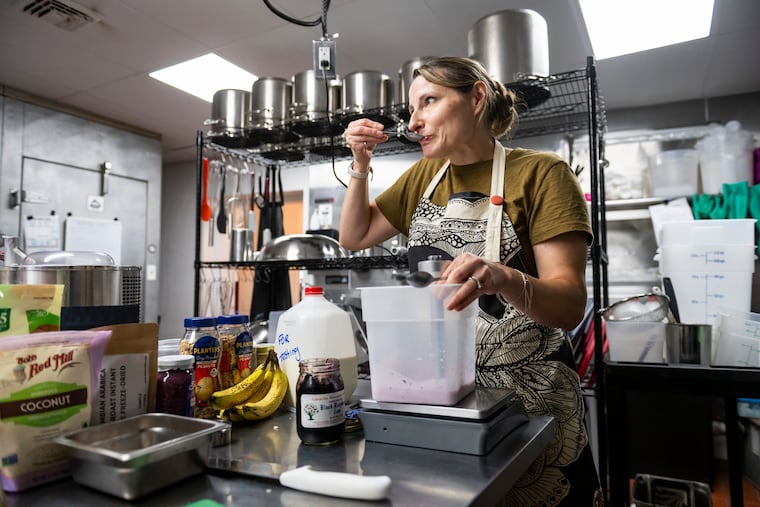
It can be easy to forget that cheffing is a blue-collar profession, especially since some chefs now attain celebrity status as Philly restaurants reach glamorous new heights. The reality, however, is that restaurant work is extremely physically demanding. Many of Philly’s best-known chefs have been on their feet, hunched over prep tables, for decades.
They all suffer from the same pains: foot injuries, posture problems, arthritis, tendonitis. They’re the compounded results of years of repetitive tasks.
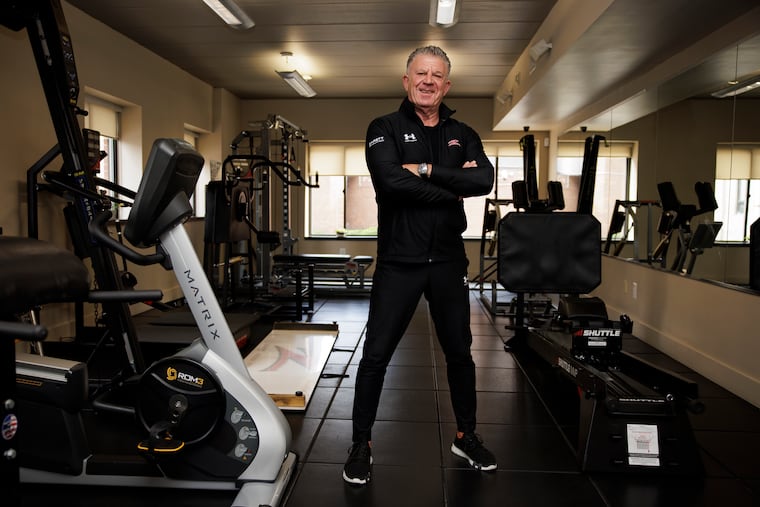
To treat these aches and afflictions, many of Philly’s chefs — along with actors, musicians, ballerinas, and athletes — seek out the services of physical therapist Joe Zarett, 61, who has a stern face and a boxer’s physique.
“People always talk about athletes and their injuries but chefs are right there with them,” said Zarett. “Every chef has cervical and lumbar issues. It comes from standing on cement floors and the shoes they wear.”
Zarett’s practice occupies a building at 520 S. 19th St., on the cusp of Rittenhouse and Graduate Hospital. He started out in the basement there 37 years ago, slowly taking it over floor by floor and eventually purchasing it. (He also maintains a facility in the Comcast Center.) Zarett Rehab today has a 60-person staff, including eight doctors of physical therapy. They treat sports injuries, chronic pain, arthritis, gait issues, joint pain in addition to providing post-surgical rehabilitation.
The walls of Zarett’s Grad Hospital waiting room are covered with photos of him posing alongside clients: chefs and restaurateurs like Marc Vetri, Jeff Michaud, Jean-Marie Lacroix, Pete Ciarrocchi of Chickie’s and Pete’s, as well as Sylvester Stallone, Gerry Lenfest, and David Adelman. Food magazines and client-authored cookbooks are strewn on tables around the room.
Zarett puts them on exercise programs once they have healed from their injuries, and often treats them over years with tailored combinations of massage therapy, manual adjusting, and heated gua sha, a scraping technique from Chinese medicine. Besides the physicality of their work, stress levels, late hours, and reliance on alcohol also affect many chefs. He frequently refers them to other specialists like neurologists or psychologists as he helps them recover.
He also advises clients on the ergonomics of restaurant kitchens before build-outs, emphasizing the height of countertops and the asymmetry of their bodies. “Look at the ergonomics of a restaurant that force you to use one side over another,” he said.
“If your body breaks down, it doesn’t matter how busy your restaurant is,” Zarett said.
From fighter to healer
Zarett’s journey to this point was not swift. Born in Kyiv (then Kiev and the capital of the Ukrainian Soviet Socialist Republic, governed by the Soviet Union), he arrived in Northeast Philly as a teenager. The migration was part of a Jews-for-grain deal, a fluctuating, informal commercial agreement the U.S. made during the Cold War, in which the Soviet Union would purchase large quantities of American wheat after poor harvests and the Kremlin would increase exit visas.
“My family — my mother, my dad, my sister, and I — came in February of 1979. We were part of the first wave of Russian Jews allowed to leave,” he said. “The Soviet Union let us leave, but they took our passports from us. We came here with $500. My uncle had come to New York before us and he had said, ‘I don’t want you going to New York, it’s too dangerous.’” Zarett’s family settled in a basement apartment that was furnished with only one mattress.
“In my life, I always start in the basement and go upwards,” he said.
He was the only Russian in his high school and was always getting into fights. “I wasn’t welcomed there because at the time, the U.S. and Russia were in the Cold War.” He only found acceptance at school when he started playing soccer as a goalie.
Getting hurt in sports and in fighting led him to an interest in physical therapy, and while attending Temple University, he started volunteering at hospitals and doctors’ offices to learn more.
On their feet
Zarett is now a regular at many of his chef clients’ restaurants, especially those close to his practice and his home: Friday Saturday Sunday, Vernick Food & Drink and Vernick Fish, as well as Vetri and Fiorella. He has treated their owners and their staff.
“I am literally walking because of him,” said Marc Vetri, 59, who has been seeing Zarett occasionally for the last 25 years to address constant back pain. Four years ago, Vetri had emergency surgery after falling on his stoop — it wound up being a three-level lumbar fusion. He did all his post-surgical physical therapy with Zarett.
“I would be in a wheelchair or in so much pain if it weren’t for him,” Vetri said. “I know so many chefs who have had the same surgery and they still limp or can’t really walk.” Thanks to the treatment, Vetri can still spend whole days on his feet, cooking for special events.
He’s internalized a lot of Zarett’s advice: “Whenever I’m cutting something, I’ll use multiple cutting boards to raise it up so I’m not leaning over but standing straight. A normal kitchen prep table height is 36 inches, but it’s better to have it at 38 to 40 inches, so you can slice while standing straight,” said Vetri, who will stack as many as six cutting boards to raise tasks to a better height. “If cooks start doing that early on, they might not have back problems.”
Greg Vernick, 46, has worked professionally in restaurants for more than half his life. He started going to Zarett’s facility at the advice of one of his employees due to back pain and hip issues.
“They were really affecting my work and it turns out my posture was all off, too,” Vernick said.
Zarett introduced Vernick to a series of exercises for him to mostly do at home. The chef only goes into the office occasionally for a “tune-up” or, recently, to help him heal from a stress fracture in his foot. “His people are excellent, his exercise physiologists, the other physical therapists on staff. The whole process of going in is very enjoyable, considering you’re there for pain management — which is not usually enjoyable,” said Vernick.
Zarett has advice for chefs who don’t need his services quite yet.
“Get yourself to a pool. Swimming is phenomenal. Being in the water is therapy. You get a cardiac workout without physical impact and the buoyancy of the water helps you psychologically. Cycling is good but you can overdo it with the [hunched] positions.”
His last tip is universal, though it certainly applies to restaurant-industry pros. “And drink water, water, water. That’s another thing chefs don’t do enough — hydrate.”
Inquirer Food Festival
Get your ticket to Philly’s ultimate food party! Join top Philly chefs and bakers for one unforgettable day of food.