Why Josh Shapiro and top Pa. Democrats think they can win a trifecta for the first time since 1993
Democrats’ long list of priorities that have been stalled by the GOP-controlled Senate could be a reality if they flip at least two Republican seats. Both parties are spending big to stay in power.
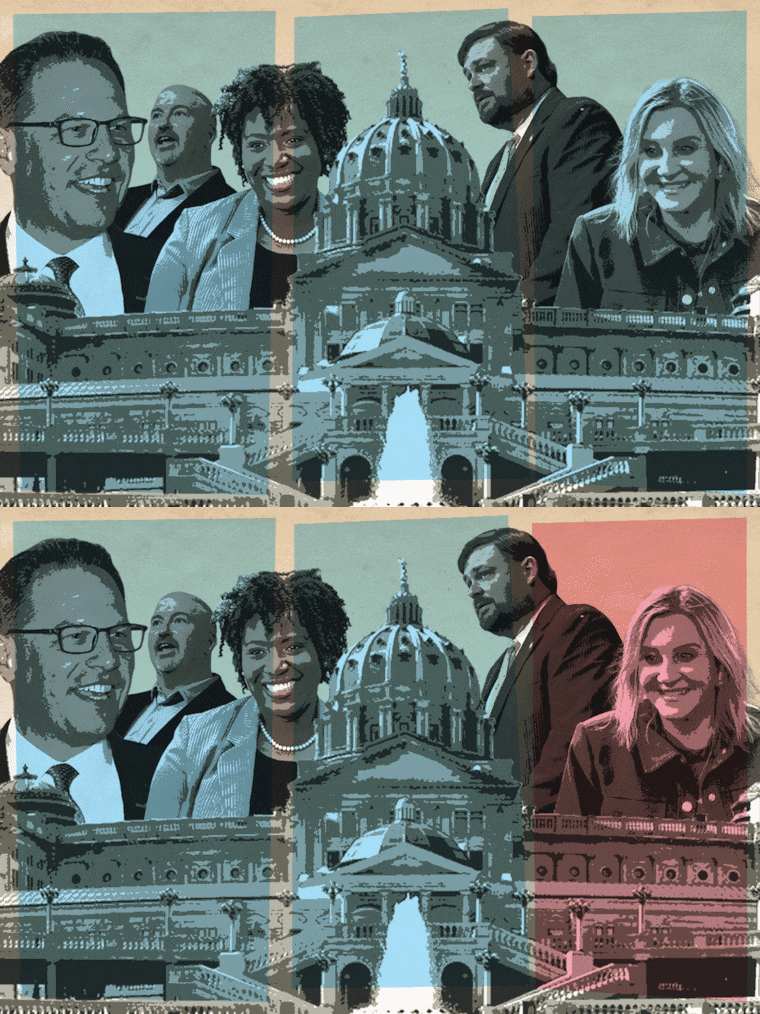
HARRISBURG — Contentious, compromising, and gridlocked.
Those are just a few ways to describe Pennsylvania’s split legislature during the last four years, as Democrats narrowly control the state House and hold the governorship, while Republicans lead the state Senate. In other words, they haven’t agreed on a lot.
Gov. Josh Shapiro and legislative leaders have clashed to the point of bitter monthslong budget impasses, or in some cases, left several critical issues — including second-degree murder sentencing rules and skill games regulation — completely unaddressed.
Before that, Republicans for years controlled both chambers, with a Democrat in the governor’s mansion.
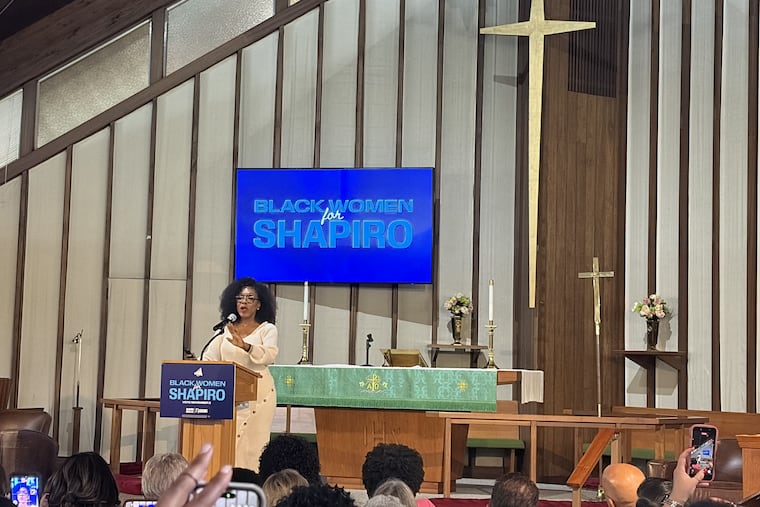
But as the political tides turn, Democrats are hoping next month for a blue wave in the Pennsylvania State Capitol. With President Donald Trump’s 37% approval rating in Pennsylvania and Shapiro, a popular incumbent governor at the top of the ticket, Democrats are entering the Nov. 3 midterm election with a lot in their favor — and for the first time in decades imagining what Harrisburg would be like with a trifecta of power.
Democrats’ long list of priorities that have been stalled by the GOP-controlled Senate — from a minimum wage increase, to new mass transit funding, to codifying abortion and LGBTQ rights — could be a reality if they flip at least two Republican seats.

PA 2026
Democrats haven’t controlled the state House, Senate, and governorship since 1993. Currently, the state Senate has 27 Republican members and 23 Democrats.
The last trifecta in Harrisburg belonged to Republicans, who won full control in 2010 in a significant red wave in the first midterm following former President Barack Obama’s election. The GOP held onto the trifecta for four years, before former Gov. Tom Wolf, a Democrat, won the governorship and would frequently veto legislation he didn’t like, leading to a nine-month budget impasse and long legislative standoffs.
If Democrats gain two state Senate seats in November, tying the chamber, Democratic Lt. Gov. Austin Davis would hold special powers — similar to the vice president in the U.S. Senate — that would help tip control to the party.
“We’re working extremely hard,” said State Sen. Vince Hughes (D., Philadelphia), who leads the state Senate’s campaign arm. “I’m not going to make any predictions about winning or losing. I know that we’re competitive everywhere where we’re running.”
Big spending in the Philly suburbs for Senate control
Half of the state Senate and all 203 House members are up for reelection this year. House Democrats feel confident they’ll expand their two-seat majority in the chamber, while Senate Republicans argue they need to keep control of the chamber as the last line of defense against “radical left policy decisions.”
Democrats are targeting four seats they want to flip, while Republicans are bullish they’ll flip a seat in Lancaster County that they lost to Democrats in a 2025 special election by a few hundred votes.
And both parties’ campaign arms are spending big for control of the seats.
According to media tracker AdImpact, Senate Republican campaigns have spent a total of $15.4 million so far in total in TV and streaming ads across five competitive races: Bucks County’s 6th Senatorial District, Montgomery County’s 24th District, Lancaster County’s 36th District, Monroe County’s 40th District, and Lehigh County’s 16th District.
Senate Democratic candidates have spent $12.3 million so far for the TV and streaming ads across those same five competitive districts, according to AdImpact.
The two most expensive races are in the Philadelphia suburbs. Both parties see these seats as must-wins to decide control of the Senate.
» READ MORE: Bucks and Montgomery Counties could determine which party gets control of the Pa. state Senate
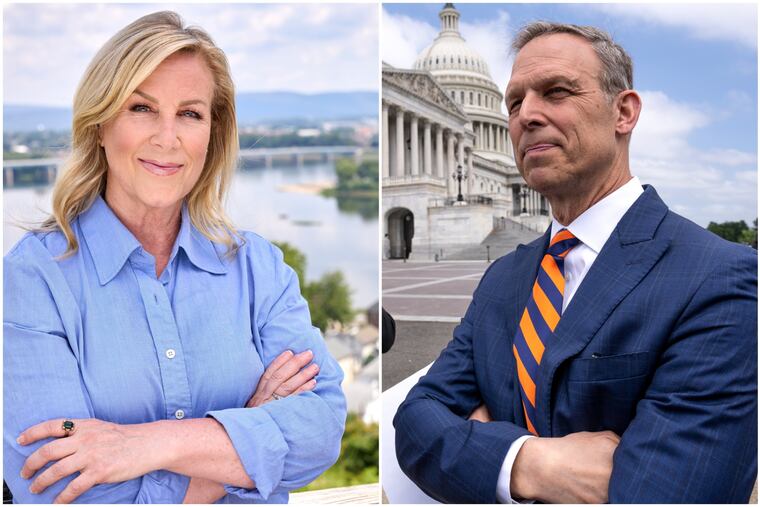
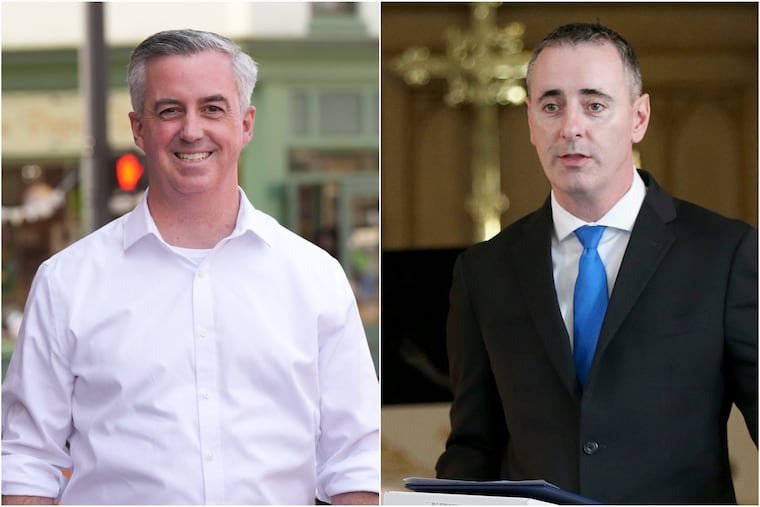
State Sen. Frank Farry (R., Bucks) represents a swing district in Lower Bucks County’s 6th Senatorial District and became an early target for Democrats. The race has already attracted $6.9 million in ad buys so far, including $3.6 million from Farry’s campaign and another $3.3 million by his Democratic challenger Eileen Harnett Alibar, according to AdImpact.
State Sen. Tracy Pennycuick (R., Montgomery), elected in 2022, is one of few Republicans still representing the now solid-blue Montgomery County. Her campaign has spent or reserved nearly $4 million in TV and streaming ads so far. Her challenger, Democrat Chris Thomas, has spent $3 million.
The exact amount of money spent so far in these races will not be available until campaign finance filings are due later this month, and will include how much was spent on other voter outreach like direct mail.
When asked this summer about the prospect of a Democratic trifecta, Senate Majority Leader Joe Pittman (R., Indiana) rebuffed it.
“I’m more focused on what it would like with a Republican trifecta,” Pittman said in an interview in July, noting the narrow Democratic control in the House. “At the end of the day, a day in politics is a lifetime.”
The path to Democratic control
Pennsylvania’s latest legislative maps — set in 2022 by the state’s five-person redistricting commission— made the state House significantly more competitive for Democrats. That year, the party flipped the chamber for the first time in more than a decade.
Meanwhile in the state Senate, the same set of maps benefitted Republicans, and were likely to cement GOP control for another decade, according to an analysis conducted for The Inquirer by the nonpartisan Princeton Gerrymandering Project at the time.
Four years later, enter Trump’s declining job approval rating in Pennsylvania, high gas prices, a governor’s race with double-digit Democratic lead, and GOP control in Washington, D.C. — and Pennsylvania Democrats see a rare opportunity.
To flip the state Senate, Democrats have two potential paths: They would need to flip at least two seats held in swing districts and maintain control of a seat which Trump won in 2024 by 15 points in Lancaster County. Or, if they can’t hold onto the Lancaster seat, they would need to flip a total of three seats to take control of the chamber.
» READ MORE: In major upset, Democrats flip a Lancaster County state Senate seat that Trump won by 15 points
Hughes, who is on track to lead the powerful Senate Appropriations committee if Democrats prove successful in November, said he isn’t yet picking out the new drapes or a new front-row parking spot at the Capitol building. Rather, he said, he is hardly letting himself imagine what it would be like to helm the committee that reviews every bill and decides how state dollars are spent, and where he has served as the minority chairman since 2010.
“We’ll accomplish a lot of things that the people of Pennsylvania need us to get accomplished, and we’ll do it in a way that I think the people of Pennsylvania will be proud,” Hughes added.
Senate Republicans’ campaign arm said in a statement that the Senate GOP has “a record of reducing costs, stopping burdensome taxes, and putting Pennsylvanians’ safety first.”
Senate Republicans appear to have spent significantly more to protect their majority than the party at large has spent to elect Stacy Garrity, the GOP nominee for governor, who has just reserved or spent $1.4 million in TV and streaming ads through Election Day, according to AdImpact.
» READ MORE: Stacy Garrity hopes ‘the cavalry will be coming’ with less than a month until Pennsylvania’s governor election
Their argument for why Republicans should maintain control of the state Senate is simple: They are the ones looking out for taxpayers. And they see themselves as the ones protecting Pennsylvania from the problems facing Democrat-led states like California and New York, criticizing Pennsylvania’s Democratic candidates for fundraising off the elite blue-state class.
“We know what’s on the line,” said Michael Straw, the communications director for the Senate Republican Campaign Committee. “We can’t afford their tax increases that crush working families and soft-on-crime policies that put our safety at risk.”
What a Democratic trifecta would do
In Shapiro’s early years as Pennsylvania governor, he spoke proudly about his abilities to bring Democrats and Republicans together in the state’s split legislature.
But after two messy budget impasses and several issues getting kicked down the road to future years, the potential 2028 presidential candidate became impatient. At the start of this year at the Pennsylvania Democrats’ endorsement convention, he proclaimed a new strategy: Give me a Democratic trifecta.
At the time, today’s political climate was unpredictable. The war in Iran hadn’t begun, and gas prices were not skyrocketing, among other factors that often drive voters to the polls.
But he had his plan set: A Democratic trifecta would allow the party to swiftly increase the minimum wage, codify abortion and LGBTQ rights, and advance an affordable housing plan.
It’s a refrain he’s repeated over the last 10 months, as he’s campaigned for Democratic state and congressional candidates down the ballot.
“The first bill that will reach my desk with a trifecta will be to raise our minimum wage to $15 an hour,” Shapiro said at a campaign event last month in Philadelphia, alongside Michigan Gov. Gretchen Whitmer.
Pennsylvania’s minimum wage is set to the federal hourly minimum of $7.25 and has remained stagnant since 2009. Raising the state’s minimum wage to $15 an hour has been a priority for Harrisburg Democrats for years, but they’ve been unable to broker a deal with the GOP Senate. (Senate GOP leaders say they are not opposed to a more measured minimum wage increase, but have not passed legislation to do so.)
» READ MORE: Pennsylvania’s minimum wage has been $7.25 since 2009. Who actually earns that much?
For Pittman, the GOP leader, he said he saw a path forward for a deal this past budget season on mass transit funding and a minimum wage increase. House Democrats refused, he said at the time.
“It’s become very transparent to me that all they want is a political talking point,” he added. “Both issues could be addressed in a meaningful way if they were serious about negotiating.”
Shapiro, at the event last month with State Sen. Nikil Saval (D., Philadelphia), placed the blame for Pennsylvania’s stalled minimum wage squarely on Senate Republicans.
“Our minimum wage has been stuck at $7.25 for the last 16 years. Why is that? Because the Republicans in the Senate that Nikil serves with — guess what — they block it every single time,” he said.
Hughes noted that the last time Democrats had a trifecta in Harrisburg, they approved Pennsylvania’s Children’s Health Insurance Program, a national model for state insurance for low-income children to get healthcare coverage.
“That’s the kind of groundbreaking work that we can and will get done,” Hughes added.
Staff writer Michelle Baruchman contributed to this article.