New vaccination data show hundreds of Philly-area schools vulnerable to a measles outbreak
Measles vaccination rates continue to decline in the Philadelphia area as an outbreak spreads across Pennsylvania.
Two years ago, every child in the kindergarten class at Eleanor Emlen Elementary in Mount Airy had vaccine protection against measles.
A year later, the school’s kindergarten immunization rate had dropped to just 80%, putting students and the surrounding community at risk of an outbreak of the highly contagious disease.
Emlen is among more than two dozen Philadelphia-area schools that saw double-digit declines in kindergarten immunization rates last school year — in many cases because parents are increasingly refusing vaccines.
The affected schools span a diverse range of communities, from city neighborhoods like Mount Airy to the outlying suburbs. In Chester County, for example, a small private school in Downingtown saw its vaccination rates plunge by 20%.
Even as countywide immunization levels remain relatively high, some 40% of kindergarten classrooms across the region became vulnerable to an outbreak during the 2025-26 school year, up from 33% the year prior, an Inquirer analysis of newly released state data found.
That means that at least 249 schools had vaccination rates below 95%, the level at which scientists say a population must be vaccinated to prevent the spread of measles, one of the most contagious diseases.
Of these, 98 Philadelphia-area schools reported measles vaccination rates below 90%, presenting an even greater risk to students.
A sharp increase in parents opting out of vaccination for religious or philosophical reasons continued to drive down vaccination rates; exemptions in this category rose by 15% in the latest two years for which data are available.
Pennsylvania is among a handful of states that allows parents to opt out of vaccine requirements for philosophical or religious reasons, often by simply signing a form.
The health department published more granular, school-level vaccination data this summer for the first time, after reporting by The Inquirer and the Pittsburgh Post Gazette made this information public for the prior school year, exposing pockets of vulnerability within counties with overall high vaccination.
» READ MORE: More than 200 Philly-area schools vulnerable to measles outbreak
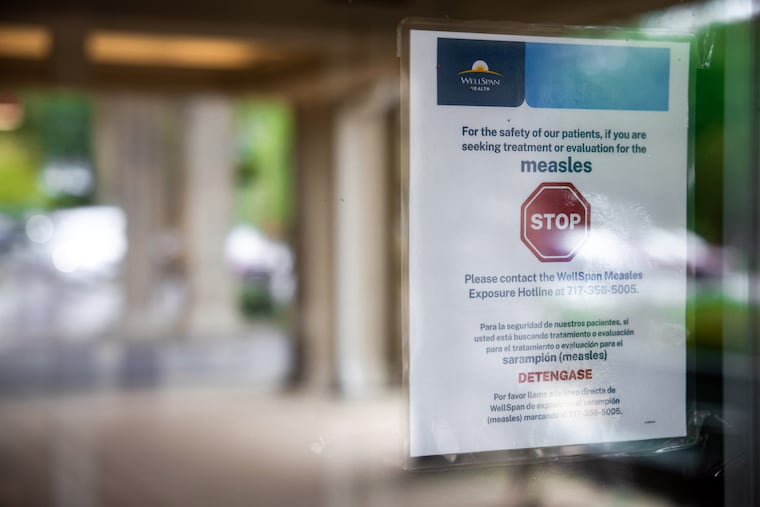
The new data show the growing public health threat to the region from Pennsylvania’s growing measles outbreak, in which two people in Lancaster County have died, state officials reported Tuesday. They were the state’s first measles-related deaths in three decades.
So far, nearly 400 cases have been diagnosed, with nearly half in Lancaster County. The rapidly spreading outbreak is edging closer to densely populated Philadelphia. Chester County, just west of the city, has reported the second-highest number of cases in the state.
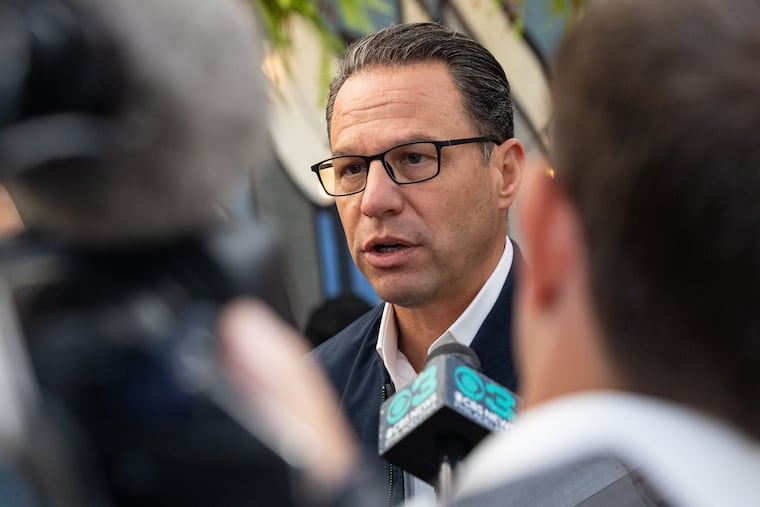
At a news conference on the measles deaths Tuesday, Gov. Josh Shapiro stressed his concern about the rise in Pennsylvania parents opting out of vaccinations over the last 10 years.
“It has dramatically reduced community immunity in different areas of our Commonwealth,” he said. “Today, we see the consequences of a lack of immunization.”
The new school-level data on vaccines, he said, allow “everyone to see their school’s vaccination coverage and make informed decisions.” Lawmakers have also said they hope that having more access to data about their children’s schools will make families more aware of risks within their communities and encourage them to vaccinate their children.
Emlen, which saw one of the steepest drops in protection, was one of 40 schools in the five-county region that reported 100% measles vaccination rates two years ago, only to drop below the 95% herd immunity threshold last year.
Philadelphia school officials say the changes at Emlen likely reflect increasing hesitancy among parents to immunize their children against measles, mumps, and rubella (MMR) and other diseases. State records show that most unvaccinated kindergarteners at Emlen have philosophical or religious exemptions.
Some fluctuations in kindergarten vaccination rates are typical from year to year, but the rise of anti-vaccine rhetoric in federal leadership appears to be exacerbating fears around vaccination, said Kendra McDow, a pediatrician who serves as the Philadelphia school district’s medical director.
“What we’re seeing is reflective of what I believe are local and national trends,” McDow said. “Families are confused, and they want to do right by their children.”
» READ MORE: Inside Pa.’s measles outbreak: A family rides out the virus, doctors treat severely ill children
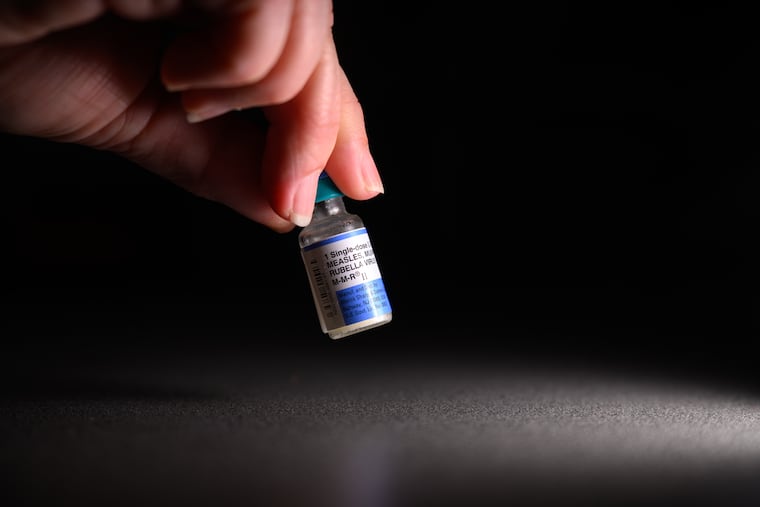
In the latest federal vaccine maneuver — opposed by the medical establishment, prominent Democrats, and Republican Sen. Bill Cassidy, a physician — President Donald Trump signed an executive order this month asking states to “consider updating” laws to require fewer vaccinations for schoolchildren without any medical justification. He also advocated for splitting the MMR vaccine into three separate shots — even though no separate measles, mumps, or rubella vaccines are licensed in the United States.
The order came after a chaotic year in which Health and Human Services Secretary Robert F. Kennedy fired federal vaccination advisers and pushed to upend the federal vaccine schedule. Kennedy, a longtime anti-vaccine activist, has promoted false concerns that vaccinations can lead to autism.
With Pennsylvania now experiencing its largest measles outbreak in three decades, Kevin Ressler, a healthcare nonprofit leader in suburban Philadelphia who was raised in Lancaster County, worries that declining vaccine rates reflect increasing political polarization.
“You don’t have to be a scientist to recognize that’s a problem,” said Ressler, the CEO of Alliance for Health Equity, a Coatesville nonprofit that works to improve access to health services. “A lot of this is rooted in whether we are able to hold trusted relationships.”
Philly-area counties all at risk
Philadelphia and its suburban counties overall remain well protected against measles, state officials say. The declines seen in the latest school year amount to less than 1% of all kindergarteners in each of the five counties in the area, an improvement from the drops that followed the COVID-19 pandemic.
But even small drops can be significant given the contagiousness of measles, which can linger in the air for hours and infect nine in 10 unvaccinated people who come into contact with it.
“The risk has definitely gone up because of lower vaccination numbers,” said Rene Najera, the director of public health at the College of Physicians of Philadelphia.
Najera says slipping vaccination rates especially endanger vulnerable students and community members beyond the schools, like pregnant women, cancer patients, or babies too young to be vaccinated. Parents of high-risk children should speak with their pediatricians about the risks of attending a school with lower vaccination rates, he said.
Last year marked the first time in more than 10 years that no Philadelphia-area county had reported measles vaccination rates above herd immunity.
Bucks County had the lowest MMR vaccination rate for kindergartners, at 93.7%, down by more than a half a percentage point from the year before.
Montgomery County, the only county in the Philadelphia region with kindergarten vaccination rates at herd immunity two years ago, slipped just below the threshold in 2025, to 94.8% vaccinated.
About 94% of Delaware County and Philadelphia kindergarteners were vaccinated last school year.
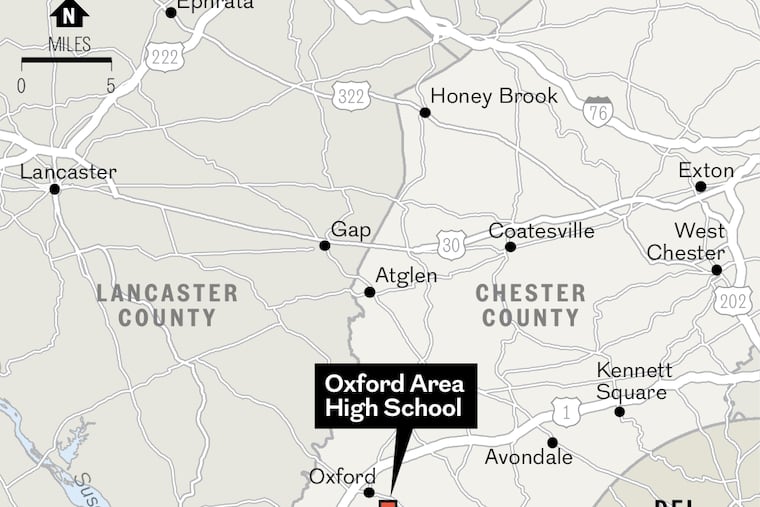
In Chester County, the only Philadelphia-area county to report cases in the current outbreak, vaccination rates for kindergartners have held steady at 94.5% for the last two school years. Some schools in the county reported steep drops in MMR coverage ahead of the current outbreak, which has seen 40 cases confirmed since June.
At Windsor Christian Academy in Downingtown, only one in four kindergarteners were vaccinated last year at a school that exceeded the herd immunity threshold the year prior. About 14% of the class had religious exemptions for vaccination. School officials did not return a request for comment.
Caln Elementary School in Thorndale saw measles vaccination rates drop from 100% to 74% in a year. Officials at the school declined to comment. (Caln closed at the end of last school year, and most of its students are transferring to the newly built Doe Run Elementary this year.)
Jeanne Franklin, Chester County’s health director, said she is “moderately” concerned about the current measles outbreak, given that many of the county’s most populous public schools still have high vaccination rates.
The school-level data improve the county’s ability to identify schools with lower vaccination rates.
Chester County health officials talk to school nurses, principals, and other administrators before the start of every school year to remind them of what to do if they identify a case of measles.
Under county policy, a single measles case in a school will mean all unvaccinated students and staff must stay home for 21 days.
This year, conversations that are usually hypothetical have taken on more urgency.
The health department has urged schools to take stock of who within their school is unvaccinated and develop a plan for how they will teach unvaccinated students who are sent home and staff classrooms of absent teachers.
“You don’t own getting them vaccinated,” Franklin said she tells administrators. “But you have to think through these things.”
Philly schools on alert
As the school district’s lead health officer, McDow worries about the threat of measles so close by, but believes concerted efforts in the city have kept vaccination rates “as high as they can be in this current climate.”
She’s also monitoring Philadelphia schools where the state data show declining vaccination coverage. (The publicly available school-level data does not include classes with fewer than 20 students, for privacy reasons, or schools that did not report to the state. About 90% of schools statewide reported data in 2025.)
In some cases, what looks like a decline can be explained by delays in data reporting due to administrative issues or staff absences. School vaccination records are reported to the state during the month of December.
For example, Mantua’s Morton McMichael School reported a 50% drop in MMR vaccination coverage, initially going from nearly nine in 10 kindergarteners vaccinated to just over a third.
But by the end of the 2025-2026 school year, records show 93% of McMichael kindergarteners were fully vaccinated against measles, district officials said, though the state data does not show the improvement.
McDow worries about drops at other schools, from Mount Airy’s Emlen Elementary to North Philadelphia’s James Logan Elementary’s 18.5% decrease in vaccination rates, which are likely related to parents increasingly refusing vaccines.
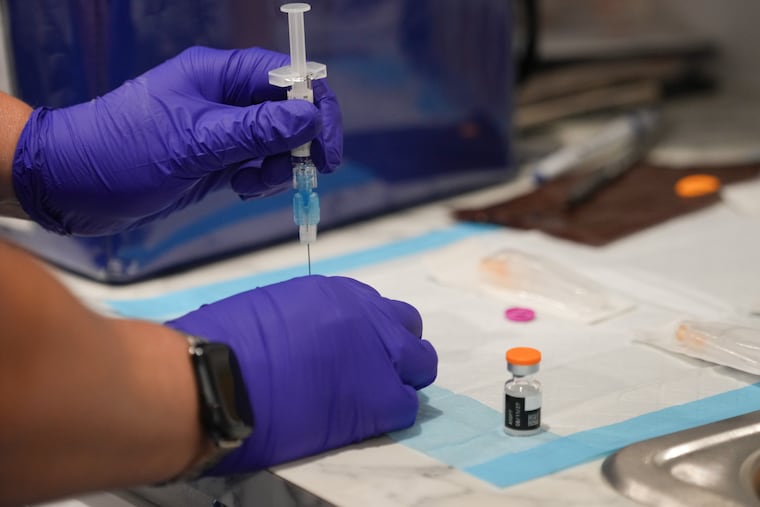
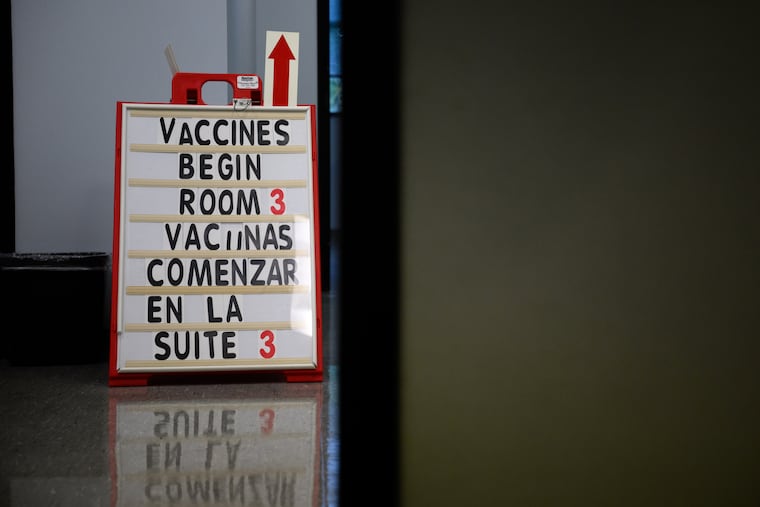
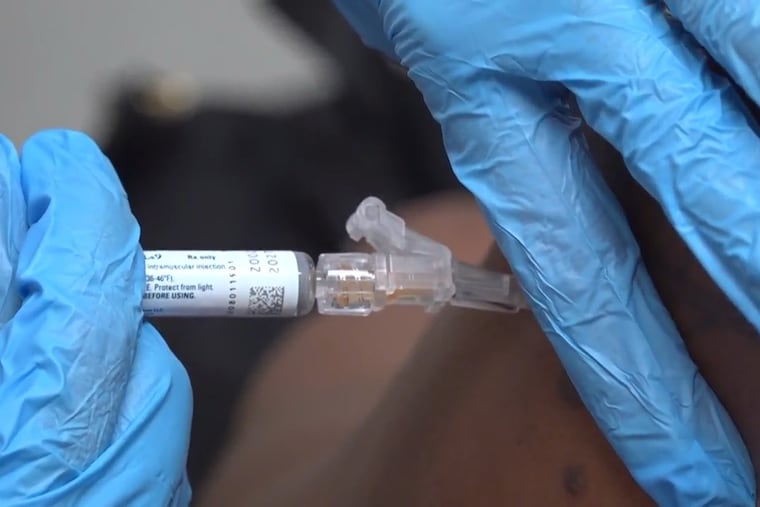
The school district hosts vaccination clinics over the summer and during the school year, working with the city health department to target families with unvaccinated children and schools with low vaccination rates.
The district also works to ensure vaccination clinics are accessible to working parents, organizing some on weekends or evenings.
“We need to be talking to families and answering questions in transparent ways,” McDow said. “But we also need to be providing the opportunities for vaccination.”
Some families line up for immunizations
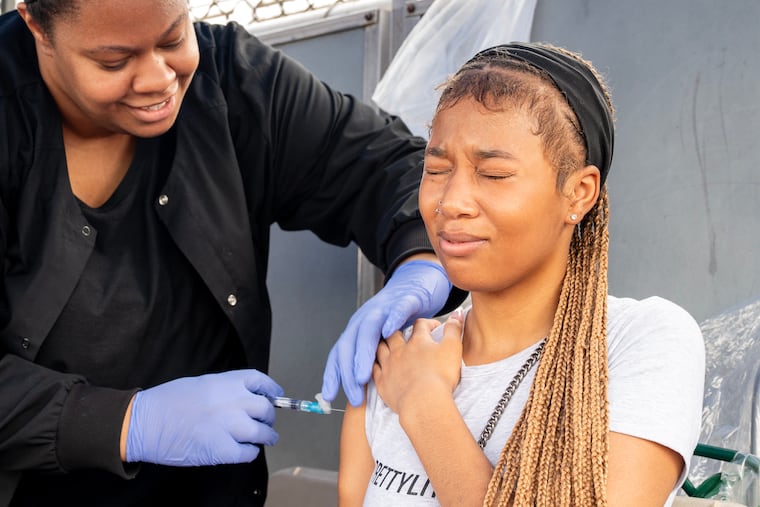
On a recent sweltering August afternoon, families lined up at a tent pitched on the football field at Marcus Foster Memorial Stadium in Olney, part of a back-to-school fair sponsored by the Philadelphia School District.
“IMMUNIZATIONS,” read a flag waving in the breeze. Business was brisk all day.
Some families who visited the tent were recent immigrants, getting caught up on vaccinations before their children started at their new schools.
“We’re vaccinated, my husband and I, because our parents vaccinated us. And I’ll do the same for my children,” said Betty Bachene, who moved to Philadelphia from Paris this summer. Speaking in French, she said she’s never been afraid of vaccinating her children, but does fear the diseases vaccines prevent.
Anaiya Burnham, a nurse, said she’d opted against getting COVID or flu shots for her two children, one of whom is entering kindergarten this year. But vaccinating them against measles was never a question.
“I would really be curious to know why anyone would opt out of the MMR, given the research,” she said.
Philadelphia parents face a number of different barriers that keep them from vaccinating children — and not all of them are related to vaccine hesitancy, said Amanda Bernard, a pediatrician with Greater Philadelphia Health Action, the clinic offering vaccinations at the event.
Some lack transportation to get to a health center outside their neighborhood, or don’t speak English well enough to navigate the healthcare system, she noted.
“I think that these sorts of events are really a way that we could combat that,” said Bernard, who has heightened her advocacy around vaccination as Pennsylvania’s measles outbreak has spread.
“There’s almost a desperation in my education. I sometimes feel like I’m almost begging [families] to get it.”
Editor’s note: This story has been updated to correct the name of James Logan Elementary in Philadelphia.