Most nicotine vape products will be banned in Pennsylvania by mid-October
Only six manufacturers’ products, like Juul and Vuse, are allowed to be sold in Pennsylvania.
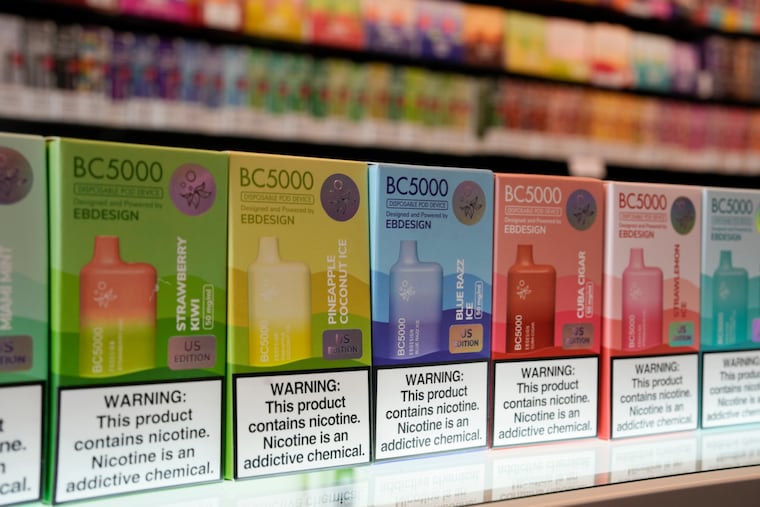
Most disposable vaporizers, vape juice, and electronic cigarette products will soon be illegal to sell in Pennsylvania, a move that will affect more than 10,000 local businesses and limit consumers to a select few brands and products.
Under a new law, signed by Gov. Josh Shapiro last year, six companies are approved to manufacture, distribute, and sell electronic nicotine products in Pennsylvania, starting Oct. 19. Any product not approved in the electronic nicotine delivery system directory will be banned from sale.
The law’s prime sponsor, State Rep. Jeanne McNeill (D., Lehigh), called the measure a tool “to protect kids, support law-abiding retailers, and crack down on illegal vapor products.” The bipartisan bill passed the state House 147-56.
“Right now, there is no clear way for states to determine which products are legally authorized by the FDA. This [law] closes that gap and brings accountability to a system that has been exploited for too long,” McNeill said before the directory was signed into law.
Vape store owners along Philadelphia’s South Street were still confused about the nature of the ban, which products would be illegal to sell, and what enforcement would look like. One store owner did not even know the act existed.
“It’s monopolizing the market,” said one store manager, who asked not to be identified out of fear of being targeted for enforcement. “It’s not just harming us, but it’s harming customers. Now that we won’t have these products, customers say they’re heading to New Jersey or figuring out ways to buy online.”
Vapes and their accessories can account for 25% to 75% of a store’s revenue, South Street store managers said. Taking a hit on these products will put some stores in dire circumstances.
Which vapes are banned?
Almost all nicotine vape products sold in vape stores, smoke shops, and gas stations will be outlawed for sale.
This means consumers will not be able to buy unlisted disposable vapes, vape juice, or manually fillable vaporizers in Pennsylvania after Oct. 18.
If it’s not in the directory, it’s not legal to sell.
Which vapes are not banned?
Six manufacturers are approved to sell nicotine vape products in Pennsylvania: Blue Nine, Custom Technologies, Juul Labs, NJoy, R.J. Reynolds Vapor Co., and the Schwartz E-Liquid.
Approved products include the Juul, NJoy Ace, and Vuse Alto vaporizers commonly available at Wawa and other corporate chain convenience stores. These vapes use a pod-based vaporizer and can only come in menthol or tobacco flavors, similar to cigarettes. These pods can have up to 50mg of nicotine content, often advertised as 5% nicotine.
One brand of disposable vape is approved: the CrossBar, which comes in four flavors at 50mg of nicotine content.
Only one brand of vape juice, Naked 100, is allowed to be sold, with 10 approved flavors that can reach up to 12mg of nicotine per product.
Several of the listed brands are approved in other states, like Virginia, Utah, and Wisconsin, that implemented electronic nicotine delivery system directories, and some, like NJoy and R.J. Reynolds Vapor Co., are owned by some of the country’s largest tobacco companies.
Being approved for the directory requires a vape manufacturer to have marketed its products in the United States as of Aug. 8, 2016, and submitted a product review to the U.S. Food and Drug Administration on or before Sept. 9, 2020.
How will this be enforced?
Starting Oct. 19, Pennsylvania Attorney General Dave Sunday’s office will begin targeted enforcement inspections of vape wholesalers and retailers across the state, according to spokesperson Brett Hambright.
“Part of that enforcement will involve education at the time of enforcement inspections to ensure compliance,” he said.
Retailers and other businesses in the supply chain will have to get rid of inventory “intended for sale” by Oct. 18, or their products can be seized and fines levied against the business. Hambright said the office’s tobacco enforcement section, in collaboration with the Pennsylvania Department of Environmental Protection, would advise retailers “on their options for legal disposal of their products.”
“We will not physically remove any product from the marketplace until October 19, 2026. Beginning on that date, any product not listed on the directory is subject to seizure if it is sold, offered for sale, or possessed for sale in Pennsylvania,” Sunday’s office said in a statement.
What are the penalties for stores selling unlisted vape products?
Penalties for violations will not be criminal, but fines start at $500 for each product that violates the new law.
A second violation within the year brings a fine of up to $1,000 per day, per product, and a license suspension.
Third-time violators will face up to a $1,500-per-day, per-product fine, revocation of their license, and responsibility for the cost to destroy the seized products, according to the attorney general.