Pa. measles outbreak is nation’s worst, echoing deadly 1991 Philadelphia epidemic
Three decades later, physicians who treated children in 1991 can hardly believe that Pennsylvania is again contending with the nation’s worst measles outbreak.
The child gasped for air, sitting alone in front of an upstairs television, near death inside her Northeast Philadelphia home.
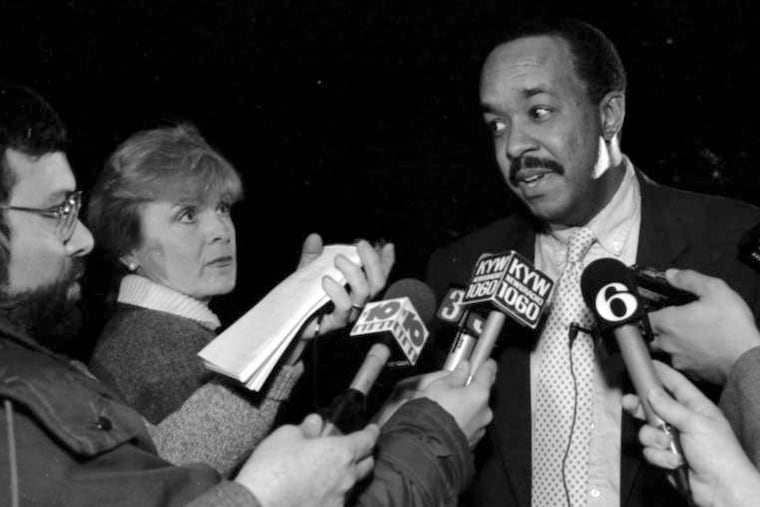
As a measles outbreak ravaged the city, Philadelphia’s deputy health commissioner, Robert Ross, used the home phone to call a judge for a court order to treat the girl. Her family worshiped at Faith Tabernacle Congregation, a fundamentalist Christian church at the center of the outbreak. Many members were refusing all medical care, including vaccinations.
The 1991 outbreak would eventually sicken 1,400 people across Philadelphia and kill nine children. It spurred the city to pursue the nation’s first and only court-compelled vaccinations. Some parents at Faith Tabernacle were ordered, against their wishes, to vaccinate their children against measles.
The girl in the house in Northeast Philadelphia was about 9 years old and “minutes, maybe an hour, away from respiratory failure,” Ross recalled. And when he tried to call for medical care, her grandmother tried to block him from the phone.
The child ended up on a ventilator at St. Christopher’s Hospital for Children and ultimately survived. Her story became a defining moment in the public health response to the state’s last major measles outbreak, part of a nationwide surge between 1989 and 1991 that sickened tens of thousands of people and led to at least 166 deaths.
Three decades later, Pennsylvania is again contending with the nation’s worst measles outbreak, with more than 1,000 cases and five measles-related deaths reported this year.
Then and now, the highly contagious disease spread in communities with low vaccination rates, but for different reasons. The 1991 outbreak spread in a community that rejected vaccines — and across a city with limited access to vaccination even for those open to them. Now, vaccines are easier to access — but too many people don’t want them.
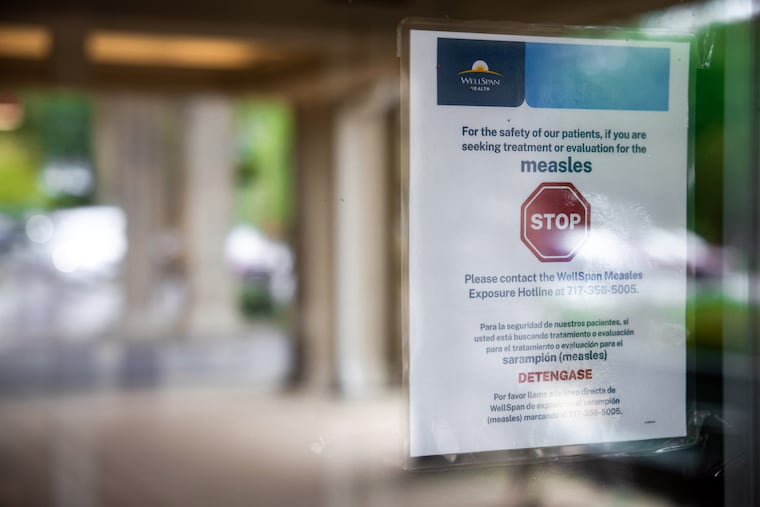
So far, Philadelphia has been spared as measles actively spreads in the region’s western suburbs of Chester County and just beyond in Lancaster County, whose 401 reported cases lead the state.
Ross and other physicians who treated children in Philadelphia in 1991 lament the return of measles, which tops the list of vaccine-preventable diseases once common during childhood.
“I would have said there was no chance this would ever happen again,” said Ross, who went on to spend decades as a public health administrator in California. “We were looking forward to decades of measles-free, whooping cough-free, polio-free livelihoods for children.”
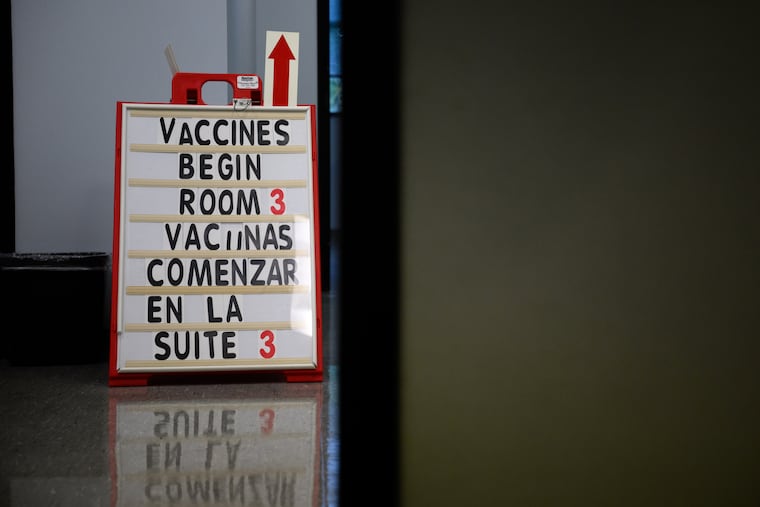
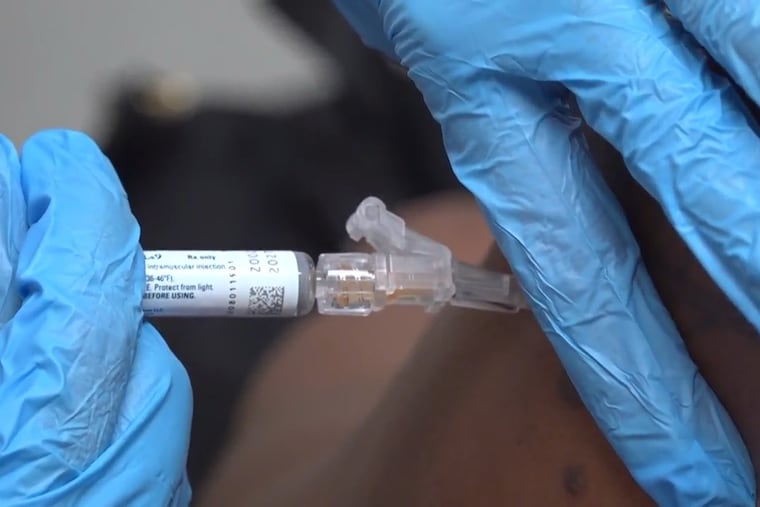
In 1991, parents flocked to vaccine clinics organized around the city. At one event that May, doctors handed out shots to 60 children — with Nerf balls and a DJ on hand to make the medicine go down — in Fishtown and South Kensington, then without full-time pediatricians to routinely provide vaccines. Another vaccination effort immunized 6,000 children over a weekend, with help from the Phillie Phanatic.
Today, families increasingly are opting out of vaccines, often by taking advantage of religious and philosophical exemptions that provide legal outs from immunizations otherwise required to enter school. And vaccine skeptics once relegated to the fringes of public discourse now are setting the federal health agenda under President Donald Trump.
Years of declining vaccination rates have left not only children but also many unvaccinated adults vulnerable. Where only children died in 1991, three of five deaths in the current outbreak appear to have occurred in adults.
“It felt like a more winnable battle in ’90, ’91, than right now,” Ross said.
‘You just knew that an outbreak was imminent’
In the spring of 1989, an R.E.M. concert led to Philadelphia’s first reported cases, involving concertgoers at the Spectrum. The city health department interviewed teenagers exposed at the show, ramped up vaccinations, and braced for the worst.
Pennsylvania laws requiring vaccinations for school admission were still relatively new — on the books for less than a decade — and federal health officials had only just begun recommending a second dose of measles, mumps, and rubella vaccines for children.
Tens of thousands of preschoolers had not received even one dose of the MMR vaccine, the Daily News reported when the first cases emerged. Nearly two-thirds of Hispanic toddlers in North Philadelphia had not received the one dose recommended by age 2, The Inquirer noted at the time.
The virus started spreading: 89 cases were reported in the city in 1989, followed by more than 200 the next year.
The numbers followed a nationwide trend: By December 1990, measles had infected more than 25,000 people across the country, a 68% increase over the year before.
At Philadelphia’s children’s hospitals, St. Christopher’s was receiving three to four measles cases a day in city neighborhoods with high poverty and low access to medical care. Children’s Hospital of Philadelphia was handling one to two at its main campus in West Philadelphia, where at least half of preschoolers had received their recommended shots.
In 1991, officials told The Inquirer that roughly 60% of preschoolers citywide were vaccinated against measles, well below the 95% threshold that scientists now say is necessary to prevent the virus from spreading in a community.
In part, this reflected access challenges. The federal government had reduced public health funding under President Ronald Reagan, a Republican, as rising poverty contributed to a growing uninsured population. The illicit drug use that defined the crack epidemic also meant some parents neglected to seek medical care for their kids, Ross said. All contributed to “a toxic brew” that kept kids from getting immunized, he said.
“You just knew that an outbreak was imminent,” Ross said.
Deaths mount
In January 1991, Philadelphia recorded its first measles death in 20 years — an unvaccinated 18-month-old who developed pneumonia after contracting measles.
The next month, two unvaccinated girls involved with Faith Tabernacle died from measles. Church members told the Daily News their views required rejecting medical care: Only God could cure illness. “They effectively had a ban not just on vaccines but on all medical care,” Ross said.
Some church members refused to call a doctor or visit a hospital even as their children lay dying. Other parents associated with the church, however, did take their children to the hospital as their conditions deteriorated.
Sarah Long, then an infectious-disease physician at St. Christopher’s, remembers the first child with measles she treated in 1991 — a 2-year-old with a high fever and rapid breathing, characteristic of a case of pneumonia.
But with a classic case of pneumonia, “the child is hyperalert and anxious,” Long said.
“These children — they were not able to sit up. Not able to take fluids. They’re just lying there, incapacitated,” she recalled.
She was stunned by the consequences of a disease avoidable through immunization since the 1960s. “This was a completely preventable problem,” Long said.
After a third death, of a Cheltenham girl whose family attended the church, Ross and other health department workers grew concerned that phone calls with the church’s members were not producing accurate information.
With a judge on call to order medical treatment if necessary, Ross and others knocked on congregants’ doors.
At the house where he discovered the girl gasping for breath upstairs, Ross met eight other children recovering from measles infections, the virus’ characteristic rash fading from their faces.
Hundreds of children not affiliated with the church also fell ill. Six of the nine children who died were church members.
Reached by phone, Faith Tabernacle’s pastor said news reports over the years had “misconstrued the truth” about the church’s experience during the outbreak.
Declining to give his name, and noting that he was not its leader at the time, he said the church supports personal choices about medical care. “We’re not a cult. We present the word. It’s up to the individual,” he said. “We trust the Lord for our healings.”
‘We had to resort to it’
In March 1991, after another child died, several judges upheld a Common Pleas Court ruling that ordered five Faith Tabernacle parents to vaccinate their children. Their parents cried as they brought their children to court for the shots.
“We had to resort to it,” Ross said. ”We just had nothing else available to us to protect those kids.”
Such a ruling is unlikely to happen again in the current political landscape, said Paul Offit, a vaccination expert who heads CHOP’s Vaccine Education Center and worked at the hospital during the 1991 outbreak.
The 1991 court rulings were much more stringent than typical vaccine requirements for schools or employment, Offit said. Under a vaccine mandate, for example, a person might face a penalty for not being vaccinated — like not being able to work a specific job — but can still decline a vaccine.
Philadelphia courts compelled Faith Tabernacle parents to vaccinate their children — with no way to opt out.
By the time courts were compelling parents to vaccinate their children, the city’s large-scale vaccine drives helped ensure that few children still lacked immunity to measles, he said.
The arrival of spring and summer — measles traditionally spreads in the fall and winter — also helped quell the outbreak. So did a wave of media coverage that raised awareness about the virus and spurred many parents to vaccinate.
Offit published a book, Bad Faith, in 2015 about religious objections to vaccination, including Faith Tabernacle’s experience.
In 1991, immunization rates came up as shots were made more widely available.
Now, stricter vaccine mandates for school entry could help reduce measles transmission — but that is politically unviable, Offit said.
Pennsylvania has some of that nation’s most permissive exemption laws, requiring only that parents indicate a religious or philosophical objection to vaccinations on a form before sending unvaccinated kids to school.
An Inquirer analysis found a 15% increase in the use of these exemptions in the last two years, reflecting increasing public mistrust in vaccines.
In the state’s current outbreak, Health Secretary Robert F. Kennedy Jr. has spent years stoking skepticism of the vaccine, although he recently said the MMR vaccine is effective.
Downplaying the dangers of the state’s measles outbreak, he has accused Pennsylvania Gov. Josh Shapiro, a Democrat, of politicizing the outbreak and said his administration may have “fabricated” the first reports of measles-related deaths.
Kennedy later acknowledged that one of the deaths was caused by measles. Yet the Centers for Disease Control and Prevention website currently lists two measles-related death across the nation this year, despite Pennsylvania’s reports of five deaths.
Now local physicians and health systems have limited options to combat anti-vaccination sentiment to increase immunization rates.
“We have two tools: quarantine and vaccine mandates,” Offit said, “and there’s been an erosion in both because people like RFK Jr. say you can’t trust medical experts. I am worried we’re going to be seeing this for years.”