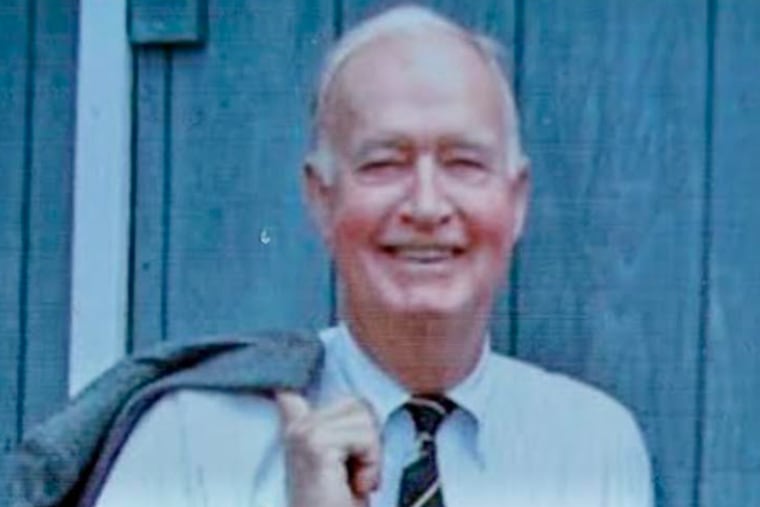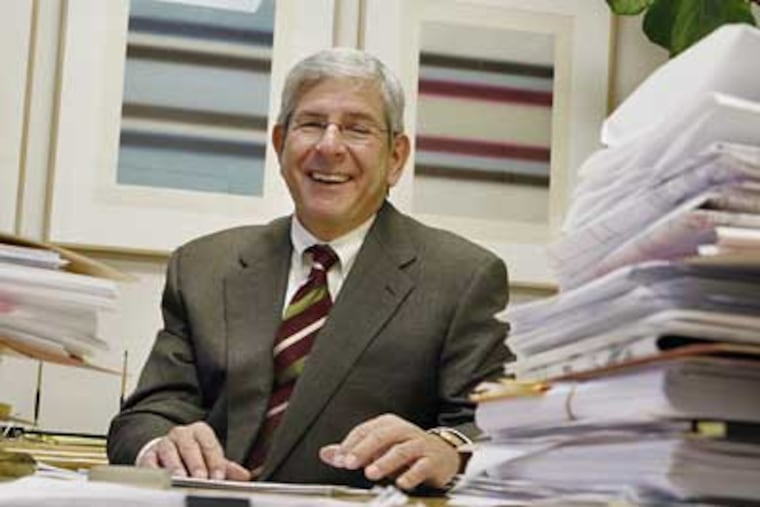
When Marc D. Brookman graduated from law school in 1968, "sprawl" was what one did on the couch while watching
The Mod Squad
.
By the time the word took on its other connotation of land-gobbling, auto-dependent suburban development, Brookman was deep into a law career specializing in real estate development. Today, as a partner at the Center City firm of Duane Morris L.L.P., he is busy advocating an alternative to sprawl known as "smart growth" - pedestrian-scale development, usually in the older suburbs in need of revitalization.
Brookman spearheaded the Delaware Valley Smart Growth Alliance, a coalition of government, private and nonprofit organizations that looks for projects to endorse in hopes that its support will help win over local officials and overcome zoning restrictions.
Question: Where did the idea for the Smart Growth Alliance originate?
Answer: Through the Urban Land Institute, [which] had worked with organizations in the metropolitan Washington, D.C., area and had achieved a high level of success and cooperation among three jurisdictions - District of Columbia, Maryland and Virginia.
Q: Has the alliance's endorsement helped projects?
A: The endorsement has provided local government with the ability to explain to its constituents that organizations that are concerned about the use of land believe that this is the appropriate use of this particular site. As a result, it has provided the bonafides or the credibility that is necessary when you seek to have change.
Q: What are the usual areas of concern about these developments?
A: Increasing density, allowing for the mixture of uses within the same site, and the perception that as a result of increased intensity of the use of the land that it will create adverse impacts.
Q: What does the alliance say in response? Why should municipalities consider this type of development?
A: Because it maximizes the investment in existing infrastructure, reduces the amount of environmental degradation that otherwise would occur if more land was disturbed to accommodate the same amount of people, and it creates a sense of place where individuals can live, work and shop without making long trips in automobiles. And it's a much more efficient use of the land than individual large-lot communities.
Q: Is there any added value to smart-growth development?
A: Empirically, it's been shown that resale values in smart-growth communities have appreciated greater than in nonsmart-growth communities, and the length of time that homes are on the market is shorter.
Q: How does this development help inner-ring suburbs?
A: The inner-ring suburbs have infrastructure in place that in many cases is not to the level of intensity that's necessary to create a sense of place. And by adding to what is in place by adaptive reuses and bringing multiple uses there, it brings back life and vitality to these areas.
Q: How do you think the current economy will affect smart-growth efforts?
A: I don't believe that smart-growth communities will fare any differently than traditional development in light of the economy, except for the fact that if the development community believes that the battle will be long and hard, they may decide to do what the local code requires by right rather than to expend substantial sums of money on what may be an uncertain result.
Q: Should the business community support smart-growth development?
A: Yes, because it provides a potential workforce closer to their place of employment. It will reduce absenteeism, lateness, and it will enable the workforce to be able to spend more quality time with their family.
Q: Would your smart-growth philosophy preclude you from representing a developer with a conventional suburban-development project?
A: Not at all. One size doesn't fit all. It's not our intention to change the world. It's just to provide that this option be available if someone should choose to develop the land in this manner.
Marc D. Brookman
Age/Birthplace: 65, Philadelphia.
Hometown: Abington Township.
Education: Temple University School
of Law.
Family: Wife Andy; sons Drew, Matthew and Douglas.
Hobbies: Tennis and listening to Big Band jazz and American standards.
Favorite Developments: Time Warner Complex, New York City; Water Tower Place, Chicago; Reading Headhouse and Terminal, Philadelphia.
Putting Money Where His Mouth Is: "I live within one block of the SEPTA Regional Rail Lines and use SEPTA for travel to most of my meetings and to and from work. Also, when I need to drive, I drive a Mini Cooper."
EndText