Arts groups seem to ride storm
New survey looks at economy's impact on area culture.
Arts groups in the Philadelphia area are beginning to feel the bite of the fiscal crisis, but a new survey demonstrates surprising resilience in ticket sales, subscriptions, and seasonal memberships at regional venues.
There has, however, been a significant decline in governmental and corporate arts support over the last six months, the survey shows.
Income from investments has also taken a dive, and individual and foundation giving are down as well, but to a lesser extent.
Conducted by the Greater Philadelphia Cultural Alliance, the survey, to be released today, is the first to take a broad look at how the region's cultural organizations are faring in the worsening financial climate.
"These are challenging times for the economy, but this demonstrates there is an important role for the arts," said Tom Kaiden, chief operating officer of the cultural alliance, a service group.
"Cultural organizations have a clear mission and they're working hard to respond to the need," said Kaiden, analyzing relatively stable ticket and membership levels. "In times of stress . . . the arts offer relief and connect us with our shared values."
Overall, the survey of 92 area organizations of varying sizes and from a broad range of disciplines reported that earned income had increased or remained relatively flat at most responding institutions. Just-released national figures show similar stability in earned revenues in recent months.
About 67 percent of the groups in the cultural alliance survey reported stable or increasing ticket sales, and 79 percent reported stable or increasing memberships or subscriptions.
Investment income has proven more difficult, with 59 percent of the groups reporting a significant drop in such funds. Cultural alliance officials noted that the region's very large endowed institutions have been most adversely affected by drops in investment income.
On the contributed-income front, corporate and government giving have slowed fairly dramatically. Corporate support is down at 35 percent of responding organizations and flat at 53 percent; government support - local, state and federal - is down at 34 percent and stable at 41 percent of the groups.
"I think we're seeing what we would expect, given the current recession," said Kaiden. "Government and corporate support drop most quickly." Declines in foundation support are "somewhat tempered," he said, because foundation giving is generally based on a percentage of assets averaged over a multiyear period.
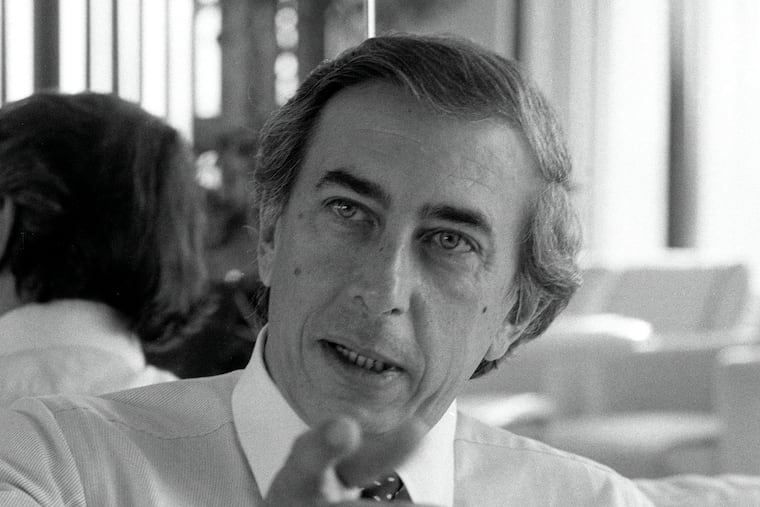
Bernard Havard, longtime artistic-producing director at the Walnut Street Theatre, said his theater's subscription campaign, the largest in the region, was shaping up well for next season.
"I'm knocking on a piece of wood because I realize we are in flux, but right now we're ahead of last year and last year was the second highest in history," he said yesterday.
The Walnut is already $250,000 ahead of this point last year. "It's still early," Havard hastened to say.
The Walnut also has reduced costs and will partner with the Pasadena Playhouse in California next year in a production of
Fallen Angels
- an effort that will result in substantial savings.
"We've definitely been proactive in terms of trying to increase income and to save money wherever we can," Havard said. "We are very fortunate in that our market doesn't seem to be significantly down."
The Walnut's efforts at collaboration and cost reduction are duplicated elsewhere, according to the alliance survey. Most organizations are seeking to maintain programming levels, but at lower cost. The survey reports that 74 percent of responding groups have reduced budgets or expect to do so in the next six months.
At the same time, 67 percent said they did not expect to be reducing staff at this point; 40 percent have done so. Nearly half of the groups - 45 percent - plan to merge or collaborate in some way over the next six months, or have done so.
The cultural alliance survey results are broadly in line with a national survey monitoring the performance of arts organizations over the 2008 holiday season.
Target Resource Group and Patron Technology report 56.4 percent of arts and cultural events staged around the country from Thanksgiving to the end of the year met or exceeded 2007 revenues.
In the Northeast, 63 percent of organizations reported revenues equal to or greater than 2007. Survey data suggest that depressed revenues - reported only in the Midwest and Northwest - can be largely attributed to prolonged periods of bad weather. Arts organizations in every other part of the country reported strong revenues.
While the results so far indicate stability, there is little talk that arts organizations are not imperiled by recession. The cultural alliance reports that 21 percent of responding organizations expect to clock in with an operating deficit this year, and 42 percent believe their general financial situation will deteriorate in the next six months.
"I think it's naive to think of any sector as recession-proof, particularly ours," said Kaiden.
At Eastern State Penitentiary in Fairmount, 2008 was a strong year, with more than 100,000 visitors during the historic site's Halloween tours alone.
"We're still relatively new, so our pattern over the last two years has been growth," said Sara Jane Elk, executive director.
Even so, she said, the organization is making very conservative assumptions about the future. Projecting a 10 percent decline in daily visitors in 2009 and a 20 percent decline over this year's Halloween period enables the organization to "plan for a loss of revenue" and maintain programming, she said.
At the Atwater Kent Museum, the city's history museum in Center City, which has seen 20 percent of its city funding disappear this fiscal year, director Viki Sand also is taking "a very conservative view" of the deepening recession.
But she said her institution, closed now in preparation for building renovations, will be better positioned as a result of prudent planning.
"Arts organizations are really good at knitting small amounts of money together," she said. "They are used to doing so much with very little."
.