Pa. accepts fed help, says CDC is ‘obscuring the seriousness’ of measles outbreak by not counting its deaths
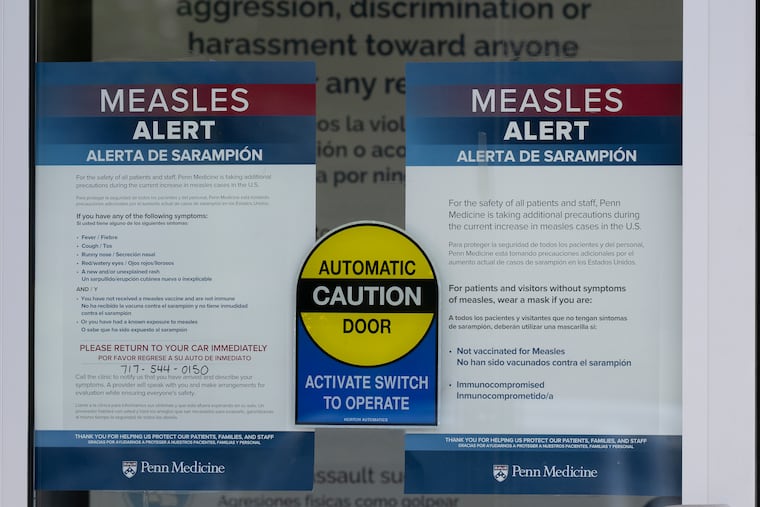
More than 1,200 people have been sickened this year, and the state has confirmed five deaths linked to its largest measles outbreak in 35 years.
Pennsylvania will accept help from a “disease detective” sent by the Centers for Disease Control and Prevention to curb the worst measles outbreak in the country, the state’s top health official said Friday, while repeating a demand for federal acknowledgment of measles-associated deaths here.
More than 1,200 people have been sickened and the state has confirmed five deaths linked to Pennsylvania’s worst measles outbreak in 35 years. Officials are also investigating a sixth death reported earlier this week by a local coroner.
» READ MORE: Your questions about Pennsylvania’s measles outbreak, answered
But the state and federal response to the outbreak has been complicated by a highly politicized dispute over how the deaths are reported. The CDC has only acknowledged two measles deaths on its data dashboard that tracks nationwide measles cases, and has not specified where they occurred.
On Monday, the CDC will send an Epidemic Intelligence Service officer, part of its Epi-Aid program, state officials said. They are looking to the CDC’s expertise to help understand how measles is spreading in the state and the true extent of the outbreak. For months, experts have warned that many measles cases are likely going unreported to the state.
In a letter to CDC director Erica Schwartz on Friday, Health Secretary Debra Bogen wrote that the state also wants all the deaths reported in Pennsylvania acknowledged — and is asking for answers on how the CDC has been tracking measles deaths.
“By not acknowledging the deaths, the CDC obscures the seriousness of this disease and the toll of measles across the U.S,” Bogen wrote.
Since the first deaths in Pennsylvania were announced in August, Democratic Gov. Josh Shapiro and President Donald Trump’s Health and Human Services secretary, Robert F. Kennedy Jr., have sparred over the response to the outbreak.
Shapiro has criticized Kennedy’s long history of anti-vaccine advocacy, saying that Kennedy spread misinformation that contributed to lower vaccine rates and a spiraling outbreak in Pennsylvania.
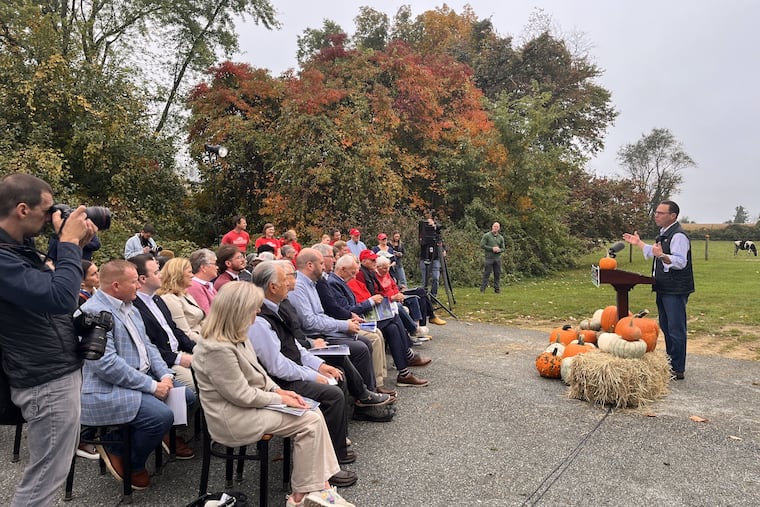
At an unrelated press event in Chester County on Friday, he called Kennedy a “grifter” who “continues to sow doubt, continues to lie about what’s happening here in the Commonwealth of Pennsylvania, and continues to play games.”
Kennedy, for his part, has suggested that Shapiro’s staff “fabricated” at least one of two measles-related deaths first reported by the state, after a county coroner said that he believed a Lancaster County infant’s death was due to a lacerated spleen, not measles. (Prominent physicians have noted that measles can weaken a spleen, making it vulnerable to rupture.)
State officials have maintained that all five deaths confirmed by the state fit its definition of a “measles-associated death” — one that occurs within 30 days of symptom onset in a person with clinical evidence of infection and a positive laboratory test, and who did not die of another unrelated cause, like a car crash.
Kennedy has also repeatedly noted, as recently as yesterday in remarks to reporters, that the state had not requested help from the CDC’s Epi-Aid program, which sends staffers to provide technical assistance to a state for one to three weeks. He said that Pennsylvania has “suffered” because of that decision.
State officials say they are already working with CDC staff remotely and meet every other week to review cases and discuss the outbreak response.
On Oct. 7, state officials submitted a formal request for Epi-Aid, which they had previously said they could accept only with acknowledgment of the state-reported deaths.
In her Friday letter to Schwartz, Bogen again asked the CDC to acknowledge the deaths and update its website accordingly.
She said the agency is creating “unnecessary and harmful distrust between state and federal agencies and sowing uncertainty among the public.”
“The Department must have confidence that CDC leadership is operating in good faith before we can request any further formal Epi Aid assistance from the CDC, and reporting these deaths is a critical step toward rebuilding that trust,” she wrote.
Bogen also asked Schwartz to explain why the CDC had changed its reporting procedures for deaths associated with measles; the agency has switched to a process that typically takes weeks longer.
And she noted that the state health department reported deaths through that new process several weeks ago. “Why has it taken so long for CDC to report these deaths on its website?” she wrote.
HHS officials did not immediately return a request for comment.
» READ MORE: More Philly-area classrooms are seeing lower measles vaccination rates. How protected is your school?
Latest case counts
Pennsylvania health officials on Friday reported that the state has logged 1,260 measles cases for the year, with 121 cases reported in the last week.
The outbreak has now reached 43 of the state’s 67 counties, with Lancaster County reporting 452 cases and Mifflin County, in Central Pennsylvania, nearing 200 cases. Chester County, in the Philadelphia suburbs, has reported 91 cases.
State officials said that about 300 health department staffers, including 60 “disease detectives,” have been responding to the measles outbreak in the state.
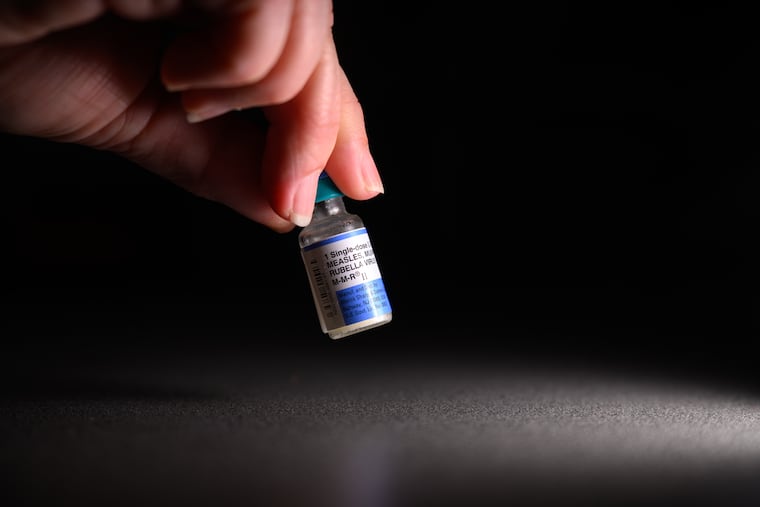
In recent months, they said, healthcare providers across Pennsylvania have doubled the number of measles, mumps, and rubella vaccinations that they typically give out.
Shapiro touted those statistics on Friday.
“People are listening to actual medical experts, not people who are spewing nonsense in Washington D.C. And as a result of that, we’re giving ourselves a fighting chance to be able to get through this and protect our citizens, protect our neighbors, protect the people around us,” he said.
“I just want to say thank you to the good people of Pennsylvania for doing what I respectfully asked of them.”
Staff writer Frank Kummer contributed to this article.

-
Your questions about Pennsylvania’s measles outbreak, answered
-
New vaccination data show hundreds of Philly-area schools vulnerable to a measles outbreak
-
Chester County has more measles cases than most entire states in the country
-
Pa. measles outbreak is nation’s worst, echoing deadly 1991 Philadelphia epidemic