Pa. gets its first agricultural plan as farmers face land loss, rising costs, and labor shortages
Pennsylvania lost 17% of its farms and 8% of its acreage between 2012 and 2022 — twice the national rate.
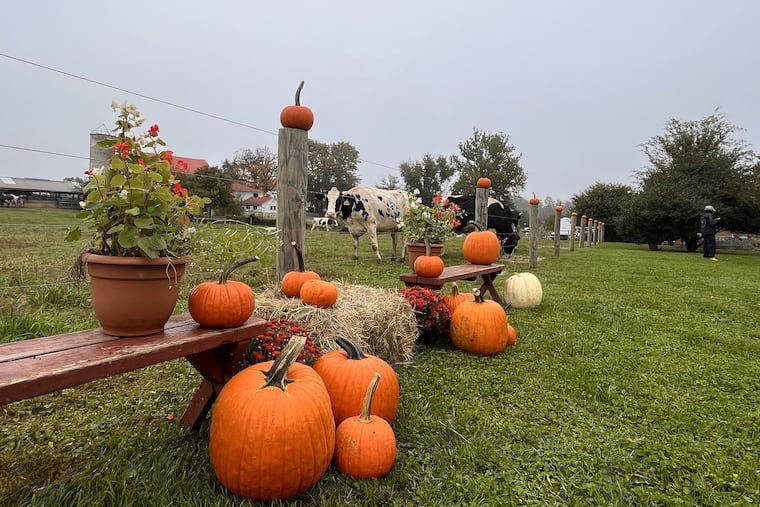
Historic Milky Way Farm, set on 103 rolling acres in Chester Springs, has been run by the Matthews family for generations.
Thomas Matthews says the farm — actively cultivated for 300 years — faces economic hurdles such as high fuel, fertilizer, and operational costs, as well as development pressure.
“We are really passionate about connecting with the community and educating people about where their food comes from,” Matthews said.
On Friday, Gov. Josh Shapiro and other officials announced Pennsylvania’s first strategic plan for agriculture in an attempt to help farms like Milky Way survive.
Pennsylvania lost 17% of its farms and 8% of its acreage between 2012 and 2022, according to the most recent agricultural census. That’s twice the national rate, according to the plan.
Much of that loss comes from high land values and development pressure.
“I believe that when you succeed, Pennsylvania succeeds,” Shapiro said of farmers. “The future of the Commonwealth of Pennsylvania looks bright, and it runs right through our Pennsylvania farmlands.”
Shapiro announced the 10-year plan from the Milky Way Farm, which has 50 milking cows, a creamery and also raises crops such as pumpkins.
The plan sets out to establish a blueprint for the state’s $153 billion agricultural economy that includes 48,000 farms and over 600,000 agricultural workers statewide.
Shapiro outlined five pillars of the plan:
Support agricultural careers by expanding apprenticeship programs, education, and workplace support.
Embrace innovation and modernization by providing grants for equipment, upgrades, automation, and research.
Increase market access by growing the “PA Preferred” brand, and expand organic markets.
Protect current farmland though preservation, farm succession plans, and land-use planning.
Better coordinate state’s support network for farmers and provide more resources.
As an example of driving technological adoption, Shapiro highlighted the state’s first Agriculture Innovation Grant, which has already distributed $20 million in grants to help farmers adopt precision equipment, water conservation tools, and modern facilities.
He pointed to major economic wins, such as Chobani’s recent $1.2 billion Leigh Valley facility investment, which is projected to increase state milk production by 30% — from 10 billion to 13 billion pounds annually.
“The launch of this plan is certainly a milestone, but it’s not a finish line.” said Russell Redding, the state’s agricultural secretary. “It a starting point for the work that we do.”
Redding said the plan was crafted through feedback from over 200 participants across 40 counties through regional listening sessions.
The plan’s primary role, he said, is to create opportunities for people to remain in agriculture.
He and Shapiro both acknowledged current political and economic headwinds, such as volatile diesel prices, high fertilizer costs, and labor issues that are pressuring farmers.
Shapiro put the blame for many of farmers’ current issues at the feet of the Trump administration.
He said Pennsylvania farmers are “getting crushed” by soaring operational costs, which he attributed the spike in fuel prices from the war in Iran, disruption of trade routes, and tariffs.
Diesel, he noted, which farmers depend on to run equipment, reached approximately $6.50 a gallon.
The new state plan can’t fix those things overnight, but sets Pennsylvania farmers up for a stronger economic run over the long haul, officials said.
Officials also credited the state’s farmland preservation program, which has 6,781 participating farms and 671,082 acres preserved.
The Milky Way Farm is preserved through Chester County’s land preservation program, Matthews said.
Matthews said he strongly supported the new 10-year plan because of its broad vision and specific support for family farms.
He said most family farms are focused on immediate tasks. Having Shapiro and state leaders provide a road map takes some of the burden off their backs, he said.
For example, providing grants to help farmers adopt modern technologies will make their businesses more competitive and help pass farms down to the next generation, he said.
“Often, as farmers, it’s easy to focus only on the chores of today, and get lost in what are we building toward.”