Phila. councilman proposes property-tax hike
After skirting the prickly issue of property taxes for two decades, City Council is officially contemplating a 12 percent property-tax hike as a way to balance the budget.
After skirting the prickly issue of property taxes for two decades, City Council is officially contemplating a 12 percent property-tax hike as a way to balance the budget.
Unhappy with Mayor Nutter's proposed $300 trash fee, City Councilman Frank DiCicco yesterday proposed a 12.1 percent increase in property-tax bills to replace it, even though the city's property assessments are, by all accounts, a mess.
Whether the plan will have enough Council votes is unclear as members weigh the political ramifications of a number of unpopular budget options.
In his budget address March 4, Nutter proposed the trash fee and a 2-cent-per-ounce tax on sweet drinks as a way to fill an estimated $150 million hole in his proposed $3.9 billion 2010-11 budget.
The trash fee would raise $107 million; the sweet-drink tax would bring in $38 million in the first year toward the general fund and $57 million annually thereafter. It would also fund $20 million for antiobesity programs starting in 2012.
DiCicco's proposal is meant to generate $107 million, rendering the trash fee unnecessary. It is an about-face for Council members, who last year rejected Nutter's proposed 19 percent property-tax increase and have not touched the property tax millage rate since 1989.
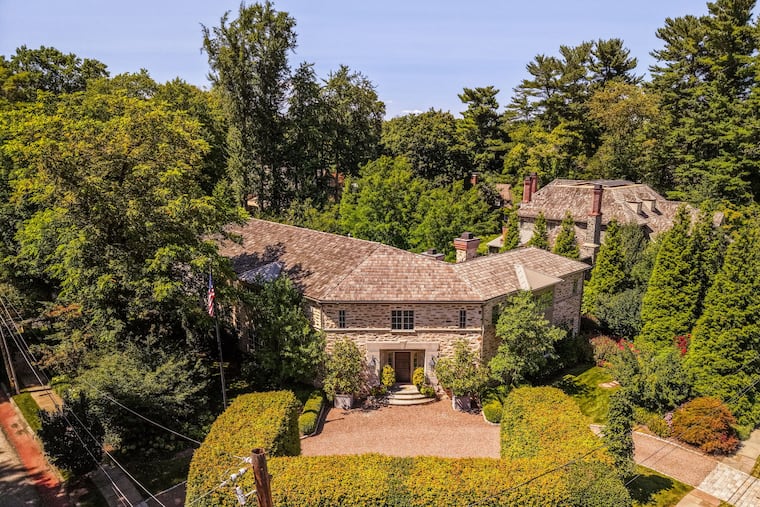
Instead of most property owners paying $300 for trash pickup (low-income homeowners would be charged $200), the owner of a typical home in Chestnut Hill might pay $805 more in property taxes while the owner of a typical home in Cobbs Creek might pay an additional $83, according to tables provided with Nutter's failed property-tax proposal of last year.
DiCicco described his plan as "more uniform" than the trash fee despite the city's admittedly inaccurate and inequitable system of property assessment. The values were so widely discredited after an Inquirer series last year that Nutter and the Board of Revision of Taxes ordered assessments frozen this year. Officials say they are at least two years away from righting the assessments.
"We're not going to be able to change that overnight," DiCicco said. His bill calls for Council to revisit the tax in each of the next five years to determine whether it can be reduced, and the increase would sunset on July 1, 2015.
A hearing was scheduled for 2 p.m. April 5 in Council Chambers. The 12 percent might go down as Council finds other ways to fill the budget gap, DiCicco said.
The bill was cosponsored by Majority Leader Marian B. Tasco and Councilman James F. Kenney.
"At the end of the day, I'll do what I have to do to close the $150 million gap," Tasco said yesterday before Council's regular session, at which DiCicco introduced his bill.
A number of other Council members appeared to support the bill in concept over the trash fee, but were apparently wary of attaching their names to the bill with an election approaching in 2011.
"I just feel it's too early to say at this point in time what direction we'll go," Council President Anna C. Verna said.
"The introduction of a property-tax increase simply means that there is no appetite whatsoever for a flat $300 fee," Councilman W. Wilson Goode Jr. said.
Nutter dropped his proposed 19 percent property-tax increase last year in the face of Council opposition, settling for a five-year sales-tax hike of 1 percentage point. He has said a property-tax increase is not an option, because of the assessment problems, but the administration appears open to Council's proposal.
"We'll take a look at the specifics of the legislation," Finance Director Rob Dubow said. "We remain focused on the need for revenue, and there may very well be other ways to get there."
"We're not married to our idea," he said.
Supporters say the property tax gives greater protection to low-income seniors, who are eligible for property-tax rebates, and allows residents to deduct the increase on their taxes. Opponents question whether such an attempt might be successfully challenged in court given the state of assessments.
Yesterday, the Rev. Ken Metzner, a South Philadelphia resident who has challenged his assessment in court, said a proposed increase alone would not be reason enough for a lawsuit.
But, he said, "it will solve nothing and continue to perpetuate the madness that is the tax system in Philadelphia, and it will continue to prevent us from making real progress."
Council has not had to raise the property-tax rate for 21 years because of the politically expedient tradition in which the appointed Board of Revision of Taxes effectively raises money for the elected Council and mayor by hiking individual assessments.
While a property owner's combined school and city property taxes would go up 12.1 percent, the city's share of that bill would shoot up more than 30 percent.
The combined property-tax rate is $8.26 per $100 of assessed property value. Of that, about $3.31 goes to the city and $4.96 to the schools. The city's share would rise to $4.31 under DiCicco's plan.