Homeowners don't like the sound of no barriers
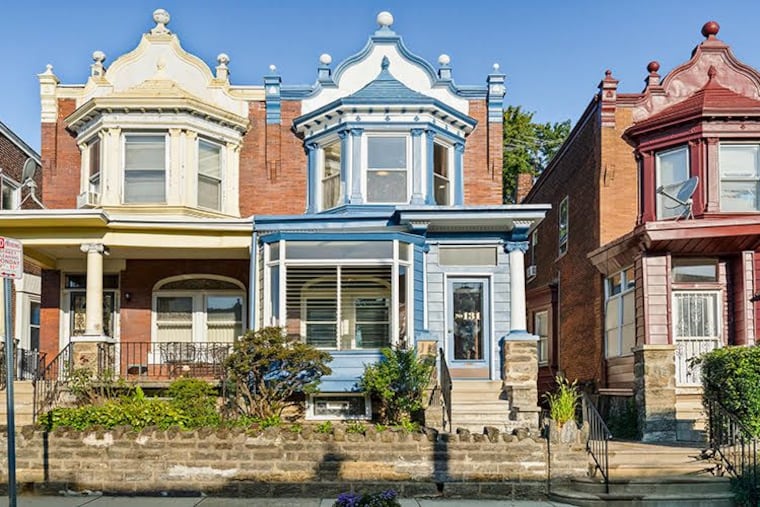
Maria Moyer has lived with the pounding din of the Pennsylvania Turnpike's Northeast Extension for seven years. Her two-story Colonial on Boone Way is so close to traffic that the Towamencin Township resident has seen the grisly results of fatal crashes.

Maria Moyer has lived with the pounding din of the Pennsylvania Turnpike's Northeast Extension for seven years.
Her two-story Colonial on Boone Way is so close to traffic that the Towamencin Township resident has seen the grisly results of fatal crashes.
With the Turnpike Commission scheduled to add a third lane in each direction between the Mid-County and Lansdale interchanges, Moyer lives in dread.
The $250 million to $300 million expansion will upgrade the most heavily traveled four-lane stretch of turnpike in Pennsylvania. Turnpike officials have warned Moyer that she could lose almost her entire backyard - up to 25 feet - in the expansion, set to begin in earnest in 2011.
And her neighborhood may not get a sound barrier, the consolation she had hoped for.
"It's heartbreaking. It will kill this property," said Moyer. "How can we live here?"
Seven years ago, when the commission announced plans to widen 101/2 miles of the expressway, all of Towamencin was promised a sound wall, residents say.
But at an April meeting attended by homeowners from the length of the expansion, officials said that some communities - including Moyer's - would receive no wall.
It will be at least a year before the Turnpike Commission tells residents how much land it will take. Until then, those in Moyer's enclave - like homeowners in several Plymouth, Whitpain, Upper Gwynedd, and Worcester Township neighborhoods - are wrangling over measures to make post-expansion life more bearable.
Towamencin residents say they are the victims of flawed acoustical studies that the Turnpike Commission will not let them see.
Noise barriers are installed when "warranted, feasible and reasonable" in economic terms, according to Lugene Keys, a consultant with the Turnpike Commission. The cost may not exceed $50,000 per affected house, according to turnpike guidelines.
Moyer's area, two dozen homes on either side of Green Lane Road, flunked the economic test, the commission said in April. The 3,600-foot-long wall needed would cost almost $90,000 per house, Keys said.
That math galls Ron Wasson, who lives on Sherwood Way, less than a quarter-mile from Moyer. To arrive at that figure, he said, only 13 homes were considered. Had A.D. Marble & Co., the Conshohocken environmental and engineering group the commission hired, found all 24 homes deserving of a wall, Wasson said, the cost criteria would have been met.
At a public meeting with turnpike representatives last month, residents complained that noise was monitored during off-peak hours and from sites that led to lower readings, such as across the street from a home or behind a tree.
Constant auditory disruption can cause cardiovascular, sleep and psychological problems, said Pamela Mason, director of audiology professional practices at the American Speech-Language Hearing Association in Rockville, Md.
Readings should be taken "where people are and where they are being disturbed, like inside their home," Mason said.
Project manager Gerry Rollman said Marble modeled its data to forecast sound at rush hour. Wasson and his neighbors want to see Marble's numbers.
"The ability to sell our homes will be determined by the results of the sound studies," he said. "It's beyond my comprehension that they won't release that information."
Responding to the neighbors, Rollman said Marble was undertaking another round of tests.
"We don't want to release portions of a report that could be misconstrued if they're incomplete," Rollman said. The results, including the data neighbors have requested, will be made public by spring, he said.
"We don't have any confidence in the new studies," said Linda Tyre of Towamencin. "What do I care if they do another study if I think they are going to mishandle it again?"
With their "arbitrary" $50,000 criterion, Wasson said, turnpike authorities have abandoned homeowners they have acknowledged will suffer.
Rollman said, "As engineers, we need to follow the criteria. . . . I sympathize with them very much."
Property owners will be paid fair market value for land lost to the expansion, according to turnpike officials. Rollman said there would not be compensation for acoustical impact, however.
"All we want is a sound wall, and to save the environment as best we can," said David Petersen, who lives on the neighborhood's Ivywood Way and also worries about storm-water problems.
The good news is that there's "wiggle room," said State Sen. Rob Wonderling (R., Montgomery). Though work on bridges may begin earlier, most of the project is years off. There is time to challenge Turnpike Commission policy and make a case for why the agency should deviate from its criteria, he said.
Including those in other townships, the owners of up to 120 homes learned in April that they would not qualify for sound barriers, said State Rep. Kate Harper (R., Montgomery). She is optimistic that the next sound study will show that her Towamencin constituents need relief. If not, she said, "then we attack that report."
Another possibility, residents say, is to commission their own acoustic tests.
"We have 67,000 cars per day" on the Northeast Extension, "and we'll get more when they expand," Harper said.
"I know it's expensive," she said, "but it's the cost of doing business in an area that's heavily populated."