What today’s reproductive and gender rights ballot measures could draw from a pioneering sex researcher
Katharine Bement Davis fought outdated laws by studying American women's sexual practices and knowledge.
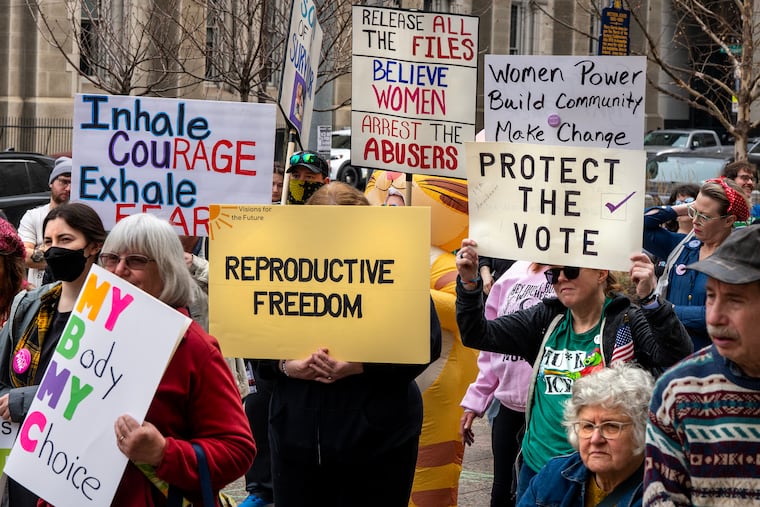
This November, bodies are on the ballot.
Ballot measures in several states deal with everything from restricting sports participation based on biological sex to limiting youths’ access to gender-affirming treatments to affirming civil rights regardless of sex or gender. Reproductive rights also face a reckoning, with ballot measures in four states pertaining to the legality of both contraception and abortion.
These measures reflect how much of a battleground reproductive rights and gender diversity have become. Without significant changes in public opinion, ballot initiatives intended to restrict bodily autonomy have escalated.
The choices facing voters also signify something else: the subordination of information to ideology in these debates. Anti-abortion activists, for example, often ignore the fact that abortion rates have declined sharply since the 1973 Supreme Court decision in Roe v. Wade protected reproductive rights nationwide. In fact, abortion rates actually increased after the Supreme Court overturned Roe in 2022 in Dobbs v. Jackson Women’s Health Organization, which empowered many states to impose severe restrictions on legal abortion.
Similarly, while anti-transgender legislation capitalizes on concerns about trans women athletes having an unfair advantage in sports, in fact, transgender people compose a tiny percentage of all athletes.
And yet, polarized views have made these issues enduring battlegrounds in American politics. Could better information make a difference?
A century ago, a pioneering sex researcher named Katharine Bement Davis thought so. She set out to demonstrate that data should inform policy. She ended up exposing that policies on issues related to sexuality and reproduction bore little resemblance to “average” American women’s beliefs or experiences. This lesson resonates today as voters confront these issues at the ballot box.
In the 1920s, the nation was amid what some historians have dubbed “America’s first sexual revolution.” Free-speech advocates and birth control crusaders sought to disseminate information about sex and to expand reproductive rights. “Flappers” flaunted their sexuality in short skirts, rolled stockings and bright lipstick. A “pansy craze” highlighted an emerging queer subculture in American cities.
Yet, to date, this ongoing sexual revolution had had little impact on public policy. Although it had been a half century since mutton-chopped moralist Anthony Comstock launched his crusade against what he deemed the “obscene” subjects of sex and reproduction (Comstock died in 1915) his Victorian sensibilities still held sway.
Federal and state laws, popularly known as the Comstock Laws, restricted disseminating information about sexuality and reproduction, while banning books and plays dealing with lesbian themes. Additionally, both sexually active women and people who today might identify as LGBTIQ+ confronted prosecution and endured lengthy incarcerations. The subject of sex was shrouded in secrecy and stigma.
Davis was convinced that a “taboo” on sex not only drove problematic policies but also led to “distorted views, baffled speculation, and unfortunate experiences.” She believed that the shame surrounding the subject not only led to a lack of accurate data but also prevented “more satisfactory adjustments of the sex relationship.”
In 1921, Davis convened a Committee for Research on the Problems of Sex to address this issue.
In their inaugural report, its members declared: “Our knowledge of sex is in a chaotic state.” The committee concluded that “attitudes toward the subject have been fixed by moral teaching, medical instruction and social propaganda, all based on only a slight foundation of established fact.” Condemning the “fog of mystery, reticence, and shame” that surrounded sex, the group dedicated itself to the “systematic study” of the topic.
Davis’ particular interest was women’s sexuality. After conducting a national “social hygiene” campaign during World War I and convening an international conference of female physicians in 1919, she was deeply concerned about women’s appalling “ignorance” about their own bodies.
Davis believed that the only way to counter the “false information” guiding public policy was to conduct a large-scale study to gather accurate data. Like other social scientists at the time, she also was interested in understanding the experiences of “normal” or “average” Americans, rather than those judged pathological or deviant.
Using lists of college graduates and club women, Davis distributed anonymous questionnaires to 20,000 white, well-educated, well-to-do women. While hardly a representative sample, this group responded eagerly to Davis’s appeal.
Expressing their discontent with what one called the “conspiracy of silence” surrounding women’s sexuality, more than 2,000 women shared 10,000 pages of “frank and detailed statements” about their sexual knowledge, experience and desire. Their testimonies formed the basis of Factors in the Sex Life of Twenty-Two Hundred Women (1929), the nation’s first comprehensive study of “normal” women’s sexuality.
Running to over 400 pages, the book supplied “actual facts and information on a topic which has long been the subject for guesswork,” as Davis’s publishers put it. Factors offered “conclusive evidence” about female sexuality. It also proposed a road map for “sex and marriage in a modern age,” providing solid evidence about what one reviewer called “our changing sex standards.”
Respected journals urged Americans to read Factors and to let “scientific truths about sex” guide the nation’s sexual mores. For far too long, Scientific American argued, real facts had been obscured by false beliefs and “rather hypocritical standards”: “We have thought we knew, yet we did not know.”
Factors showed that public policy was out of touch with popular opinion. Despite legal prohibitions, approximately three-quarters of Davis’s subjects approved of and used contraceptive methods — and about one in 10 had procured abortions.
Davis’s study also demonstrated that a significant proportion of American women engaged in same-sex relationships. She found that more than half of unmarried women and nearly one-third of married women had experienced “intense emotional relationships” with other women. In each group, approximately half described those relationships as sexual. This was a remarkably high figure, given prevailing views of homosexuality as sexual deviance and state laws criminalizing homosexual acts.
Davis used this data to challenge the stigma surrounding homosexuality. She included two chapters on same-sex relationships in a book about “normal” women; described women’s intimacy as “natural” rather than pathological; and included lesbians’ own eloquent testimonies defending the legitimacy of their unions.
Davis used her scholarly research as the basis for social activism and legal reform. She argued for the adoption of what her colleague, YMCA educator Max Exner, called “rational sex ethics.” As journalist Helen Buckler argued in an article on “Sex and the Law” in Scribner’s Magazine, legal regulation should reflect accepted practice.
Throughout the 1920s, Davis used her position at the helm of an anti-vice think tank, the Bureau of Social Hygiene, to secretly fund Margaret Sanger’s Clinical Research Bureau, the first legal birth control clinic in the nation.
In 1927, she shared her early findings on lesbianism with Arthur Garfield Hays, a free-speech attorney who headed up the legal defense of the lesbian-themed play The Captive. The following year, Davis provided pre-publication data about same-sex relationships to civil rights lawyer Morris Ernst, who successfully fought to protect British writer Radclyffe Hall’s lesbian-themed novel The Well of Loneliness, already banned in the U.K., from censorship in the U.S.
In 1929, Davis joined the legal defense committee for Mary Ware Dennett, who was appealing a conviction for sending her sex education pamphlet, The Sex Side of Life, through the U.S. mail in violation of the Comstock Laws.
Davis framed Dennett’s appeal as a test case for both sex education and scientific expertise. She forecast that if Dennett’s conviction were upheld, parents, educators and young people would be left with no accurate sources of information. As a result, children would turn to “surreptitious and often truly obscene sources” presenting “generally incorrect” information. (When Dennett won her appeal, her attorney declared in the Nation: “Sex wins in America.”)
Davis’s efforts were effective, but they also led to the loss of her job. At the behest of her misogynistic male co-workers, prudish philanthropist John D. Rockefeller Jr., founder and funder of the Bureau of Social Hygiene, forced Davis into early retirement in early 1928. Although he allowed her to finish her magnum opus, he also insisted that the Bureau downplay the book’s publication, and the original sex survey results mysteriously disappeared.
Davis and her allies succeeded in curbing censorship and making sexual education, birth control and lesbian literature more accessible. These advances helped drive the nation’s first sexual revolution, paved the way for the second and continue to inform contemporary conversations about sexuality and reproduction. Even so, Davis and her allies failed to overturn the Comstock Laws — which still lurk in the background as “zombie” legislation that conservatives today threaten to revive.
A century ago, Katharine Bement Davis demonstrated the utility of accurate information in shaping both public opinion and public policy. As the nation struggles with the current politicization of sex, we would do well to follow her example by allowing facts, rather than fears, to shape policy decisions and public debates.
Anya Jabour is Regents professor of history at the University of Montana, Missoula, where she teaches about the history of women, gender and sexuality in America and directs the History Department’s Graduate Program. Her latest book, Matters of Sex: Katharine Bement Davis and America’s First Sexual Revolution, is forthcoming from NYU Press on Nov. 10, 2026.
Made by History takes readers beyond the headlines with articles written and edited by professional historians. Opinions expressed do not necessarily reflect the views of The Inquirer.