A new generation portends political upheaval
Morley Winograd and Michael D. Hais are coauthors of "Millennial Makeover: MySpace, YouTube, and the Future of American Politics," to be published next month
Morley Winograd
and Michael D. Hais
are coauthors of "Millennial Makeover: MySpace, YouTube, and the Future of American Politics," to be published next month
The scene at American University was electric: thousands of young people filling an arena to hear Massachusetts Sen. Edward M. Kennedy endorse Barack Obama for president and praise the Illinois senator's ability to inspire and move a new generation of Americans.
It was the perfect setting for Obama, who has been focused on this new "millennial generation" from the start. Almost a year ago, in a speech to African American leaders in Selma, Ala., he underlined the differences between two different types of generations: the "Moses generation" that led the children of Israel out of slavery and the "Joshua generation" that established the kingdom of Israel. The first was a generation of idealists and dreamers, the second a generation of doers and builders.
With that speech, in which he associated Sen. Hillary Rodham Clinton with the former generation and claimed the mantle of the latter for himself, Obama fired the first shot in an election battle that is being fought along the dividing lines between these two generational archetypes.
U.S. history suggests that about every 80 years, a civic (or Joshua) generation emerges to make over the country after a period of upheaval caused by the fervor of an idealist (or Moses) generation. In 1828, 1860, 1896, 1932 and 1968, as members of new generations - alternately idealist and civic - began to vote in large numbers, the United States experienced major political shifts. This year, the civic-minded millennials, born between 1982 and 2003, are coming of age and promising to turn the political landscape, currently defined by idealist baby boomers such as Clinton and George W. Bush, upside down.
Reared by indulgent parents and driven by deeply held values as adults, members of idealist generations embroil the nation in heated debates on divisive social issues as they try to enact their own personal morality and causes through the political process. (Remember that boomer-era rallying cry, "The personal is political"?) In the idealist eras that began in 1828 and 1896, the nation divided between the forces of tradition and those advancing a more modern approach to morality. In 1828, Andrew Jackson's Democrats gave rural traditionalism a victory. In 1896, the tables were turned as Mark Hanna, the Karl Rove of his day, guided Republican William McKinley to victory over William Jennings Bryan and his agricultural allies, on behalf of industrial-age companies and their urban workers.
In 1968, it was the Republicans' turn to take up the cause of traditional values - and end an era of dominance by a Democratic Party that seemed increasingly unable to maintain "law and order." Richard M. Nixon's victory in 1968 began a 20-year era of Republican presidential victories (interrupted only once, by Jimmy Carter in 1976) and firmly established the GOP as a traditionalist, Southern-oriented party.
It may surprise some to see baby boomers, so often represented as a generation of peaceniks and civil rights activists, producing this Republican realignment. But boomers were - and still are - a highly divided generation that actually tilts a bit to the right. On the college campuses of the 1960s, there were twice as many members of the right-wing Young Americans for Freedom as of the left-wing Students for a Democratic Society. It's no different 40 years later. A survey done last month by the media-research company Frank N. Magid Associates found that twice as many boomers called themselves conservative as liberal. The only things that unites this generation are its members' efforts to impose their diametrically opposed ideals, values and morality on everyone else through the political process.
Because idealist generations are unwilling to compromise on moral issues, they always have failed to solve the major social and economic problems of their eras. In the decades after the 1828 election, the country was pulled apart over slavery, ultimately leading to the Civil War. After the 1896 campaign, the United States couldn't find a way to help blue-collar workers and farmers share fully in the wealth generated by the Industrial Revolution. It took the Great Depression to usher in the sense of urgency that led to Franklin D. Roosevelt's New Deal. Today, issues such as affordable health care, quality education and climate change are endlessly debated but never resolved by two sides unwilling to set aside their ideological agendas for the common good.
But now, with another civic generation emerging, the times, as boomer troubadour Bob Dylan sang, they are a-changin'. Civic generations react against the idealist generations' efforts to use politics to advance their own moral causes and focus instead on reenergizing social, political and government institutions to solve pressing national issues. Previous civic realignments occurred in 1860, with the election of Abraham Lincoln, and in 1932, when the GI generation put Roosevelt in office. It's no coincidence that these "civic" presidents, along with George Washington, top all lists of our greatest presidents. All three led the country in resolving great crises by inspiring and guiding new generations and revitalizing and expanding the federal government.
Today's millennials look a lot like the GI generation, born between 1901 and 1924, which FDR described as having "a rendezvous with destiny" - a phrase Ted Kennedy echoed in his endorsement of Obama. In 1930, the GI generation was nearly twice as large as the two previous generations combined. Today's millennials are the largest generation in U.S. history - twice as large as Generation X and numbering a million more than the baby boomers. About 40 percent of millennials are of African American, Latino, Asian or racially mixed backgrounds. Twenty percent have at least one immigrant parent.
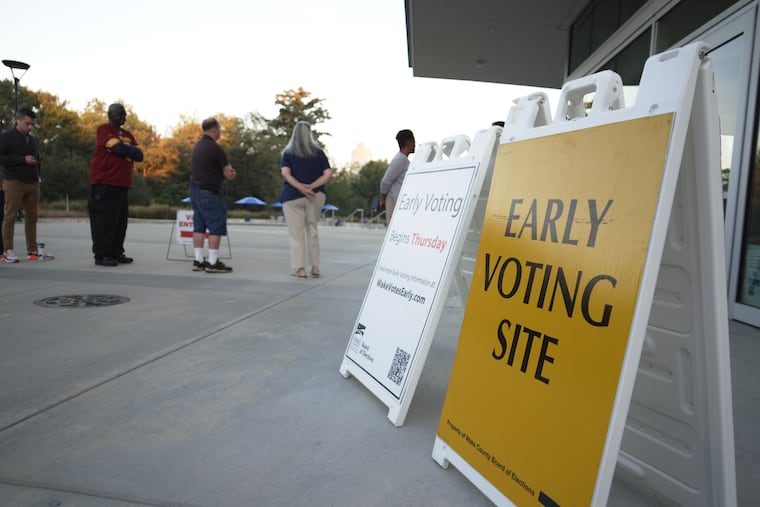
Civic generations are committed to political involvement and believe in using and strengthening political and government institutions. Millennials have led this year's surge in voter participation, especially in Democratic contests.
The millennials' political style also is similar to that of the GI generation. They aren't confrontational or combative, the way boomers (whose generational mantra was "Don't trust anyone over 30") have been. Instead, their political style reflects their generation's constant interaction with hundreds, if not thousands, of "friends" on MySpace or Facebook, about any and all subjects, increasingly including politics. Since they started watching
Barney
as toddlers, the millennials have learned to be concerned for the welfare of everyone in the group and to try to find consensus, "win-win" solutions to any problem. The result is a collegial approach that attracts millennials to candidates who seek to unify the country and heal the nation's divisions.
Given the public's disapproval of both Congress and President Bush, we're going to need all the optimism and change we can generate to overcome the challenges the nation will face in the future. Luckily, the millennial generation, like its GI generation forebears, is arriving right on time to deliver just what America needs.