This taxpayer-funded warehouse is key to Philly port's expansion. But who gets to work there?
Pennsylvania invested $85 million to build a new warehouse near the Packer Avenue Marine Terminal in South Philadelphia. Labor unions are at odds over which workers should get the jobs.
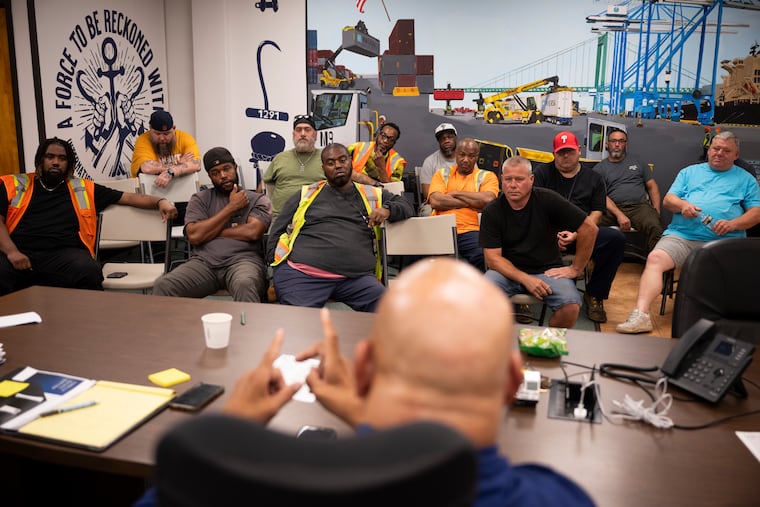
Cleo Winfield has worked at a warehouse located inside the Packer Avenue Marine Terminal in South Philadelphia for 22 years, stacking bananas and other cargo that are unloaded from ships docked on the Delaware River.
Now his job is at risk.
The warehouse, currently operated by an affiliate of Holt Logistics Corp. and staffed by members of a longshoremen’s union, is expected to be razed to make space on the terminal to stack more shipping containers.
As part of a port development plan, the Philadelphia Regional Port Authority (PhilaPort) — the Pennsylvania state agency that owns the city’s seaport facilities and leases them to private tenants — has built a new taxpayer-funded, Holt-operated warehouse a mile from the Packer Avenue terminal.
Gloucester City-based Holt says it has a deal to staff the new facility with workers represented by Teamsters Local 929. Holt has longshore work available for the members of International Longshoremen’s Association Local 1291, the company says, but it has been unable to reach an agreement with the union. A contract extension expired in June.
The ILA counters that such an arrangement would strip Winfield and 30 other warehouse workers of their seniority — sacrificing wages and benefits they’ve accrued over the years.
He and the other ILA members who attended Monday’s union meeting in Port Richmond voted unanimously to authorize a potential strike “if and when necessary,” a development that would require approval from their parent organization.
“Been there so long. That’s really all I know, man,” said Winfield, 57. “Raised my family with that job, put my son through college, man. I’m still paying the student loan on that. … I just want to be able to take care of my family.”
Holt said in a statement that the workers are all “productive and hardworking ILA members.”
“To be clear, there is more than enough terminal and stevedoring work for these men at Packer, and we remain interested in bringing them on if the ILA agrees,” the company said.
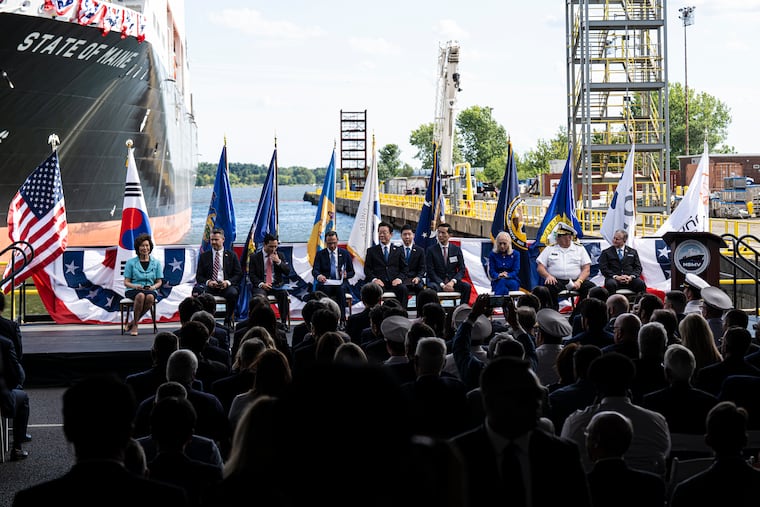
Regardless of the outcome, the episode has laid bare growing pains at the Port of Philadelphia, which has seen hundreds of millions of dollars of public and private investment over the past decade — as well as disputes over competition and labor. That includes $85 million in state funds that were allocated to the new 165,500-square-foot warehouse, according to PhilaPort. Holt invested $81 million in the building.
Boise Butler, president of ILA Local 1291, said he wants Holt to be a healthy employer. “But don’t screw them,” he said, motioning to his members. “Don’t screw us. OK? Because it’s not necessary.”
Port development
Philly’s port is relatively small compared to the biggest U.S. container ports, but it’s seen steady growth in recent years and is a major gateway for refrigerated cargo, especially fresh fruit.
Container volumes have more than doubled since 2016, from about 400,000 units that year to almost 900,000 in 2025.
During that time, the U.S. Army Corps of Engineers completed the three-decade-long deepening of the Delaware River from 40 to 45 feet, which allowed the port to accommodate bigger ships.
And Democratic Gov. Tom Wolf’s administration invested more than $500 million in Philadelphia’s port expansion. That included more than $120 million for a distribution center near Packer Avenue featuring two warehouses totaling 365,000 square feet.
The distribution center “is an important step to improve port facilities and bring more traffic to the port,” Wolf said when construction began on the first warehouse in 2021. Leo Holt, president of family-owned Holt Logistics, said at the time that warehouse space “puts Philadelphia more fully into the last-mile business.”
Teamsters and longshoremen at odds
The warehouses were built at the site of the old Food Distribution Center, a wholesale market that opened in the late 1950s and employed Teamsters for decades.
To Rocky Bryan Jr., that history is important. “We’ve been on that location there since the ’50s,” said Bryan, president of Teamsters Local 929, which represents about 3,000 members in three states.
The first so-called dry warehouse opened three years ago, and there’s no conflict over that facility. About 15 Teamsters work there, Bryan said. The disagreement revolves around the second, refrigerated warehouse, with both the Teamsters and the longshoremen’s union making claims to the territory.
“To us, it’s all one warehouse. It’s our jurisdiction,” Bryan said, adding that a collective bargaining agreement is already in place. “It’s traditional Teamster work, which is truck driving and warehousing.”
As it happens, the ILA warehouse workers used to belong to the Teamsters but voted to join the longshoremen’s union in 2009, according to the ILA’s Butler.
Butler points to another piece of history. When the Food Distribution Center closed and a new Philadelphia Wholesale Produce Market opened on Essington Avenue near the airport in 2011, the same Teamsters who worked at the old facility continued to work at the new one, he says.
The same principle should apply today, Butler says: Some of his members have been working at the Packer Avenue refrigerated warehouse since the late 1990s, and they should be able to “follow their work.”
Butler added, “I knew the Holts was gonna try to turn this into a union against union. I’m not fighting with Rocky.”
Butler — who serves alongside Bryan on PhilaPort’s board — has sought to elevate the dispute to political leaders, writing in an April memo to PhilaPort management and Democratic Gov. Josh Shapiro’s staff that Holt has “refused to commit to hiring” the ILA members.
“In effect, that will mean that taxpayer money was used to subsidize Holt Logistics’ desire to expand its refrigerated warehouse cargo operation, all while ending the careers of 31 warehouse workers in the process,” Butler wrote.
Representatives for PhilaPort and Shapiro’s office declined to comment.
Holt maintains that traditional longshore work is available to the workers. Butler said it’s “not impossible to do that” but added that they would lose their seniority.
That’s because the warehouse workers belong to a separate bargaining unit from the 500 longshoremen in Local 1291 who work the docks at Packer Avenue and other Delaware River ports.
In the final year of the union’s recently expired contract, warehouse workers with at least three years on the job were paid a minimum wage of $30.59 an hour, plus a $4.25 hourly annuity contribution for retirement. It also included provisions for health insurance, overtime pay, and vacation.
“A lot of us put over 20 years here, and a lot of us is at the age where we don’t want to start over,” said Lonnie Boyd, 50, an assistant shop steward who’s worked at the Packer Avenue warehouse since 1998. “We can’t afford to start over.”