Penn Medicine and IBX form new company to open Philly-area ambulatory surgery centers
Regent Surgical, a Tennessee firm that will manage the Penn-IBX locations, called the corporate structure a pioneer for involving a health system, insurer, and management firm.
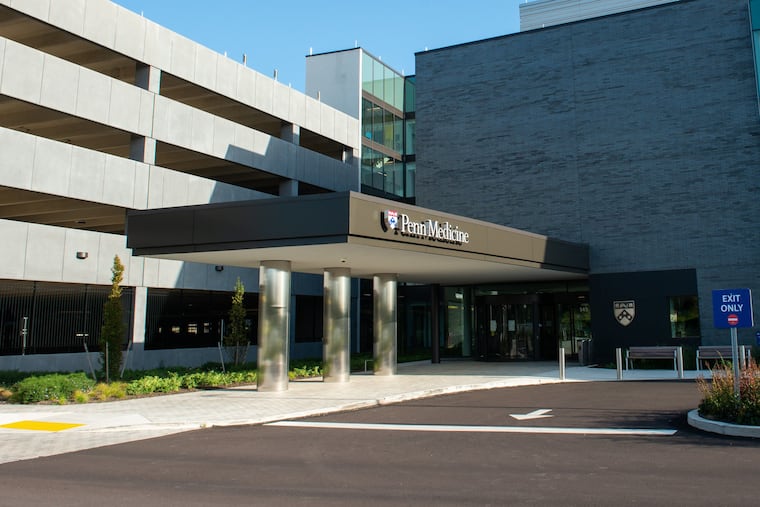
The University of Pennsylvania Health System and Independence Blue Cross, the Philadelphia area’s largest insurer, have formed a new company with plans to open at least 18 regional surgery centers.
The for-profit company announced Thursday is part of an effort by Penn and IBX to bring lower-cost procedures closer to patients, while maintaining quality and safety, officials said.
For Penn, the venture represents a financial leap, because it means the nonprofit health system will intentionally accept significantly lower payments for part of its business.
“We need to work on affordability in healthcare. It’s too expensive. It’s bankrupting families,” Penn health system CEO Kevin Mahoney said.
Medicare and private insurers like IBX who pay the healthcare bills “want to move to less costly settings,” he said, and Penn needs to be ready to capture that business.
IBX’s CEO Kelly Munson emphasized the importance of partnerships to tackle rising healthcare costs. She noted that shifting care to ambulatory surgery centers from hospital departments can generate as much as a 50% discount.
“The healthcare affordability crisis won’t be solved alone,” Munson said.
A third investor in the company is Regent Surgical, a Tennessee firm with private equity investors that will manage the local centers. Its tasks include forcing efficiency. Regent already manages 40 sites in 15 states. Penn clinicians will provide services.
Regent’s CEO Travis Messina called the new company the first of its kind nationally. “I’ve yet to see one that has involved both a payer, a provider, as well as a management company,” he said.
Key details — such as the for-profit company’s name, the ownership percentages, and the time frame for opening the anticipated facilities — were not disclosed.
The first local facility is expected to open next year, but officials did not say where.
The Penn-IBX initiative doesn’t fit into the typical playbook for ASCs, said Dan Grauman, a healthcare consultant based in the Philadelphia area.
Usually, physicians are also involved as owners. “They’re part owners of these surgery centers, and they drive the volume,” said Grauman, a managing director at VMG Health, a national healthcare consulting firm.
Asked if non-Penn doctors could be involved in or be investors in the new centers, Penn and IBX said they are evaluating all options for future growth.
The case for more ASCs in the Philadelphia region
Southeastern Pennsylvania already has more than 100 ambulatory surgery centers, many of them specialized in gastroenterology and mainly focused on colonoscopies, state heath department data show.
Yet the region lags the nation in the shift to lower cost surgery centers.
Data provided by Regent show that in 2023 and 2024 only 33% of ASC-eligible procedures in the Philadelphia region had migrated to the ASCs, compared to 56% nationally. Regent uses data from Kythera Labs, a company that analyzes health insurance claims.
Messina attributed the slower adoption of surgery centers to the concentration of physicians employed by local health systems. “That tends to limit the amount of ASC availability in markets across the country,” he said.
Historically, Philadelphia-area health systems tended to concentrate services in their hospitals, which have expensive fixed overhead, and in facilities that charge hospital rates. Executive focused on protecting revenue, so they could maintain broad hospital offerings, rather than on offering lower-cost options.
Healthcare trends now increasingly are pushing care into the community. Mahoney noted that half of Penn’s chemotherapy and infusion services are provided in patients’ homes. Close to two thirds of Penn’s $13.6 billion in revenue is from outpatient care, he said.
“We’ve been trying to deconstruct away from hospitals for a long time, and this is a natural step on that continuum,” he said.
Penn previously invested an undisclosed amount of money in the Ambulatory Cardiovascular Center of Pennsylvania near King of Prussia. That facility is a partnership that also includes Cardiology Consultants of Philadelphia, Cardiovascular Logistics, and SCA Health.
To incentivize more surgery centers and reduce costs for employers, IBX introduced a policy this year that it will only pay for certain procedures if they are done in a low-cost ASC. At the same time, IBX does not force patients to change doctors if their provider does not have privileges at an appropriate ASC.
How Penn could go about opening centers
Mahoney called the initial target of 18 locations the start.
“Eighteen is half of what I want to do. These are not mega hospital buildings,” he said. “They’re going to be convenient. They’re going to be spread throughout the five counties, easy for people to get to, close to their homes.”
The new centers won’t always require new construction, as is typically the case for Penn’s large outpatient centers, such as the one going up in Montgomeryville.
The new ASC company could also acquire existing ASCs or change the billing practice at a Penn surgery center that currently charges higher hospital rates, Messina said.
A surgery center on the campus of Penn’s Doylestown Hospital closed last year. Penn could relaunch it under the new company.
New Jersey could also see new surgery centers from the Penn expansion.