Rural Health Transformation Fund leaves gaping hole in finances at Pa.’s Geisinger Health
The rural health system said it expect to lose $180 million in revenue next year because of Medicaid cuts and an increase in the number of uninsured individuals who will seek treatment.

Geisinger Health expects to lose more than $180 million in revenue next year when deep cuts to Medicaid start impacting the nonprofit health system with 10 hospitals in a largely rural stretch of central and northeastern Pennsylvania.
The Rural Health Transformation Program — meant to soften the blows from the cuts imposed by Congress under Republican’s so-called “One Big, Beautiful Bill Act” or H.R. 1 — offers limited relief. Geisinger expects to collect $6.7 million of the $193 million allotted to Pennsylvania.
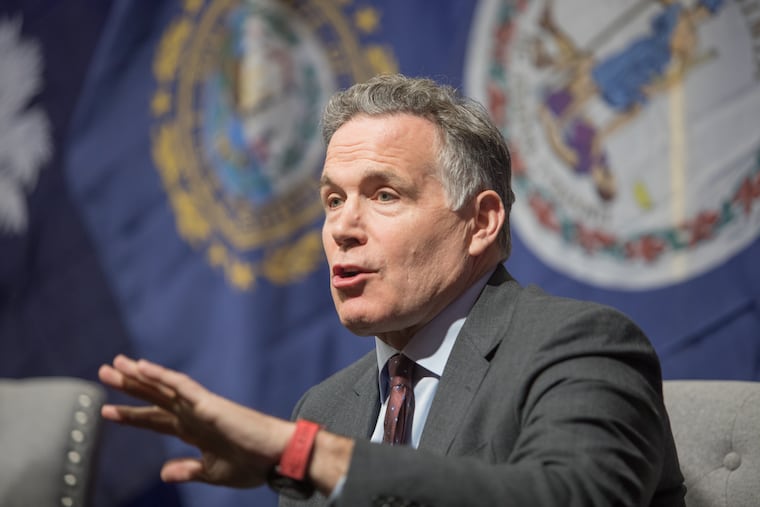
“It’s given us some money for some critical infrastructure that we need,” such as a CT scanner or an MRI machine for hospitals that serve rural counties, CEO Terry Gilliland said in an interview last month.
But much of the money being distributed through the Rural Health Transformation Program, or RHTP, isn’t going to help rural hospitals because it wasn’t designed to do that. No more than 15% of the funding can be used to reimburse providers for healthcare services.
That has left Geisinger, which is owned by California-based Kaiser Health, in a tough spot: “H.R. 1 is taking a big old chunk out of our hide, and there’s just no way for RHTP to fill the hole,” he said.
Nationally, $911 billion in Medicaid cuts are anticipated over a decade, with $137 billion is expected to come from rural areas, according to KFF, a nonprofit that researches health policy. KFF’s analysis did not provide state estimates for rural losses.
The Rural Health Transformation Fund totals $50 billion over five years. Pennsylvania would receive $965 million if it were to get the same amount each year as it did this year. Philadelphia-area health systems haven’t received money from the fund yet, but could participate in the future through projects that benefit rural Pennsylvania.
Where the money is going
The rural health fund is an incomplete response to the revenue hole created by H.R. 1, said Katherine Hempstead, a senior policy officer at the Robert Wood Johnson Foundation, a Princeton-based philanthropy focused on healthcare advocacy and research.
“It is mostly targeted to upstream projects designed to make rural healthcare more efficient in the long run. They may or may not be successful,” she said.
So far, Pennsylvania has provided a breakdown of how it is spending the first $42.2 million of its first year award.
All but $2 million went to technology and infrastructure projects, including critical needs like new roofs, HVAC systems, elevator repairs, and the repair of a collapsed sewer line.
On the technology side, new imaging equipment was popular in the first funding round.
With $3.7 million from that round, Geisinger got a new X-ray machine for its Bloomsburg hospital, new CT units for Jersey Shore and Lewisburg hospitals, and an upgraded compounding pharmacy for its flagship hospital in Danville.
Geisinger applied for $3 million from a forthcoming second round and plans to use the money for a special EMS vehicle, transport vans for senior care, telehealth equipment, and other capital equipment, if it is approved.
In addition to technology and infrastructure, Pennsylvania is focusing the rural funding on workforce development, maternal health services, behavioral health services, aging and access, and emergency medical services and transportation.
Geisinger’s approach to filling its financial hole
Geisinger’s estimated $180 million revenue loss next year has three main drivers. They are limits on how much federal money the state can generate through provider taxes, changes to the supplemental payments for hospitals with large numbers of Medicaid patients, and an increase in the uninsured population caused by new Medicaid enrollment rules.
In 2025, Geisinger had about $10 billion in revenue. That’s up from $7.7 billion in 2023, that last full year before it became part of Risant Health, a new nonprofit created by Kaiser in 2023 to acquire community health systems.
Already this year, Geisinger has seen a $10 million a month increase in charity care and bad debt write-offs, Gilliland said, which he attributed to people not being able to afford individual Affordable Care Act plans after the enhanced tax subsidies expired.
Geisinger also expects a $47 million loss of revenue from the federal 340b drug discount program.
“How many more of these hits can I take? The answer is not very many,” Gilliland said.
The health system is focused on becoming more efficient.
“There’s some optimism that says we could find some way to have artificial intelligence do some of the tasks that we typically throw humans at,” Gilliland said.
He hopes to avoid want layoffs, given that Geisinger is often the largest employer in its communities.
“I’d really like to figure out ways to fill the hole without having people lose their jobs because that has a much more devastating impact on the local economy,” he said.