Pa. ranks 28th out of 50 states in supporting immigrant residents. New Jersey stands in top 10.
The findings come from the American Immigration Council, which released a post-midterm-election analysis of how well states support and include immigrant residents

When it comes to supporting its immigrant residents, Pennsylvania doesn’t do so well, a new study shows, ranking 28th out of 50 states.
New Jersey finished a more-than-respectable ninth. And tiny Delaware came in at 13th.
Those standings come from the American Immigration Council, which this week released a post-midterm-election analysis of how U.S. states perform in their ability to support and include immigrant residents. The council created a States Index that assesses government policies across four key areas to compile a score for each state.
Nan Wu, the council’s director of research, said the index is a way for states to compare and contrast their own policies, to better understand the implications of immigration-related actions or the lack thereof.
“It’s a tool that can inform state advocates and policymakers as they develop a roadmap in response to the needs of their constituents,” she said in a statement.
The national average score was 1.65 out of 5.
At the top were California, 4.56; Washington, 3.94; and Illinois, 3.92. At the bottom was Texas, 0.42, with Florida and Tennessee close behind.
People can see how individual states scored here.
Pennsylvania had an overall score of 1.05, lower than the national average of 1.65. In subcategories, it scored a high 3.75 in access to identification, but recorded zeros in housing protections, legal-services programs, and language access.
The state is home to more than a million immigrants, who make up 8% of the population.
New Jersey scored 2.78 out of 5 overall.
In subcategories the Garden State earned perfect 5 scores in access to driver’s licenses ― the state allows undocumented immigrants to earn standard licenses ― and in immigrant offices or liaisons.
An estimated 2.2 million immigrants live in New Jersey, about 24% of the population, the council reported.
The index gave each state a score for every policy category and for subcategories, capturing the extent to which individual policies supported or hindered immigrant residents.
The index focused on policies in four main areas:
Workforce, education, and occupational licensure.
Access to services.
Government infrastructure, including language-access programming.
Cooperation with federal immigration enforcement.
The index arrives at a moment when the future of U.S. immigration ― and particularly immigration enforcement ― is suddenly at play, with a Democratic Congress poised to take office in January.
U.S. Rep. Robert Garcia, a California Democrat projected to become chair of the House Oversight and Government Reform Committee, has already announced plans to investigate “abuses” by the Department of Homeland Security and Immigration and Customs Enforcement.
Immigration advocates in Philadelphia and elsewhere say this is the moment for change.
ICE says it is not slowing down. In Pennsylvania, for instance, the agency has nearly doubled the number of partnership agreements it holds with local police agencies.
Meanwhile, President Donald Trump told CBS’s 60 Minutes on Sunday that his immigration policies had been “too tough” and his push for mass deportations had hurt him during the midterm elections. On Monday, however, Trump defended his deportation policy as “very strong” and said he was opposed to any deal that would include “amnesty” for immigrants who entered the country without permission.
As comprehensive immigration reform continues to elude Congress, the immigration council said, state policies regarding immigrants become more important ― on everything from limiting coordination with federal immigration enforcement to strengthening local economies.
The council said the index can help policymakers identify practical approaches to support and protect community members, and to develop policies that promote economic growth.
In Oregon, for example, policymakers created a statewide right-to-counsel program to connect immigrants to legal services.
New Jersey has worked to expand language access across state-government services.
Maryland worked for years to withdraw state support and participation in federal immigration enforcement.
North Dakota directed its Global Talent Office to help businesses recruit and retain immigrant workers, showing how states that have not traditionally been immigrant destinations are recognizing opportunities to fix workforce shortages.
The federal government determines who can enter and stay in the U.S., the council noted, but states play a big role in how immigrants experience daily life.
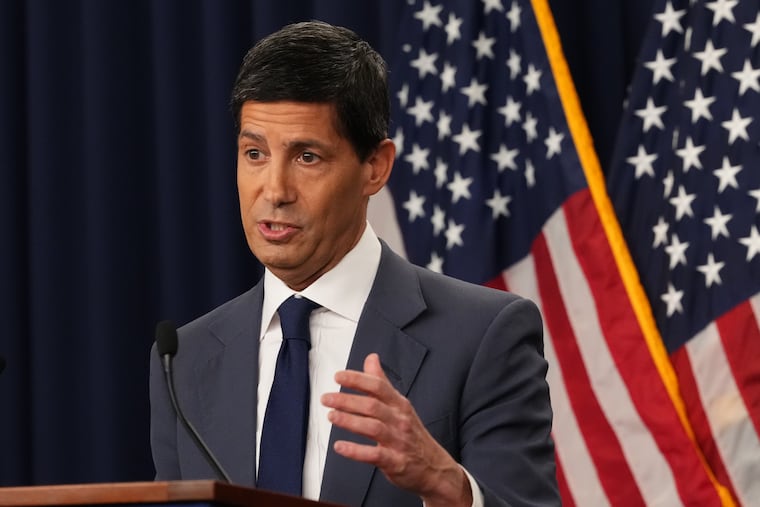
Council executive director Jeremy Robbins said in a statement that, across the country, states are recognizing that the economy continues to be the main concern for most Americans.
“By embracing policies focused on economic opportunities and the well-being of all community members, including immigrants,” he said, “states can create safe, connected communities and promote the small businesses that truly power the country.”