‘The sauna is hot and uncomfortable’: Vote on joining EU makes Iceland sweat
With this vote, Icelanders are trying to figure out the best way forward in an increasingly precarious and divided world.
TALKNAFJORDUR, Iceland — Gudlaug Bjornsdottir had warned her family. If the talk over the dinner table turned to Iceland’s coming referendum on opening talks to join the European Union, she would get up and leave.
Polls show a starkly divided country heading into the vote Saturday. Many people have strong opinions about whether Iceland should maintain its hard-won independence or seek the stability and protections that would come with EU membership.
So perhaps inevitably, despite Bjornsdottir’s admonitions, the dinner conversation in the tiny town of Talknafjordur one recent Friday eventually landed on the referendum. “I am leaving, like it or not,” Bjornsdottir stood and said, a wineglass still in her hand.
Her family promised not to mention it again, and she returned to her seat.
This exchange, in Iceland’s remote northwest, encapsulated an unusually heated debate in this proudly agreeable nation over what could be a watershed moment for its 400,000 people. If the vote passes, the country will start a yearslong process of EU accession negotiations. A second referendum, on whether to actually join the bloc, would be held once a deal was reached.
Many Icelanders have spent months wrestling with how to speak with each other about the divisive choice.
“It has become something of a ‘hot potato,’” Arni Ingolfsson, a 55-year-old program manager at a tech company, wrote in an email. He said he was avoiding talking to his co-workers and even a close relative about the issue.
“It’s bombarding everyone, from every angle — everywhere,” said Lisa Margret Gunnarsdottir, 31, an advocate for Icelandic students. She said that there were extreme disagreements in her immediate family and that no one talked about anything else.
“The sauna is hot and uncomfortable these days,” said Greta Gudjonsdottir, 57, who works in tourism. She said she had not yet decided how she would vote but just wanted the whole thing over with.
With this vote, Icelanders are trying to figure out the best way forward in an increasingly precarious and divided world. For years, they had little reason to doubt that their country would remain safe, stable, and sovereign. Then NATO, to which Iceland has long entrusted its security, threatened to crack under pressure from President Donald Trump, while wars, climate change, and tariffs shook the global economy.
Some “yes” voters say that Iceland should seek strength in numbers — and the financial stability of being part of one of the world’s biggest economic blocs — by moving toward joining the EU.
Many opponents worry that membership in the bloc would cost Iceland its autonomy on several fronts. Icelanders are acutely aware that their country only gained full independence in 1944, after centuries of Norwegian and Danish rule.
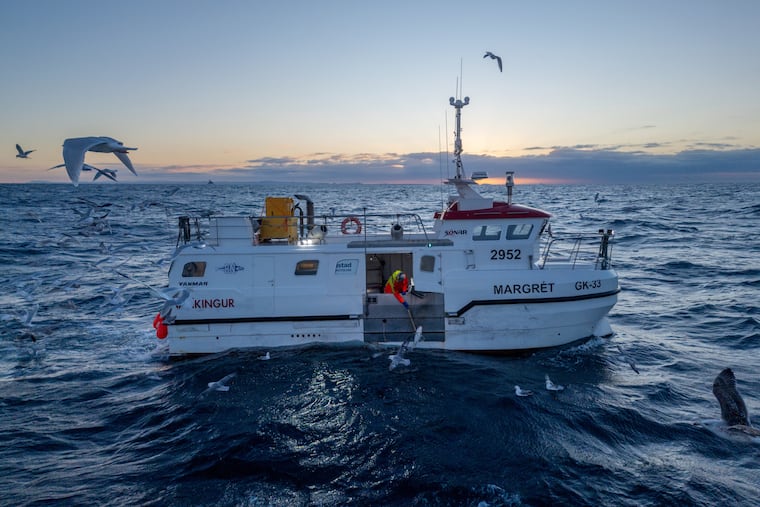
Fishing is widely seen as the biggest concern about EU membership, with many “no” voters worrying that joining the bloc could hurt this major industry.
“It feels very existential, this debate,” said Eirikur Bergmann, a politics professor at Bifrost University in Iceland. “It’s really a fight over where Iceland belongs.”
Of course, Iceland has had contentious times before.
The 2008 global financial crisis hit the country particularly hard — its banks collapsed, and its currency plummeted. The strife led Iceland to explore EU membership, but that effort fizzled after its economy started to recover.
Still, many Icelanders live with the memory of that economic precarity, which is animating the referendum debate for both sides. Some think joining the European economic bloc could help lower Iceland’s high inflation and interest rates, while others worry that it could burden the country with regulations that make it less nimble.
Bjornsdottir and her husband, Thor Magnusson, who were having the recent family dinner in Talknafjordur, make their living off fish. He goes out alone on a boat. They work together to prepare the catch and sell the fish out of a glass house, which runs on the honor system.
Like other Icelandic fishermen, they believe that staying out of the EU will give them more control over their own fate.
The discourse over the referendum has become so heated that Margret Einarsdottir, a law professor at Reykjavik University, said she saw echoes of American-style polarization and misinformation in some of the ugliest corners of the domestic debate.
“I’m sad about how much anger is in this discussion,” she said. Icelanders do not shy away from disagreement. But this feels different, she and other experts said.
“We are not used to it,” Einarsdottir said.
Others see things more positively, saying it is a good thing that Icelanders can disagree openly but cordially, and still keep their tight communal bonds.
“It’s a lively debate, which is also a very healthy sign of democracy,” said Bjarni Mar Magnusson, a partner at a law firm, Polestar, and a former dean of the law faculty at Bifrost University.
Hallgrimur Oddsson, the founder of Evropustraumar, an Icelandic think tank focused on relations with the EU, said that despite the acrimony, Icelanders still share the same values.
“At the end of the day,” he added, “we can still talk to our neighbor.”
This article originally appeared in the New York Times.