Inside Elon Musk’s $276 million midterm rescue mission for Republicans
The staggering amount of money makes Musk, the richest person in the world, by far the largest known donor in the midterms.
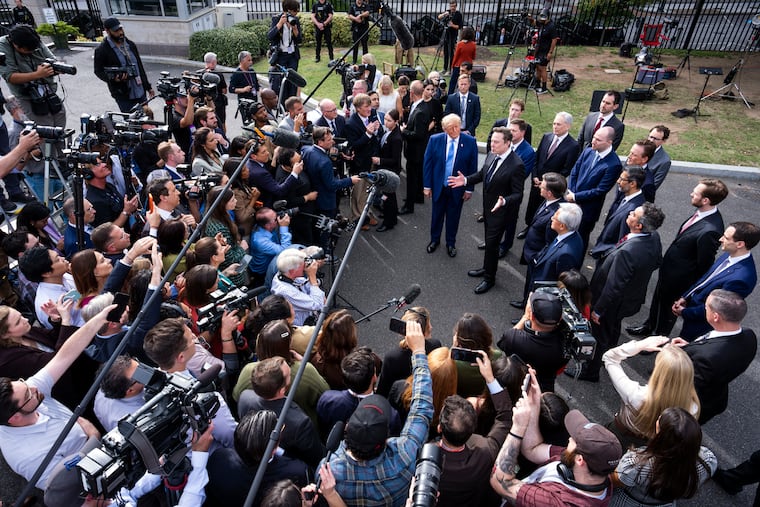
WASHINGTON — Elon Musk has quietly funneled more than $276 million into Republican groups and his super political action committee since the start of July, building a huge turnout operation to help the party battle headwinds in the midterm elections.
The staggering amount of money makes Musk, the richest person in the world, by far the largest known donor in the midterms. Representatives for Musk supplied the previously unreported figures on his political giving to the New York Times before a federal filing deadline Thursday.
In an effort to save Republicans’ Senate majority, Musk gave a total of $158 million this summer to the Senate Leadership Fund, the main super PAC backing the party’s candidates for the chamber, according to his team. In sum, that is one of the largest political donations in American history, and more than the group’s Democratic rival raised from all of its donors that quarter.
Musk has also built a major Republican turnout operation through a super PAC he founded in 2024, America PAC. He donated over $76 million this summer to the group, which in turn spent that much on building a sprawling canvassing program to try to turn out hard-to-reach Republican voters. The group is active in seven Senate battlegrounds and nearly three dozen House races.
Musk has already given far more money, about $366 million, to federal committees during the 2025-26 election cycle than he did during the 2024 election, when he laid out roughly $290 million to help return President Donald Trump and Republicans to power. He has given even more in undisclosed donations during both elections, according to people briefed on the giving.
The latest torrent of spending has helped give the Republican Party a financial advantage in the midterms, as well-funded outside groups like Trump’s powerful super PAC flood the airwaves with advertising in the final weeks. No Democratic billionaire is spending nearly as much as Musk, and money remains a central worry for the party in an otherwise favorable political environment.
The donations also clear up the mystery of how much staying power Musk wants to have in American politics.
“In terms of political spending, I’m going to do a lot less in the future,” he said in May 2025.
Musk, who oversees a vast business empire that has benefited from enormous federal contracts, is famously unpredictable and often jumps from one project to another. He has been far quieter about his political work since his dramatic blowup with Trump last year. After months of wielding vast influence inside the White House and overseeing Trump’s government cost-cutting project, he raged against the president’s major domestic policy bill and floated threats to start a third party.
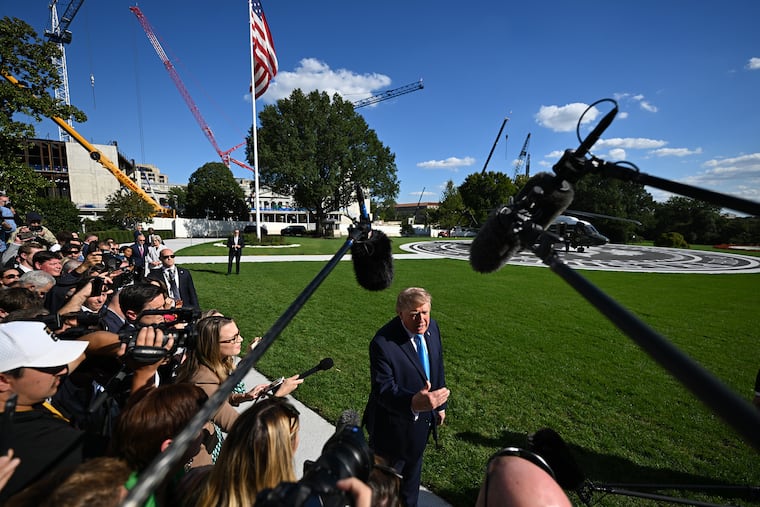
But the two men have warmed back up, appearing together at three events in the last two weeks and praising each other.
Now Musk has donated more than a quarter-billion dollars to help Trump and Republicans in the midterms. The money signals his commitment to the right and sets him up as a potential player in the 2028 presidential election, when his super PAC says it intends to remain active — the first time it has confirmed such plans.
Beyond Musk’s donations to his super PAC and the Senate Leadership Fund, his representatives said that from July through September, he had given smaller but still substantial amounts to other conservative groups:
— $20 million to the Congressional Leadership Fund, the main super PAC for House Republicans
— $10 million to Lone Star Liberty PAC, a group supporting Ken Paxton, the Republican nominee for Senate in Texas
— $10 million to the Republican Governors Association
— $2 million to the Republican Attorneys General Association
“If Democrats take control of Washington and win key gubernatorial and attorney general races this November, then America risks becoming a socialist, woke, and borderless country,” said Andrew Romeo, a spokesperson for America PAC. “These robust investments have allowed the GOP apparatus to get its message out so Republicans can have a fighting chance to defy history.”
Pushing for Paxton
On voters’ doors across Texas, the campaign literature carries a stark warning: “Radical Democrat socialists are winning elections all across America. Could Texas be next?”
The hanging door cards are the work of Musk’s voter-turnout operation, which deployed nearly 3,000 paid canvassers last week around the country, according to America PAC officials.
The group has devoted most of its more than $76 million in midterm spending so far to this canvassing program, shelling out smaller amounts on advertising, mail, phone calls, and text messages. Much of the messaging targets Democrats, sometimes in misleading or overheated ways.
This spring, Trump’s political advisers asked Musk to reprise America PAC’s 2024 field program, a person familiar with the conversation said. Despite the challenging environment for Republicans, some party strategists believe that a field program can make the difference in particularly tight races.
America PAC relies on a few voter-canvassing firms that compete aggressively with one another for work and for staffing, according to people briefed on the operation.
Turnover in the canvassing industry is high. One canvasser who worked for America PAC told the Times that he was paid between $1.50 and $3.00 for each door he knocked on across Texas in the heat. America PAC says it has knocked on about 6.5 million doors across the country so far.
Musk and his operation, people close to them say, have been particularly focused on the Texas Senate race. The group has unloaded over a third of its disclosed spending in that expensive race, more than in any other. It is uncommon to run an extensive field campaign in large states like Texas, where television ads are more often used to reach voters.
Musk, a resident of Austin, has extensive business interests and property holdings in Texas. Paxton, the state attorney general, has investigated Musk’s opponents, including Media Matters, a liberal group.
Musk’s $10 million donation to Paxton’s super PAC came at a critical time, when the Republican candidate was being badly outspent.
And Musk’s $158 million in donations to the Senate Leadership Fund, the most the super PAC has ever received from a single donor in a quarter, may have made it possible for that group to suddenly spend big for Paxton after months of reluctance.
That is because Musk’s donations preceded the decision in late August by the super PAC, led by allies of Sen. John Thune of South Dakota, the majority leader, to start what has become a $149 million pro-Paxton ad campaign.
A focus on transgender issues
As it did in 2024, Musk’s operation is focused not on persuading swing voters, but on registering and turning out voters with conservative beliefs — especially “low-propensity” ones who are less likely to cast a ballot.
This is a lot harder for Republicans in a midterm election, without Trump at the top of the ballot.
To do it, Musk’s super PAC is leaning hard into the culture wars, especially transgender issues. (Musk’s daughter, who is transgender, has spoken about their clashes over her identity, and he has suggested that this led to his increased political engagement.)
At voters’ doors in Texas, canvassers are told to target Gina Hinojosa, the Democratic candidate for governor, over her record on transgender issues, according to parts of a script reviewed by the Times.
Similarly, the Musk operation is leaving literature on doors that claims that James Talarico, the Democratic nominee for Senate in Texas, has a “radical trans agenda.” And America PAC’s top ad in the state, according to the media tracking firm AdImpact, denounces Talarico over his past comments suggesting that “God is nonbinary.”
The Musk group is also targeting other Democratic Senate candidates over transgender issues, including Josh Turek, the party’s nominee in Iowa. Nationally, one of the super PAC’s most visible ads on Facebook features a man in makeup and reads: “He made his plan to vote. Did you? Don’t stay home while crazies elect radicals.”
The group is running ads and sending mail on a broad range of topics, but socialism is a core theme. The Musk super PAC regularly attacks Democrats as socialist and ties them to figures such as New York City Mayor Zohran Mamdani and Rep Alexandria Ocasio-Cortez of New York, according to 48 pieces of direct mail shared by Mintt, a mail-tracking firm.
Online, it is even running personalized messaging that invokes a voter’s first name. For example, in a video showing smiling Democrats: “Why are they smiling? Because Christopher hasn’t made a plan to vote yet.”
Much of this outreach points voters to an America PAC website where conservatives can learn how to register to vote. The super PAC is pushing what it calls an “America Pass,” a digital card on Apple or Google wallets on voters’ phones that lists their registration information, along with election dates and deadlines in their home state.
A big spender with a backseat role
While Musk is spending big again and using some tactics that are similar to those he deployed two years ago, this is not 2024 anymore.
He is in a different place politically. While he and Trump appear to be on good terms again — “our modern-day Thomas Edison,” the president called him Thursday — Musk is taking a hands-off approach this election and does not appear as personally passionate.
He has not brought up the midterm elections or the Trump presidency much in private conversations with friends, according to people who have spoken to him in recent months. He is focused on his businesses, these people say, and he and his business lieutenants have taken a less active role in America PAC’s operations, entrusting major decisions to Chris Young, his top adviser.
And on the social platform X, a semi-reliable indicator of where the billionaire’s mind is, Musk has written just seven direct posts this year about candidates in competitive midterm races, according to a Times review, a far cry from his relentless calls throughout 2024 to elect Trump. Five of those posts focused on Talarico — and one appeared critical of Sen. Susan Collins, a vulnerable Republican in Maine.
Gone, too, are Musk’s barnstorming campaign stops, such as the ones he did in Pennsylvania in October 2024 or a Wisconsin judicial election in the spring of 2025. There are no more sweepstakes where he personally hands an oversize check of $1 million to those who register voters or sign a petition, a gambit that drew legal challenges.
Musk has not evidently grown infatuated with candidates this time around, as he did with Trump. The closest he came was a $10 million donation for a long-shot Republican running for the U.S. Senate in Kentucky — an investment that went poorly.
The $276 million figure is, of course, just what is publicly known. Musk has also made some seven-figure donations to support midterm candidates through groups that are not required to disclose their donors, according to a person with knowledge of the matter.
This article originally appeared in the New York Times.