American journalist Shelly Kittleson released in prisoner swap, Iraqi officials say
The freelance journalist, who was kidnapped in Baghdad last week, was freed Tuesday.
BAGHDAD — American journalist Shelly Kittleson, who was kidnapped from a Baghdad streetcorner last week, has been released, two Iraqi officials with direct knowledge of the situation said on Tuesday.
The development came after the powerful Iran-backed Iraqi militia Kataib Hezbollah said in a statement earlier in the day that it had decided to free Kittleson, who was abducted on March 31. Its condition was that that Kittleson must “leave the country immediately” upon her release.
Two officials within the militia, who spoke on condition of anonymity because they were not authorized to comment publicly, told the Associated Press that in exchange for freeing Kittleson, several members of the group who had previously been detained by Iraqi authorities would be released.
The U.S. State Department did not immediately respond to a request for comment. Typically, the State Department does not confirm the release of Americans abducted abroad until they have been transferred to U.S. government hands or have safely left a country.
In Wisconsin, Kittleson’s mother said she was unsure if her daughter was free.
A one-off release
According to one of the two Iraqi officials, Kittleson was freed in the afternoon. The officials, who spoke to the AP on condition of anonymity because they were not authorized to comment publicly, did not share her current whereabouts but said that prior to her release, Kittleson had been held in Baghdad.
In its statement, Kataib Hezbollah said its decision came “in appreciation of the patriotic stances of the outgoing” Iraqi Prime Minister Mohammed Shia al-Sudani, without giving more details.
It added that “this initiative will not be repeated in the future.”
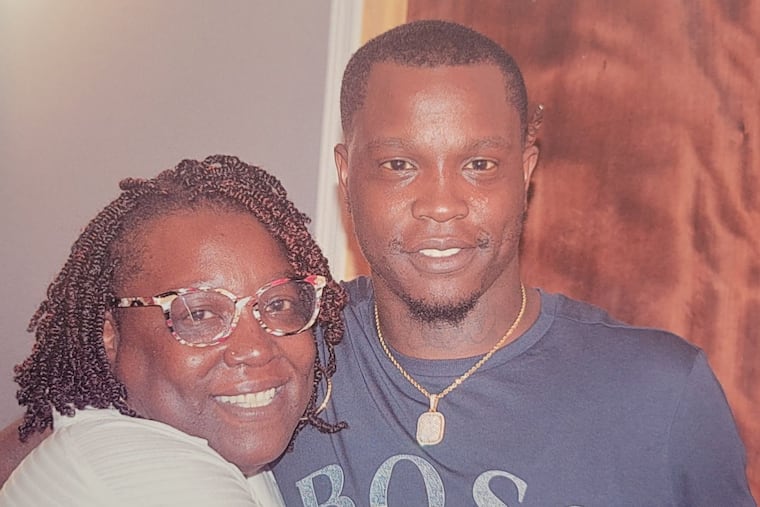
In Mount Horeb, Wisc., Kittleson’s mother told a reporter who knocked on her door that FBI agents were at her home. A number of people could be seen sitting at Barb Kittleson’s kitchen table.
Initially she said that her daughter had not yet been freed, but when a reporter returned later, she said she did not know if her daughter had been released or not.
Caroline Clancy, a spokesperson for the FBI’s Milwaukee field office, declined to comment.
Kataib Hezbollah had not previously acknowledged that it was the one responsible for Kittleson’s abduction, although both U.S. and Iraqi officials had pointed fingers at the group.
A respected journalist in conflict zones
Kittleson, 49, a freelance journalist, had lived abroad for years before the kidnapping, using Rome as her base for a time and building a respected journalism career across the Middle East, particularly in Iraq and Syria. Like many freelancers, she often worked on a shoestring budget and without the protections afforded by large news organizations to staff.
She had entered Iraq again shortly before her abduction. U.S. officials have said that they warned her multiple times of threats against her, but that she did not want to leave.
Iraqi officials have said that two cars were involved in the kidnapping, one of which crashed while being pursued near the town of al-Haswa in Babil province, southwest of Baghdad. The journalist was then transferred to a second car that fled the scene.
Three other Iraqi officials said earlier Tuesday that attempts to negotiate her release had run into obstacles. The two Iraqi security officials and one official from the pro-Iran Coordination Framework political bloc spoke to the AP on condition of anonymity because they were not authorized to speak about the sensitive case publicly.
A shadowy militia group
According to one of the security officials, a member of the Popular Mobilization Forces, a coalition of Iran-backed militias that is nominally under the control of the Iraqi military, had been tasked with communicating with the abductors to secure Kittleson’s release but had run into difficulties in communicating with the Kataib Hezbollah leadership.
“The primary challenge is that the leaders of the Kataib militia — specifically, the commanders of the battalions — are nowhere to be found. No one knows their whereabouts, and the process of establishing contact with them is extremely complex,” the security officials said.
“These leaders have gone underground, maintaining no active lines of communication, out of fear of being targeted,” they added.
According to the officials, a message had been sent to the Kataib leadership to determine their demands in exchange for releasing Kittleson. Iraqi authorities were willing to release six Kataib Hezbollah members who are currently detained, most of them in connection with attacks on a U.S. base in Syria, they said.
Kataib Hezbollah has previously been accused of kidnapping foreigners.
Elizabeth Tsurkov, a Princeton graduate student with Israeli and Russian citizenship, disappeared in Baghdad in 2023. After she was freed and handed over to U.S. authorities in September 2025, she said that she had been held by Kataib Hezbollah.
The group never officially claimed responsibility for kidnapping Tsurkov.
Iran-backed militias in Iraq have also launched regular attacks on U.S. facilities in the country since the beginning of the U.S.-Israeli war on Iran.