What China sees in ‘Jane Eyre,’ now required reading for ninth graders
Charlotte Brontë's classic novel is almost two centuries old, but Chinese officials consider its independent protagonist a feminist role model.
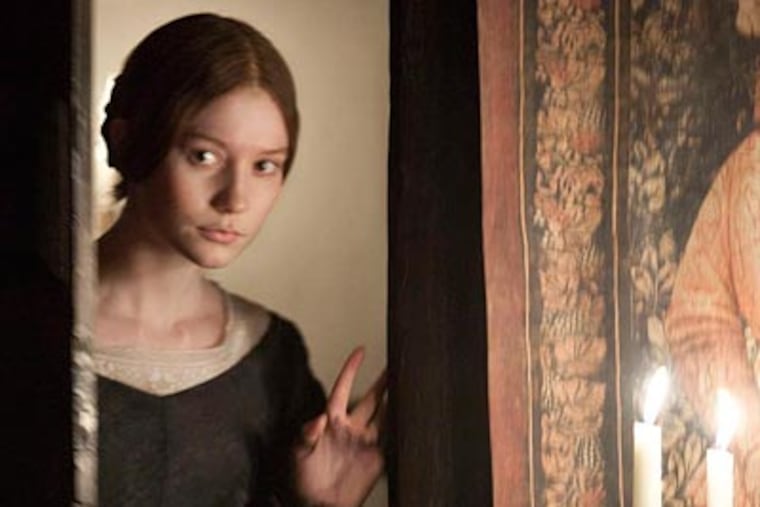
Nearly two centuries after Jane Eyre first defied the conventions of Victorian England, China is requiring a new generation of teenagers to read her story.
The British classic has long been popular in China and was already recommended reading for schoolchildren. But this fall, ninth-grade students across the country are being required to read the novel in full, according to Chinese state media. One report in an official newspaper held it up as an antimaterialistic love story that young people could learn from.
The book, in which the young orphan Jane Eyre works as a governess in the household of the wealthy but elusive Mr. Rochester, is widely celebrated in China for its themes of independence and equality between women and men.
A Chinese translation appeared as early as 1925, and there have since been numerous translations and adaptations for stage and screen. A British film adaptation was shown in Chinese theaters in 1979, just a few years after the end of the Cultural Revolution, as China was reopening to foreign culture.
Ping Zhu, a literature professor at the University of California, San Diego, who researches Chinese feminism and literature, said the novel is compatible with the Chinese government’s vision of women’s equality — one that can coexist with traditional gender roles and the heterosexual nuclear family. Its inclusion in the ninth grade textbook comes as China struggles with population decline and the government encourages young people to marry and have children, she said.
“Jane Eyre is about an independent woman, but she’s not too outrageous in her challenge of patriarchal power,” Zhu said. By the end of the novel, Jane has married Mr. Rochester and had a child. “All these things are what the Chinese government wants the younger generation to do,” Zhu said.
Published by Charlotte Brontë in Britain in 1847, Jane Eyre was striking for its depiction of a poor young woman insisting on her independence, dignity, and equality in a society in which women — particularly married women — had severely limited legal and economic autonomy.
The novel has long been celebrated in China for its feminist themes, with state media often quoting Jane’s declaration to Mr. Rochester: “Do you think, because I am poor, obscure, plain, and little, I am soulless and heartless? You think wrong! I have as much soul as you — and full as much heart!”
Jane Eyre was progressive in its 19th century context, but some contemporary feminists would view its idea of liberation as limited, Zhu said.
The kind of feminism depicted in the novel has long been supported by the Chinese Communist Party, Zhu said. It is at odds with how the party sees more modern kinds of feminism, like the #MeToo movement, she added, “or the kind of feminism that teaches women to not marry and not have children — that is a feminism they cannot accept at all.”
In recent years, the Chinese government has restricted some other portrayals of romance and relationships.
Authorities have detained dozens of writers of Boys’ Love, a genre of gay romance novels written largely by and for straight women, that state media said could shape young readers’ ideas about sexuality.
Regulators have also sought to rein in a popular genre of micro-dramas about wealthy executives falling in love with less privileged people, urging creators to avoid glorifying marriages to powerful and wealthy people.
State media has suggested that novels like Jane Eyre offer young readers an alternative to what they call superficial love stories. An article in Beijing Daily, an official Chinese Communist Party publication, argued that teaching literary classics like Jane Eyre could help children “establish a more balanced value system.”
Chinese readers have long found their own meanings in Jane’s story.
Vicky Li, 46, read Jane Eyre when she was young and saw something of herself in its hero. Years later, she said, she shared the novel with her daughters, now 13 and 15, because she wanted them to become independent and courageous.
Li said she was happy to see the novel included in the textbook, even if some might think Jane did not embody the modern idea of a strong woman. “Given the historical context in which she lived, the choices she made were truly groundbreaking — a profound act of defiance,” she said.
The novel itself complicates the idea that Jane ultimately submits to convention. She leaves Mr. Rochester rather than become his mistress and returns only after inheriting a fortune. Mr. Rochester has lost his estate and his sight, dramatically altering the balance of power.
Wang Sirui, 30, pointed to Jane’s refusal to become a mistress — even if it meant starving to death — as a key moment that showed the character’s commitment to independence.
“The core of the work lies in the message that a woman must make choices based on her own will and values, rather than succumbing to various temptations,” said Wang, who first read the book when she was 13.
Zhu said Chinese authorities may ultimately have limited control over what messages young people take from Jane Eyre.
“Literary works, especially these great literary works, they’re always very rich, and they’re open to millions of ways of interpretation,” she said.
This article originally appeared in the New York Times.