Federal court temporarily blocks Trump administration border wall in Texas' Big Bend region
The court’s decision comes just weeks after the administration erected the first border wall panels in the Big Bend sector in the middle of September.
WASHINGTON — A federal court in Texas on Friday issued a ruling temporarily blocking the Trump administration from building a border wall and other infrastructure across the state’s Big Bend region, in a victory for opponents who have pushed back against what has long been a key campaign promise by President Donald Trump.
Landowners, businesses, and environmentalists in the region have united to oppose the planned infrastructure projects, which are part of a $46 billion effort by the Trump administration to line the southern border with a mix of 30-foot-tall steel walls, vehicle barriers, roads, and surveillance technology.
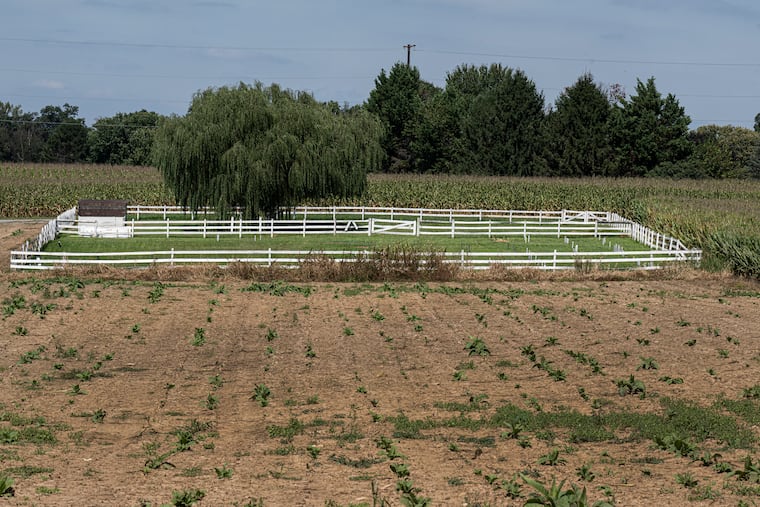
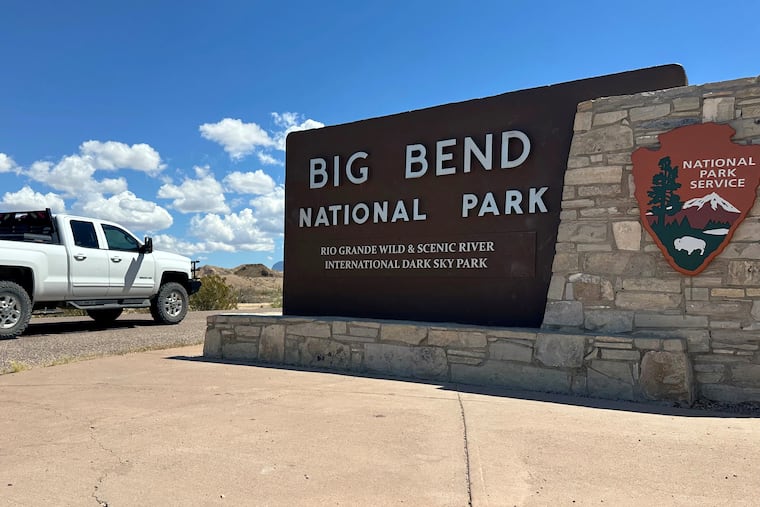
The judge’s ruling includes Big Bend National Park, which sits on a bend of the Rio Grande River, but also extends across the entire, roughly 500-mile-long Big Bend sector, which accounts for about a quarter of the roughly 2,000-mile-long southern border with Mexico.
Judge Kathleen Cardone said in her ruling that the plaintiffs were “likely to succeed on the merits of at least one of the claims in suit, that there is a likelihood that they will suffer serious, irreparable harm without an injunction, and that the balance of the equities and the public interest weigh in their favor.”
Customs and Border Protection and the Department of Homeland Security did not immediately respond to a request for comment.
Opponents of the border wall project have argued that the Big Bend region of Texas is so remote and the landscape so rugged that it serves as its own deterrent to illegal immigration and that the administration violated the law when it issued a swath of waivers allowing it to bypass numerous regulations in order to speed up border wall infrastructure projects.
The lawsuit brought by an environmental organization, advocates for a historic church in Ruidosa and a river guide argued that the Department of Homeland Security was wrong to bypass regulations meant to protect the environment, culture, and archeology of regions like the Big Bend area.
Laiken Jordahl, with the Center of Biological Diversity that brought the suit, called Cardone’s ruling a “total victory.”
“The bulldozers are going to be sent packing until she rules on the merits,” Jordahl said. “This is such a historic day for Big Bend and for Texas and the Constitution.”
The court’s decision comes just weeks after the administration erected the first border wall panels in the Big Bend sector in mid-September.
The border wall project through the Big Bend sector has sparked bipartisan opposition.
Much of the opposition has been geared around Customs and Border Protection’s plans for inside the Big Bend National Park, which is prized for its beautiful landscapes, limestone cliffs, and crystal clear night sky views.
When bulldozers were spotted clearing land in the park in August, it sparked widespread opposition with both Republicans and Democrats calling for the administration to stop. Customs and Border Protection paused all activity there, but that pause expired on Sept. 30. The administration has said it’s reevaluating plans for the National Park but has not yet said what it will do there.
Advocates for the park on Friday said they were happy with the judge’s ruling but called on the administration to fix the damage already done to Big Bend National Park, come to the table to meet with local residents and develop alternative plans.
“Big Bend is no place for border barriers. It’s time for the administration to come to the table with the border communities that know Big Bend best, repair the damage from this ill-conceived project, and find new solutions,” said Tiernan Sittenfeld, National Parks Conservation Association President and CEO in a statement.
The judge’s ruling extends to areas up and downriver from the National Park, where Customs and Border Protection has planned a range of border infrastructure projects that would largely require building across privately owned land.
In those areas, the government has been working to obtain permission from local landowners to survey and build on their land, but in a recent court filing, it said it was prepared to refer some cases to the Justice Department where it hadn’t been able to secure permission from landowners.