Ax-wielding FlyDubai copilot had been flagged over extremism concerns
The United Arab Emirates says the copilot on a FlyDubai flight that nearly crashed with 182 people on board attacked the captain with the cockpit’s crash axe in a “terrorist attack.”
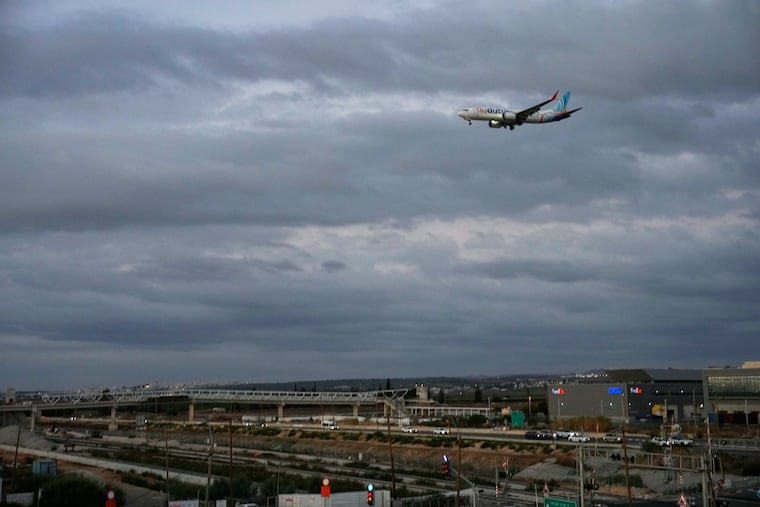
CAIRO — The copilot accused of attacking the captain on an Israel-bound flight with an ax and trying to seize the controls was an Omani national who had been barred from flying on his country’s airline because of concerns about extremist views, officials said Saturday.
The copilot has been identified as Hamam al-Hammami, according to three people with knowledge of the situation, including a Gulf and Western diplomat, who spoke on condition of anonymity because they were not authorized to speak to the media.
The United Arab Emirates, which is leading the investigation, said the copilot attacked with the cockpit’s crash ax and tried to take control of the sharply plummeting plane in a “terrorist attack” Wednesday. His actions nearly crashed the flight with 182 people on board before passengers and others rushed in and subdued him.
The new details raised questions about how thoroughly FlyDubai vets potential employees, and how the copilot’s presence on a flight filled with Israeli passengers got past Israel’s strict security protocols.
Israel’s government has said it has agreements with foreign carriers to keep pilots of nations without diplomatic ties from flying there. Israel and Oman don’t have formal diplomatic relations. The UAE government has earned a reputation for effective measures against extremist activities but has bristled in the past over criticism of security lapses.
The incident occurred at a sensitive time for Israel, a week before the anniversary of the Hamas-led attack on Oct. 7, 2023, that sparked the war in Gaza. It also came weeks before a highly contentious election in which security, and Oct. 7 security failures, have been central issues.
FlyDubai hired the copilot after Oman Air barred him
Separately, a regional official and a person familiar with the matter said the copilot had been barred from flying by Oman over concerns he had adopted extremist views. The official said he was moved to an administrative job at Oman Air. Both spoke on condition of anonymity to discuss the ongoing investigation. They gave no details about the alleged extremist views.
The copilot was later hired by UAE-based airline FlyDubai, the person said. It was not immediately clear to what extent the co-pilot was vetted. The Gulf diplomat said he had undergone standard security checks before being hired, but it appears that the checks focused on whether he had been convicted on criminal charges and didn’t go deeper into examining his background for potential signs of radicalization.
The regional official also said security agencies from four regional countries were working to establish the copilot’s motives, aided by the United States and other Western governments. The Gulf diplomat said investigations were trying to establish whether the copilot acted alone or “has any connection with any extremist groups.”
The regional official said the copilot was born in the UAE and his mother is Syrian. He obtained Omani nationality from his father, also an Omani national. The regional official also said the copilot had traveled to Syria, with no details.
Israeli Prime Minister Benjamin Netanyahu on Friday said the copilot had undergone “Islamist radicalization,” but provided no evidence. There was no immediate comment Saturday from Israel’s government.
A social media account was deleted the day of the flight
A FlyDubai spokesperson said in an email that the airline could not comment beyond its official statements and acknowledged “there are many questions at this stage.” There was no immediate comment from Oman Air, and Oman’s government has said nothing publicly in response to repeated questions since the incident.
In a statement to the AP, Royal Air Maroc, Morocco’s national carrier, said the copilot “completed a three-month theoretical training period with the airline in 2025, as part of the pre-employment process. At the end of this training period, his application was not selected for employment.” There were no details.
Keith Coles, a spokesperson for Buckinghamshire New University in England, told the AP that al-Hammami previously completed a distance-learning course in aviation management there but “did not undertake any pilot training.” There were no details on the timing.
Little else was immediately known about the copilot’s background. His Instagram account was active until the day of the flight and then deleted.
Captain and passengers have described drama on board
Airlines are generally required to carry a crash ax in the cockpit that could be used in an emergency to break open a window to escape or break open a panel to access a fire.
The captain, who was badly wounded in the ax attack, has said he used his remaining energy while being attacked to unlock the cockpit door, allowing people who had noticed alarmingly unusual sounds to come in, tackle the c-pilot and stabilize the flight while passengers screamed.
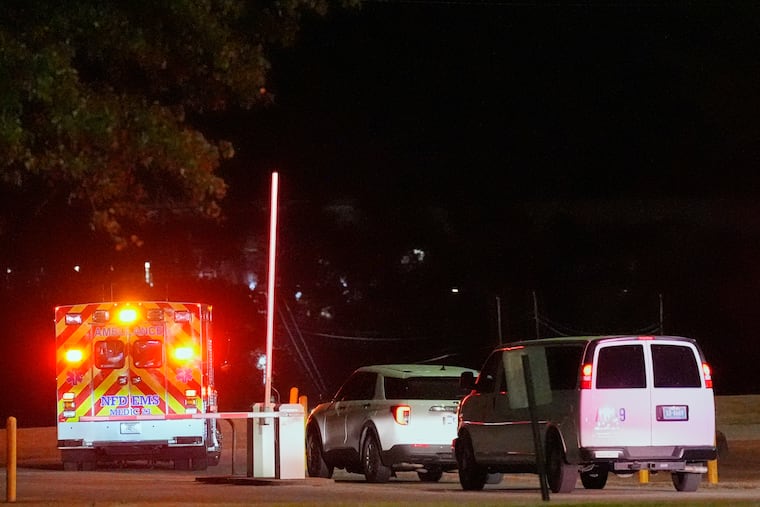
The plane made an emergency landing in Saudi Arabia after a descent so extreme that part of the rudder was torn away, and aviation experts have marveled that it didn’t crash. FlyDubai has said crew traveling on the plane helped to stabilize the plane and land. They have not yet been publicly identified.
Both the captain and copilot were later taken to the UAE. The passengers, most of them Israeli, flew home later Wednesday on a separate plane, to cheers.