Nikole Hannah-Jones came to Philly to talk race and education. Here’s what she said.
"Nobody else is coming for our babies," New York Times journalist Nikole Hannah-Jones told over 1,500 Black educators and their supporters who gathered in Philadelphia this weekend.
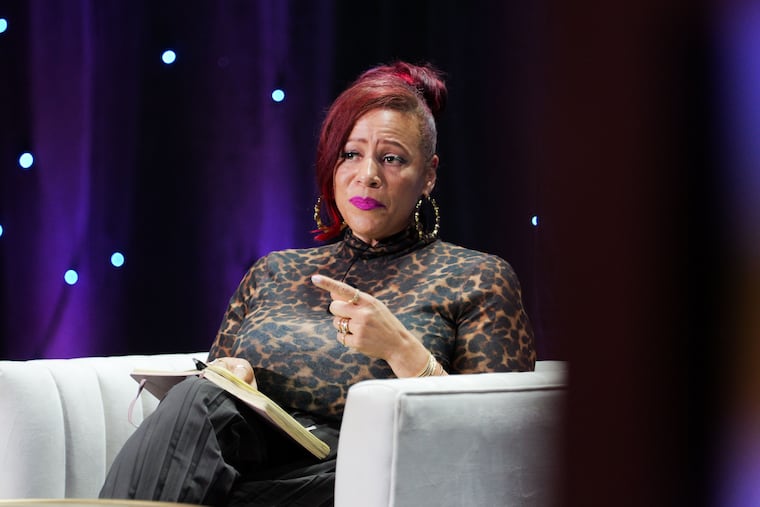
The American educators-of-color world was centered in Philadelphia over the last few days, and Nikole Hannah-Jones was here for it.
The Pulitzer Prize-winning journalist and founder of the 1619 project looked out over a sea of over 1,000 people in a Center City ballroom Sunday, searching for Sharif El-Mekki, founder of the Center for Black Educator Development and an architect of the Black Male Educators Convening that brought the crowd to Philadelphia.
Hannah-Jones marveled that a few days prior, the city renamed a street for El-Mekki, an Overbrook High graduate and longtime city teacher and principal turned prominent evangelist for diverse teacher pipelines.
El-Mekki “certainly has had a lot of impact on my own thinking,” Hannah-Jones said. “If you followed my work at all, especially on the 1619 Project, then you know it was a Black male that changed my life.”
That is: Hannah-Jones, who is Black, had just one Black teacher when she was bused into white schools in Waterloo, Iowa. Her African American history teacher, Ray Dial, taught Hannah-Jones the significance of the year 1619 — when the first enslaved Africans came to America, before Columbus.
Dial, Hannah-Jones said, “blew my mind with all that could be learned and taught about Black people,” which shaped her life’s work.
“To see a room full of Black educators, but especially a conference geared toward Black male educators, it’s just so meaningful,” Hannah-Jones said. “I just wish every one of our kids could have a Mr. Dial in their lives, because I would not be on this stage right now without Mr. Dial, and that’s 100% true.”
‘You cannot deny my child’s experience’
Hannah-Jones, who lives in Brooklyn, could have sent her only child to a highly rated public or private school. But she chose a majority-Black, high-poverty school for her daughter because she and her husband believed they could use their social and financial privilege to advance education for all the children enrolled at P.S. 307 and further work toward dismantling systemic educational inequalities.
She first wrote about that decision in a New York Times Magazine article in 2016.
Earlier this year, Hannah-Jones wrote a follow-up with a tantalizing headline: “In Fighting for Every Black Child, Did I Betray My Own?” In the story that has since gone viral and launched countless parent chats and heated comment wars, Hannah wrote about the difficult questions the choice had raised within her family. While there were things to love about the education Najyah received, like the strong affirmation of her Black identity, and the many caring educators she encountered, her segregated elementary and middle schools had left her with significant gaps in her basic skills even though she had been at the top of her class, Hannah-Jones reported.
And, at the end of seventh grade, Najyah confronted her mother about what she felt was the wrong choice: sending her to struggling schools when she could have gone to ones that prepared her better academically. Eventually, Najyah chose her own high school — a majority-white and Asian magnet school, the kind of school Nikole Hannah-Jones argued advanced inequality.
Najyah, who’s now 16, found her high school experience jarring both academically and culturally, but she stayed. She caught up academically, but still bristles against the racism at her school, Hannah-Jones said Sunday. She told her mom her school is not better, it’s just “able to select students who already had good test scores.”
Christopher Emdin, the Columbia University education professor who interviewed Hannah-Jones at the convention, said his initial reaction to her recent piece was hurt: Why “do we have to add onto the narrative about the dysfunction of Black spaces?” Emdin told Hannah-Jones. “I understood that was not what the intention was, but at the same time, I was carrying the ways that narratives constructed by us about us oftentimes get read as a justification of the enemy’s perceptions of the spaces that we hold as sacred.”
Hannah-Jones said it was not her intention to disparage Black educators, and that she was honest about the positives her daughter took from her time in segregated schools.
“But at the same time, you cannot deny my child’s experience. When I’m looking at my child’s work is not being graded and she cannot do basic math, you can’t deny that, right? You can’t deny that she takes algebra, fails the algebra exam, goes to a rigorous high school, and takes algebra again and almost knows no algebra,” Hannah-Jones told Emdin.
Is it fair to expect upwardly mobile Black parents — who, like Hannah-Jones and her husband, may be the first generation of their family to not struggle financially — to fix schools? That is, she said, “to ask us to give up that one bit of advantage that we’ve been able to accrue and pass on to our children seems fundamentally unfair against a system that we did not create and we don’t want.”
But what she keeps coming back to, “and why this was so hard, and why I stuck it out despite everything we were experiencing is nobody else is coming for our babies. Nobody.”
Going deeper
Go deeper, Hannah-Jones said. The educators who taught Najyah in elementary and middle school had difficult tasks — as do many in the crowd on Sunday.
“By the time my child gets to middle school, you are asking these educators to do an almost-impossible task, because you’re saying, ‘You need to keep them on grade level.’ Teach my child high-level math when she doesn’t even have the foundations, and if you don’t teach her high-level math and the foundations at the same time, we’re going to label your school a failing school.”
Don’t judge schools on test scores, Hannah-Jones said she told her daughter.
“I say that, but what my child is saying is, ‘I don’t care what you say. I was in the classroom, and you weren’t. I had to sit in that class every day when my teachers are having to focus so much on other kids who are having their behavioral issues that she can’t help me when I’m struggling on a math problem,’ and I had to acknowledge that,” said Hannah-Jones. “So what the piece is trying to do is say that the inequality is systemic. Teachers are having to function against a system that’s not setting them up to succeed. Y’all know better than anyone.”
‘There’s nothing magical about what it takes to educate our children’
The fix isn’t magical, Hannah-Jones said.
In recent years, she founded the 1619 Freedom School in her hometown, geared toward children who are at least two grade levels behind in reading.
The free after-school program teaches literacy through Black history.
“Within one year, we catch them up and we catch them up in a two-hour after school program,” Hannah-Jones said. “So what that tells me is none of us are shocked by what it takes to educate our children. There’s nothing magical about what it takes to educate our children.”
What kids need, Hannah-Jones said, is a quality educator, a nurturing and culturally-affirming environment, and remediation for whatever gaps they have.
“The problem is, we’ve never had the sustained will to do what it takes to support the educators who need to go into the neediest schools,” said Hannah-Jones. We rely on altruism. So we rely on educators to say, ‘I want to go into the hardest schools,’ but we don’t have systems that place the best educators in the schools that need them the most.’"
‘The biggest piece of undone work’
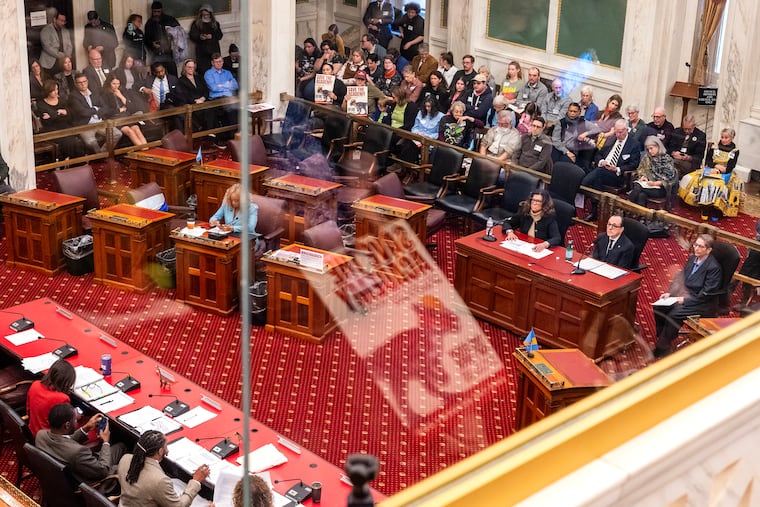
Hannah-Jones’ fireside chat was one of dozens of sessions at the conference, which also featured Mayor Cherelle L. Parker and a panel of students from Science Leadership Academy at Beeber who aim to become teachers themselves.
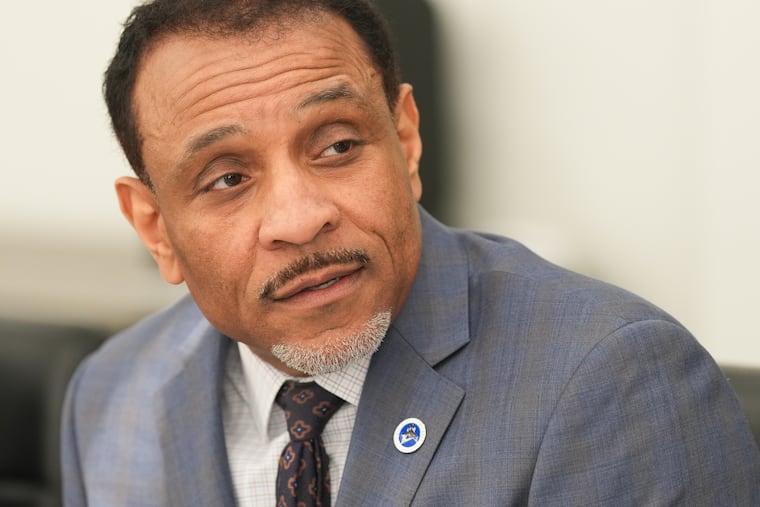
Philadelphia Superintendent Tony B. Watlington Sr. addressed attendees on Friday night, saying developing a more diverse teacher pipeline is key to solving “the biggest” unfulfilled promise of the Declaration of Independence.
“The biggest piece of undone work is to figure out how to educate Black and brown children well so that they not only can graduate college and career ready but they can take their rightful places in the middle class and solidly in the middle class,” Watlington said.