Bob Harvie’s win over Brian Fitzpatrick was fueled by Bucks County’s younger, lower-income, and Hispanic voters
Eleven Lower Bucks municipalities swung toward the Democrat by 20 points or more as he defeated the five-term incumbent.
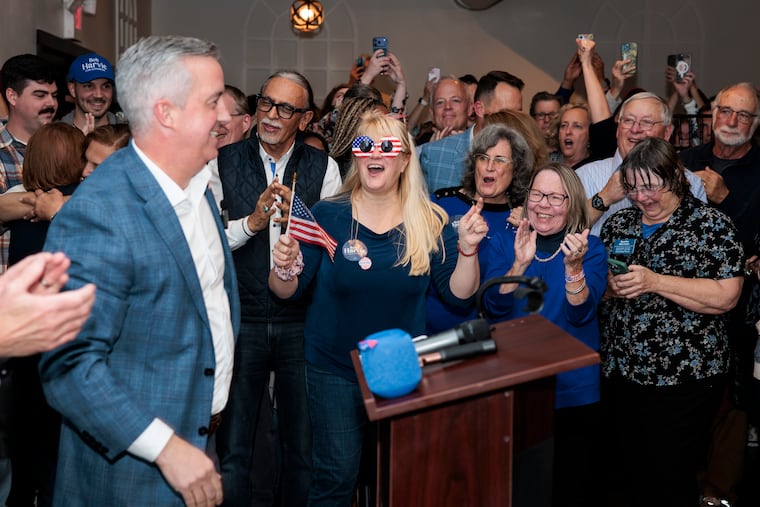
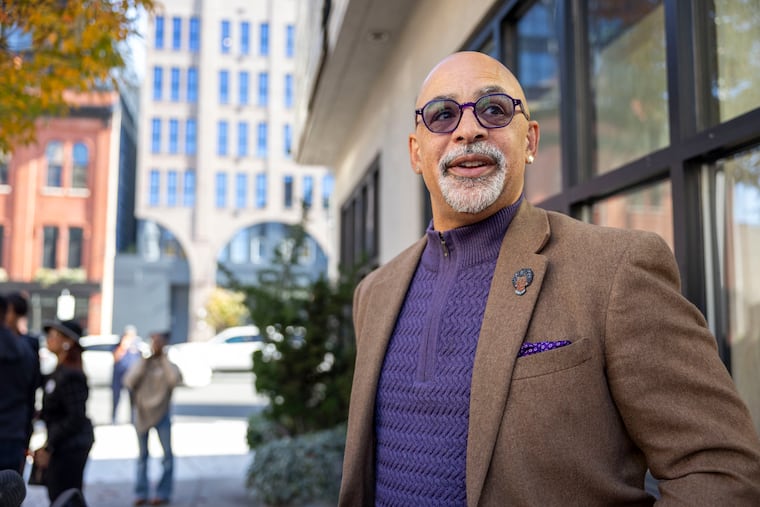
U.S. Rep-elect Bob Harvie’s hometown of Bristol Borough had the largest swing toward the Democrat of any municipality in the 1st Congressional District, helping push him to victory against one of the toughest Republican incumbents in the country.
Bristol Borough had a 32-percentage-point swing toward the Democrat compared with 2024.
All precincts in the 1st District, which includes all of Bucks County and a portion of Montgomery County, swung toward Harvie compared with two years ago, but he found his strongest support in his win against Republican U.S. Rep. Brian Fitzpatrick in Lower Bucks municipalities with a higher percentage of key voting blocs.
Bristol Borough and four other communities in Lower Bucks — Bensalem Township, Bristol Township, Falls Township, and Tullytown Borough — are younger and lower-income, have fewer people with college degrees, and have a larger Hispanic population that the rest of the district. These areas had the biggest swing toward the Democrat and helped move the needle for Harvie throughout the district, an Inquirer analysis of municipal-level election results and census data from 2024 and 2026 found.
Fitzpatrick won Lower Bucks two years ago when he won the district by double digits, but this year Bristol Borough and 10 other municipalities had a 20-percentage-point or more shift toward Democrats from 2024 — including Tullytown Borough, Falls Township, Richlandtown Borough, and Bristol Township.
Both Harvie and Fitzpatrick are from Lower Bucks (with the five-term GOP lawmaker growing up in Levittown), but Harvie’s campaign particularly focused on his upbringing in the county and community ties. He spent 20 years teaching social studies at Bucks County Technical High School and more than a decade as a Falls Township supervisor. He has served as a county commissioner since 2020, making him the first challenger of Fitzpatrick’s to have previously won countywide elections.
Harvie improved on 2024 nominee Ashley Ehasz’s performance in every corner of the district, and Democrats saw gains nationally with virtually every demographic group.
But in a race decided by fewer than 6 percentage points, these are the people and places that propelled Harvie to victory.
Building on the youth vote
The younger the municipality, the more it shifted toward Harvie.
The Democrat won a majority of the two-party vote in every age group across the district, but he had his strongest performance in boroughs or townships with a median age between 23 and 39.
Harvie took 57% of those areas, the analysis found.
Fitzpatrick had won among all age groups in 2024, but Harvie benefited from a 22-percentage-point swing among the youngest municipalities.
Though the 1st District is older overall than the United States as a whole, the backlash to President Donald Trump was particularly severe among young voters and may have helped Harvie and other Democrats.
An Inquirer/New York Times/Siena University poll in August found that 75% of Pennsylvania voters ages 18 to 29 disapproved of Trump’s job performance.
He was deeply underwater with young voters across all issues, particularly on the cost of living, an issue on which 90% disapproved of his handling, compared with only 9% who approved. A quarter of voters under 30 who had cast a ballot for Trump in 2024 disapproved of his performance on the issue.
Lower-income voters supported Harvie amid affordability crisis
As affordability remained top of mind for voters this election, Harvie’s best performance came in the district’s lowest-income municipalities, where he won 56% of the vote.
The district is, on average, more affluent than the country as a whole, but Harvie saw a roughly 22-percentage-point shift in his direction in communities where the median household income is between $65,000 and $94,000, the analysis found.
The lower a municipality’s median household income — such as in places like Red Hill Borough or Tullytown Borough — the larger the move toward the Democrat this year.
Though Fitzpatrick had won all four of the district’s income categories in 2024, this year he held on to only one — municipalities where median income is roughly between $95,000 and $112,000 (a demographic that Trump has won in the past) — but by less than a percentage point, 50.3% to Harvie’s 49.7%.
Trump ran in 2024 on a promise to lower costs on day one, but voters this year were frustrated by rising prices in the grocery store and at the gas pump. Harvie focused much of his campaign on affordability — often discussing heating oil prices, housing costs, and healthcare expenses.
Harvie’s strongest performance came in municipalities where fewer people have a college degree — a statistic that dovetails with income. He won 56% of the vote in places where between 21% and 32% of adults hold a bachelor’s degree or higher.
But he also performed nearly as well in municipalities where a larger portion of the population is highly educated. He had 55% of the vote in areas where between 56% and 75% of adults have at least a bachelor’s degree.
Fitzpatrick won municipalities where 32% to 42% of adults have at least a bachelor’s degree, but that was the only group he was able to hold on to — by less than a percentage point — after previously dominating among all education levels in 2024.
Hispanic communities helped boost Harvie
Most of the 1st Congressional District — about 79% of the population — is white, but Hispanic voters helped push Harvie to victory.
Almost 7% of the 1st District identifies as Hispanic, and the larger a place’s Hispanic population, the more strongly it shifted toward Harvie, with Telford Borough, Bristol Borough, Souderton Borough, and Bensalem Township at the top of that list.
Democrats also made a point in the homestretch to reach out to Asian voters — a key voting bloc in the 1st District — for Harvie, with the Democratic Congressional Campaign Committee tapping Montgomery County Commissioner Neil Makhija, a Democrat and the first Asian American county commissioner in Pennsylvania, for a digital ad.
Harvie won a slightly higher share of the vote in places with more prominent Asian communities, such as Hatfield Township, than in the rest of the district. But these were communities where his party had also done well two years ago.