Kilmar Abrego García will leave U.S. voluntarily to avoid deportation
His battle has, for many critics, come to epitomize what they view as some of the worst aspects of the Trump administration’s immigration enforcement efforts.
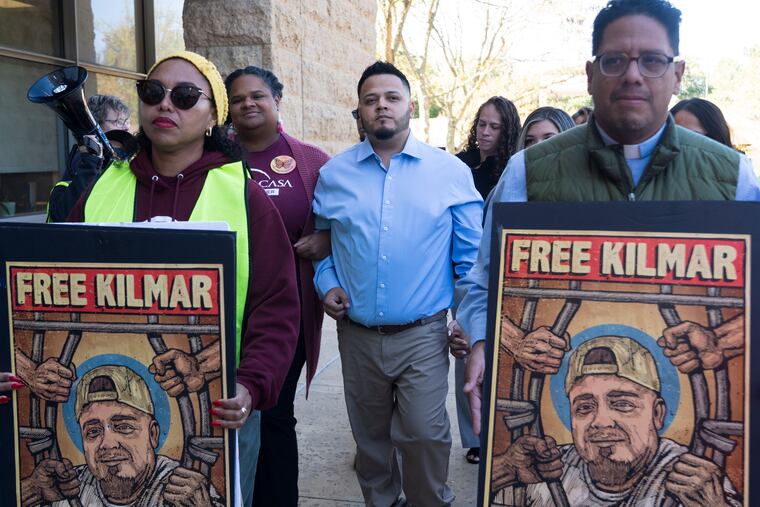
Federal authorities have agreed to let Kilmar Abrego García depart the United States voluntarily, according to two people briefed on the case, ending a 20-month legal saga over the fate of a Salvadoran migrant whose case became a symbol of the Trump administration’s aggressive deportation campaign.
There is a negotiated agreement for Abrego, 31, to voluntarily depart the U.S., said the two people, who spoke on the condition of anonymity because the arrangement has not been made public.
He was expected to leave as soon as Tuesday evening.
The agreement comes after months of officials insisting that Abrego should be deported to Africa.
His lawyers maintained that choice was meant to punish Abrego for successfully challenging both his illegal deportation to a notorious gang prison in El Salvador last year and separate criminal charges filed against him in Tennessee after multiple courts ordered his return.
Since he was brought back to the United States in June 2025, Abrego had said he was willing to voluntarily leave for Costa Rica. But U.S. immigration officials refused.
Abrego’s attorneys secured a court order temporarily barring his removal from the United States while their legal fight played out.
The battle has, for many critics, come to epitomize what they view as some of the worst aspects of the Trump administration’s immigration enforcement efforts.
Abrego lived for years in Maryland with his wife, a U.S. citizen, and children. He had been working as a sheet metal apprentice. He has said he came to the United States from El Salvador as a teenager to flee death threats from the Barrio 18 gang.
Because of that gang threat, a U.S. immigration judge in 2019 barred officials from deporting Abrego to El Salvador. The Trump administration arrested and deported him there anyway last year; multiple courts concluded the deportation was a violation of the 2019 order.
Still, for months, officials resisted court orders — including one from the Supreme Court — to facilitate Abrego’s return to the United States. Officials publicly derided him as an “animal,” a gang member, and a domestic abuser — accusations he repeatedly denied.
He was only brought back to the U.S. last year after federal investigators reopened a previously shuttered human smuggling investigation and secured a two-count indictment against him.
A federal judge tossed that case in May, ruling that prosecutors had improperly pursued charges to punish Abrego for challenging his deportation in court. The Justice Department appealed.
While his legal battles played out, U.S. Immigration and Customs Enforcement continued to threaten Abrego with deportation to an ever-changing series of countries in Africa.
In March, the Trump administration said it had settled on Liberia, one of several nations that have agreed to accept non-native deportees from the United States. The Justice Department asked a federal judge in Maryland to lift an order she imposed last year barring Abrego’s removal while he challenged that destination in court.
Abrego’s attorneys contend he had designated Costa Rica as his preferred country of removal, and the Central American nation’s previous administration indicated they would welcome him. However, a new Costa Rican government said last month that they had not received a fresh request and would have to consider whether to admit him.
Both sides were set to argue the matter at a hearing before U.S. District Judge Paula Xinis on Oct. 6. As that proceeding began, Xinis met privately with attorneys in her chambers. She abruptly canceled the hearing once they emerged.