National Security Agency launches historic restructuring
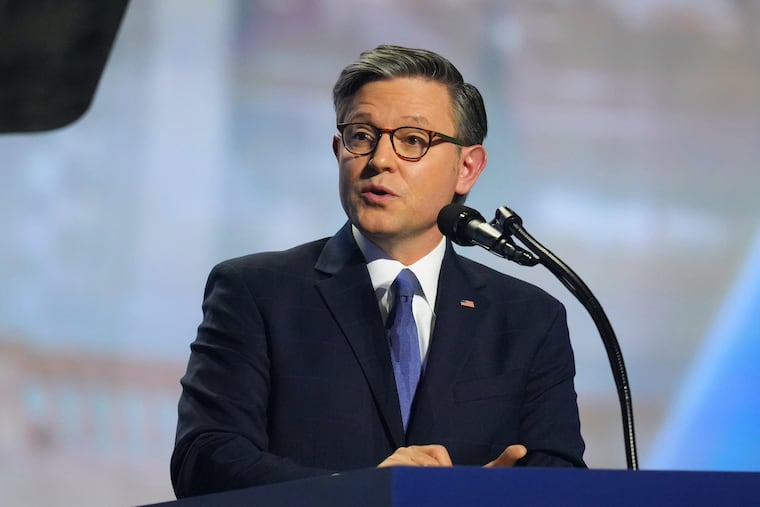
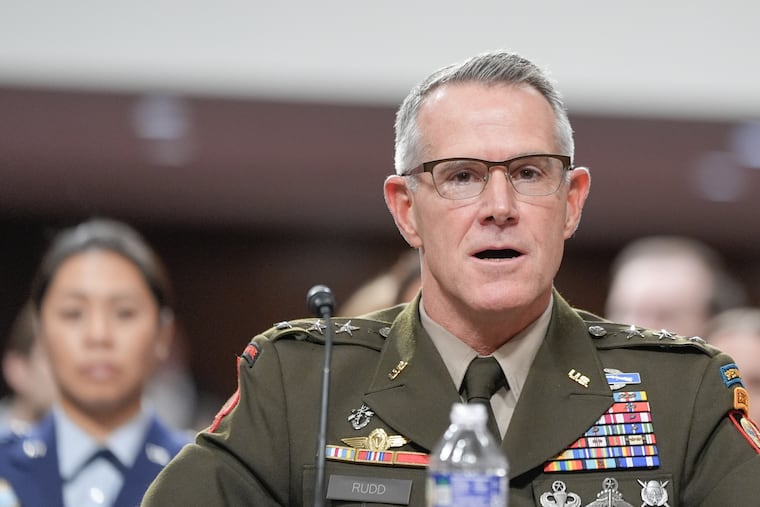
The National Security Agency is set to undergo its most extensive internal restructuring in at least a decade under Army Gen. Joshua Rudd, its new director.
The National Security Agency is set to undergo its most extensive internal restructuring in at least a decade, according to current and former officials briefed on the emerging plan.
The new design for one of the most powerful U.S. intelligence agencies, which was announced to senior NSA leaders last week, is the brainchild of Army Gen. Joshua M. Rudd, the NSA director, these officials said.
Rudd’s initiative calls for the creation at NSA’s Fort Meade, Md., headquarters of five new organizations inside the agency, in artificial intelligence, China, cybersecurity, combat support or warfighting, and global intelligence. Each will be led by a newly elevated “mission director,” according to former officials.
This new organizational configuration will better reflect NSA’s current and future priorities, Rudd believes, according to current and former officials. NSA, the U.S. intelligence community’s premier global eavesdropping arm, specializes in digital espionage.
The mission heads will have the “effective” authorities of an NSA deputy director, according to one former official familiar with the plan. This former official, like others in this article, spoke on the condition of anonymity to discuss sensitive information about the agency, whose operations are highly classified.
The NSA did not respond to a request for comment.
It was not immediately clear if the five new organizations will replace existing divisions within NSA or be superimposed atop the agency’s existing structure. The NSA is believed to employ more than 30,000 people, both military and civilian, and has a larger workforce than the CIA.
Rudd told senior NSA officials that the heads of the five new mission centers might be selected from outside the agency, unnerving NSA insiders, according to the former officials.
“They are begging people to come back, especially leaders,” said the first former official, referring to NSA personnel who have left.
A second former official said Rudd is considering candidates for the new mission director posts. It is unclear whether any have been chosen yet.
The elite hacking unit known as Tailored Access Operations (TAO), reconstituted in recent months by Rudd, will fall under the purview of the mission director for global intelligence, according to a current and former official.
The TAO is set to receive a significant budget increase in the new federal fiscal year, which begins Oct. 1, the second former official said.
Founded in 1997, TAO is among the most secretive parts of the NSA, devoted to compromising — and sometimes attacking — the hardest-to-reach digital targets worldwide. The unit name was retired in 2016, and its members spread across different NSA components.
Rudd, who was confirmed in March, is both director of the NSA and head of U.S. Cyber Command, one of the Pentagon’s combatant commands. In his dual-hatted role, he reports to both Defense Secretary Pete Hegseth and Director of National Intelligence Jay Clayton.
Before assuming the NSA directorship, Rudd’s military career mostly focused on special operations.
The NSA, generally believed to be the biggest and most-well-funded arm of the U.S. intelligence apparatus, focuses on the large-scale collection of signals intelligence, including communications and other electronic information. It also manages and secures U.S. encryption systems to prevent foreign actors from penetrating sensitive coded U.S. government communications and networks.
The timeline for the NSA restructuring is aggressive. The new mission directors will be expected to provide Rudd their organizational redesigns by the end of the month, according to a former official. Rollout is expected in mid-October, with the target for “full operating capacity” slated for mid-January 2027, said a current and former official.
Rudd “admitted that they don’t know how they are going to do it, so they are going to rush into reversible decisions, in case it is wrong,” said the first former official. NSA personnel are still unclear whether the new mission directors will merely be grafted atop preexisting bureaucracy or will oversee more fundamental structural shifts inside Fort Meade.
Since becoming NSA director in March, Rudd has been focused on AI-related advancements, according to former officials. The NSA has rolled out a new desktop AI tool called “Ask Mary,” purportedly named for the head of the division leading the agency’s AI-related integration efforts. The agency has been keenly interested in working with commercial AI labs, even circumventing a Pentagon ban against Anthropic to employ the firm’s advanced Mythos model.
Rudd has been a frequent visitor to the White House, according to a former official, with AI-related issues dominating his conversations there. The administration has proposed a massive, multibillion-dollar budget increase for investments in IT and computing capability, according to former officials. Approved by Congress as part of the “black budget,” NSA’s funding levels are a tightly held secret.
The last major agency restructuring, known as NSA 21, was initiated in 2016 under then-Director Mike Rogers. That effort, which divided NSA into six directorates, was given a two-year runway for its rollout and still remains unfinished, the first former official noted.